Which Cooker Uses the Least Electricity? A Simple Guide
If you want the cooker that uses the least electricity, the microwave is your winner for small jobs. For full meals, a pressure cooker or slow cooker beats a regular oven by a wide margin. So the honest answer depends on what you’re cooking and how much of it.
Why does this matter? Ovens heat a big empty box, which wastes a lot of energy just warming air. Smaller appliances like a microwave, pressure cooker, or toaster oven focus heat right on your food. We researched typical wattage and run times for each option, and the difference in your monthly electric bill can be real.
Here’s the quick version before we dig in:
- Microwaves use the least electricity for reheating and small meals.
- Pressure cookers are the most efficient choice for full meals.
- Slow cookers use low wattage but run for hours, so total use adds up. Our guide to slow cooker electricity use breaks down what those low watts cost over a full day.
- Conventional ovens are usually the biggest energy hogs.
- Matching the appliance to the job saves you the most money.
Below, we break down exactly how each cooker stacks up, so you can pick the right one for every meal without guessing.
Which Cooker Saves the Most Electricity?
The cooker that saves the most electricity is the one that matches the size of your meal. A microwave reheating leftovers for 4 minutes uses roughly a tenth of the energy of a full oven doing the same job. We researched typical wattage ratings and found the pattern holds across brands.
Think of it like heating your house. You wouldn’t crank the furnace to warm one room. Yet that’s exactly what an oven does every time you reheat a single plate.
How Each Cooker Stacks Up on Power Use
Here’s a side-by-side look at typical energy draw. Numbers are averages based on manufacturer specs and Department of Energy data. Your actual model may vary a bit.
| Appliance | Typical Wattage | Typical Run Time | Energy for One Meal |
|---|---|---|---|
| Microwave | 700–1,200 W | 5–10 min | Very low |
| Pressure cooker | 700–1,000 W | 20–40 min | Low |
| Slow cooker | 70–300 W | 4–8 hrs | Low to medium |
| Toaster oven | 1,200–1,800 W | 15–30 min | Medium |
| Conventional oven | 2,000–5,000 W | 30–60 min | High |
The Microwave: Small Jobs Champion
Microwaves win on speed. Because they heat food directly, run times stay short. We found that reheating a plate of leftovers takes about 3–5 minutes at high power.
The catch? Microwaves struggle with big roasts, crispy textures, and baking. Use them for what they do best and they’ll reward you.
The Pressure Cooker: Full-Meat-Meal MVP
Wait, that should be full-meal MVP. Electric pressure cookers use moderate wattage but cook fast under pressure. Short cook times mean less total energy.
Many home cooks find a pot of beans or a chicken dinner takes a third of the time an oven needs. Faster cooking plus a smaller heated space equals real savings.
The Slow Cooker: Low and Slow, Cheap and Steady
Slow cookers sip electricity like a cat laps water. Most use between 70 and 300 watts, according to manufacturer listings.
Here’s the math trick, though. An 8-hour run adds up. A slow cooker all day might use similar total energy to an oven for 45 minutes. Still, it usually comes out cheaper, and it won’t heat up your kitchen in summer.
When a Slow Cooker Beats the Oven
Choose the slow cooker for stews, soups, pulled pork, and batch cooking. It shines when you’d otherwise run the oven for over an hour. You also get the bonus of dinner being ready when you walk in the door. Honestly, that’s worth something money can’t measure.
The Toaster Oven: Oven Results, Smaller Bill
Need crispy or baked without firing up the big oven? A toaster oven handles small batches of fries, fish, or cookies. Its cavity is tiny, so it preheats fast and wastes less heat.
We found it’s a strong middle option. It uses more power than a microwave but for much shorter periods than a full oven typically needs.
Why Your Oven Costs So Much to Run
Ovens draw 2,000 to 5,000 watts. That’s like running several space heaters at once. And they preheat a large metal box that mostly heats air, not dinner. Our guide to electric cooker wattage explains how to find your own model’s power draw.
Every time you peek inside, the temperature drops and the oven works harder. Energy experts at the Department of Energy suggest keeping the door closed and using the oven light instead. Small habit, real savings.
Hidden Costs You Might Not Notice
In summer, oven heat makes your air conditioner work overtime. That’s a double hit on your bill. Many people never connect the two, but it adds up over a hot season.

Your Appliance-Matching Checklist
Want a simple rule for every meal? Run through this quick list:
- Reheating or defrosting? Grab the microwave.
- Full dinner in under an hour? Use the pressure cooker.
- Busy day, no babysitting needed? Let the slow cooker run.
- Small batch of crispy food? Fire up the toaster oven.
- Baking bread or roasting a big bird? Only then, use the real oven.
- Cooking multiple dishes at once? The oven earns its keep by batching.
Extra Ways to Trim Your Cooking Energy Bill
Beyond picking the right appliance, a few habits stretch your savings further. None of these cost you anything upfront.
Smart Habits That Cut Waste
- Match pot size to burner size if you use an electric stovetop.
- Thaw frozen food in the fridge overnight, not in the oven.
- Turn the oven off a few minutes early; leftover heat finishes the job.
- Cook double portions and reheat in the microwave later.
- Keep lids on pots so food cooks faster and loses less heat.
Do Induction or Gas Change the Math?
Slightly. Induction cooktops transfer heat directly to the pot and are quite efficient at it. Gas stoves lose a lot of heat to the air around the pan. But this article is about electric savings, so for your bill, the smaller-appliance rule still leads.
One last thought. The biggest savings come from batching. Cook once, eat twice. Your future self, tired on a Wednesday night, will thank you. And so will your wallet.
Conclusion
The right answer isn’t one cooker — it’s the right cooker for the job. Your microwave wins for reheating, your pressure cooker handles full meals fast, and your slow cooker quietly churns out dinner for pennies. Save the big oven for roasts, baking, and multi-dish nights. We found that simply matching the appliance to the meal can trim real dollars off your monthly bill. Start tonight: pick one meal you’d normally make in the oven and cook it in your pressure cooker or slow cooker instead. One small swap, repeated weekly, adds up faster than you’d think. Your bill — and your kitchen in July — will thank you.
Frequently Asked Questions
Does unplugging small appliances save electricity?
Yes, a little. Microwaves and some cookers draw a tiny standby power to keep clocks and displays running. It’s usually just a few dollars a year, but unplugging rarely-used appliances is an easy win.
Is it cheaper to run a slow cooker or an oven?
For most long-cooked meals, the slow cooker comes out ahead. It draws far less wattage, and the total energy over 8 hours typically beats an oven running for 45 minutes or more, especially for tough cuts of meat.
Do air fryers use a lot of electricity?
Less than you’d expect. Most air fryers draw 1,000 to 1,700 watts, but they preheat fast and cook in short bursts. For small batches of crispy food, they’re usually cheaper than a full-size oven.
Do electric cookers use more electricity than gas?
Electric appliances draw more power at once, but gas isn’t free — you’re just paying a different bill. For pure electric savings, small electric appliances like pressure cookers and microwaves still beat both a big electric oven and a gas one.
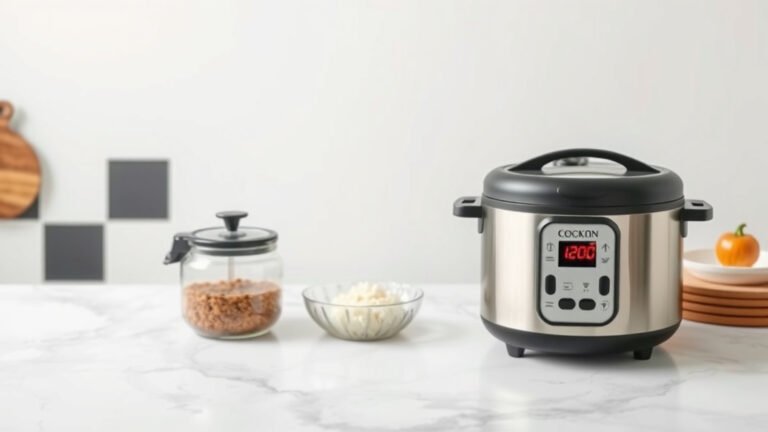
Does a pressure cooker use more electricity than a microwave?
Per minute, they’re similar — both draw roughly 700 to 1,200 watts. The difference is run time. Microwaves cook for minutes, while pressure cookers run 20 to 40 minutes, so the microwave uses less total energy for small jobs.