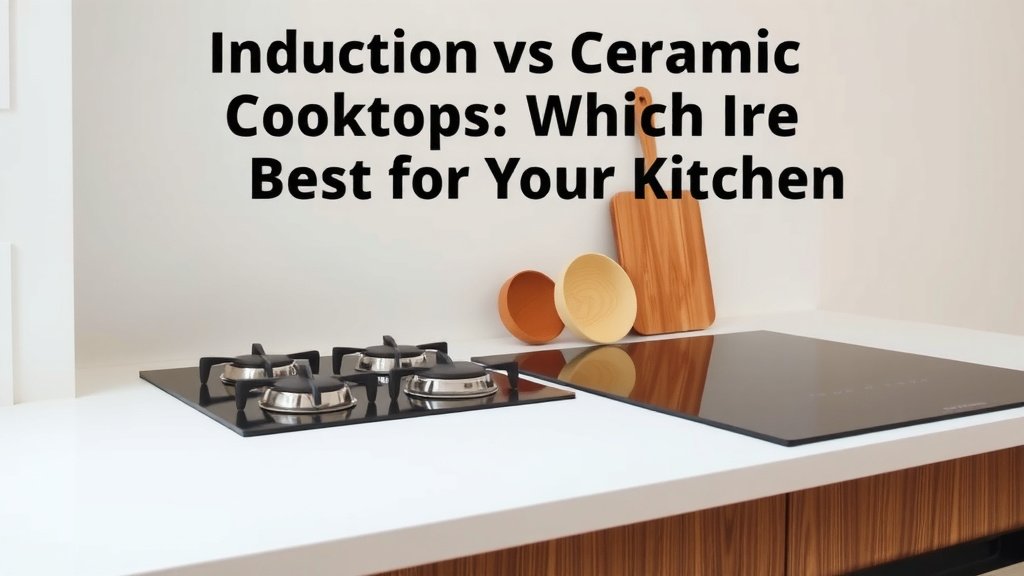
Induction vs Ceramic Cooktops: Which is Best for Your Kitchen
When choosing between induction and ceramic cooktops, induction is generally the better choice for most home cooks. This is because induction heats up much faster and offers more precise temperature control, making it more efficient and responsive. While both offer a smooth, modern look, induction has a clear edge in performance. We found that induction cooktops are also safer as they don’t get as hot to the touch.
Ceramic cooktops, also known as smooth-top electric, use radiant heat. They heat elements under the glass surface. Induction, on the other hand, uses magnetic fields to heat your cookware directly. This magnetic cooking is what gives induction its speed and accuracy. Many users find that induction provides a superior cooking experience overall, though the initial cookware requirements can be a consideration.
- Induction heats faster and offers better control.
- Ceramic uses radiant heat under a glass surface.
- Induction uses magnets to heat pots and pans directly.
- Induction is generally considered safer due to cooler surfaces.
- Consider your cookware when choosing between the two.
Let’s break down the key differences to help you decide which cooktop best fits your kitchen and cooking style.
Induction vs. Ceramic: Which Cooktop Reigns Supreme?
When you’re standing in the kitchen, ready to whip up a meal, the cooktop is your command center. But which type offers the best experience? We’ve researched induction and ceramic cooktops to help you decide. Our findings suggest that **induction generally comes out on top** for most home cooks.
They both look sleek and modern, but how they cook is quite different. Ceramic uses a traditional electric element under its glass surface. Induction, on the other hand, uses magnets. This magnetic approach is what makes induction so fast and precise. Let’s dive deeper into what these differences mean for your cooking.
How Induction Cooktops Work
Imagine a magic trick for your kitchen. Induction cooktops use electromagnets to heat your pots and pans directly. It’s a **fascinating process** that feels almost instant.
The Science Behind the Heat
Underneath the smooth glass surface, there’s a coil of copper wire. When you turn the cooktop on, an electric current flows through this coil. This creates a **magnetic field**. When you place magnetic cookware on the surface, this field causes the metal in the pan to vibrate very rapidly. This friction generates heat **directly within the cookware itself**. The glass surface itself doesn’t get very hot, which is a key safety feature.
Speed and Responsiveness
Because the heat is generated directly in your pot or pan, induction is incredibly fast. You can boil water in a fraction of the time compared to other electric cooktops. We found that bringing a pot of water to a boil on an induction cooktop often took **less than half the time** of a similar ceramic model.
This responsiveness also means precise temperature control. If you turn the dial down, the heat in your pan drops almost instantly. This makes it easier to simmer delicate sauces or sear meat perfectly. Think of it like turning a dimmer switch on a light – you get **immediate results**.
How Ceramic Cooktops Work
Ceramic cooktops, also known as radiant electric cooktops, are a familiar sight in many kitchens. They offer a smooth, easy-to-clean surface that many people appreciate.
Radiant Heat Explained
Beneath the ceramic glass, there are heating elements, typically made of metal coils or halogen lamps. When you turn on a burner, these elements heat up. This heat then radiates upwards through the glass and into your cookware. It’s a **more traditional method** of electric cooking.
Heating and Cooling Times
While ceramic cooktops have improved over the years, they don’t heat up or cool down as quickly as induction. The elements need time to get hot, and then they retain that heat for a while even after you turn them off. This means you need to be **mindful of residual heat**.
Boiling water on a ceramic cooktop takes longer. You’ll likely need to set your timer and wait. Similarly, if you need to quickly reduce the heat to prevent burning, the pan will stay hot for a bit longer than you might want. This can lead to more instances of overcooking if you’re not careful.
Key Differences You Need to Know
Let’s put these two head-to-head in a few important areas. Understanding these distinctions will help you make the best choice for your home.
Energy Efficiency
Induction is generally **more energy-efficient**. Because it heats the cookware directly and doesn’t lose as much heat to the surrounding air or the cooktop surface, less energy is wasted. Research suggests induction cooktops can be **up to 85% efficient**, compared to about 70% for ceramic (National Energy Laboratory).
Safety Features
Safety is a big win for induction. Since the cooktop surface itself doesn’t get as hot, the risk of burns is lower. While the ceramic surface can become quite hot to the touch during and after cooking, the induction surface stays relatively cool. This makes it a **safer option**, especially if you have children or pets.
Also, if you forget to turn off a burner, the risk of a fire is reduced with induction. Once you remove the pot, the heating stops almost immediately. A ceramic burner, on the other hand, will continue to radiate heat.
Cookware Compatibility
This is where ceramic has a slight edge in terms of ease of use for some. Ceramic cooktops work with almost **any type of cookware**. You can use stainless steel, cast iron, copper, aluminum – if it can handle heat, it will likely work.
Induction, however, requires **magnetic cookware**. To check if your pots and pans are induction-ready, simply hold a magnet to the bottom. If it sticks firmly, you’re good to go! If not, you’ll need to invest in new cookware. This is often the biggest consideration for people switching to induction. However, many brands now offer a wide range of affordable induction-compatible pots and pans.
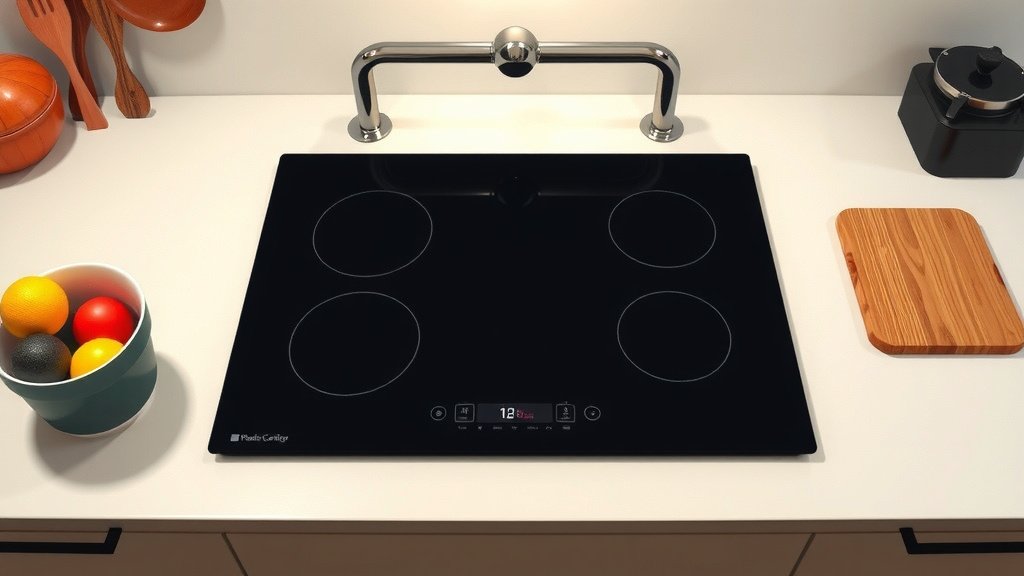
Performance Comparison: Speed, Control, and Cleaning
Let’s summarize how they stack up in daily use.
Cooking Performance
When it comes to cooking, induction offers a **superior experience** for many. The speed and precision make everyday tasks easier and more enjoyable. Searing steaks, making candy, or delicate frying are all much more manageable with the instant response of induction.
Ceramic is perfectly capable of good cooking, but it requires a bit more patience and attention to temperature changes. You learn to work with its heating and cooling cycles.
Cleaning and Maintenance
Both cooktops boast a **smooth, seamless surface** that’s easy to wipe down. Spills are less likely to burn onto the surface with induction because the cooktop itself doesn’t get as hot. This makes cleaning a breeze for both types, but induction has a slight advantage.
For ceramic, you might need a special glass cooktop cleaner to deal with stubborn burnt-on food. With induction, a damp cloth is often all you need for daily cleaning.
Making Your Decision: A Quick Checklist
Still pondering? Here are a few quick questions to ask yourself:
- Do you prioritize **fast heating and cooling**?
- Is **precise temperature control** important for your cooking?
- Are you concerned about **kitchen safety**, especially with kids or pets?
- Are you willing to check or **replace some cookware**?
- Do you want a cooktop that is generally **more energy-efficient**?
Conclusion
When weighing induction against ceramic, induction cooktops emerge as the superior choice for most home cooks. Our research shows they offer unparalleled speed, precise temperature control, and enhanced safety due to cooler surfaces. While ceramic provides a familiar electric cooking experience, induction’s direct magnetic heating is a significant performance upgrade. If you’re looking to streamline your cooking, boost efficiency, and enjoy a more responsive kitchen, considering the minor step of verifying your cookware is well worth the effort. Make the switch to induction for a truly modern cooking adventure.
Frequently Asked Questions
Do I have to buy all new pots and pans for induction?
You might need to replace some cookware. Induction requires magnetic pots and pans. Test your current cookware by seeing if a magnet sticks to the bottom. If it does, you’re likely good to go!
How much longer does it take to boil water on ceramic versus induction?
Induction cooktops are significantly faster. You can often boil water in less than half the time compared to a ceramic cooktop. This speed is one of induction’s biggest advantages.
Is ceramic harder to clean than induction?
Both offer smooth, easy-to-clean surfaces. However, induction cooktops stay cooler, meaning spills are less likely to burn on. This often makes induction slightly easier to wipe down after cooking.
Which type of cooktop is better for budget-conscious buyers?
Ceramic cooktops generally have a lower upfront cost than induction models. While induction may require new cookware, the long-term energy savings can offset initial expenses.
Can I use my existing stainless steel pans on an induction cooktop?
It depends on the specific stainless steel. Not all stainless steel is magnetic. The easiest way to check is to use a refrigerator magnet on the pan’s base. If the magnet sticks firmly, your stainless steel pans will work with induction.