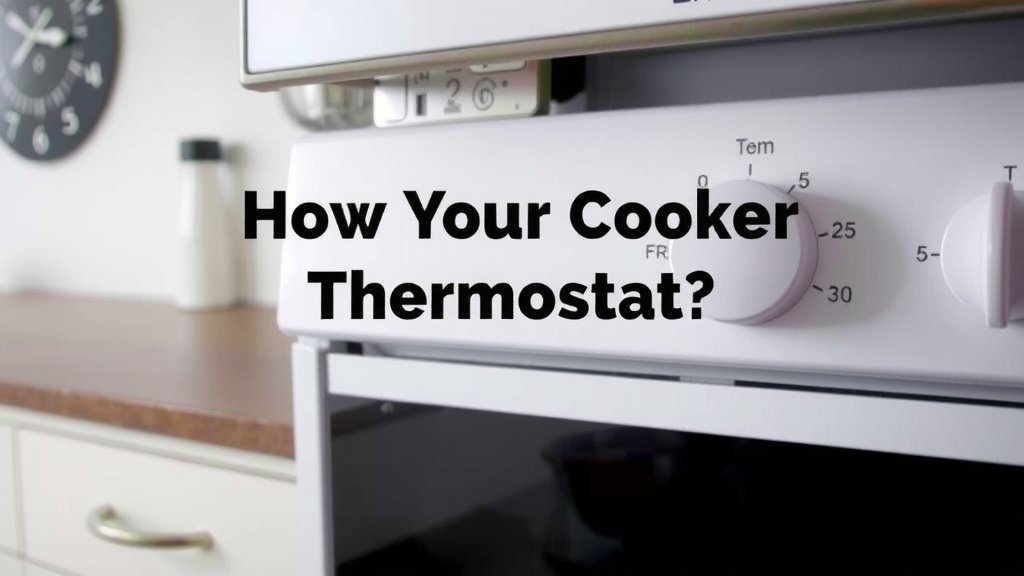
How Your Cooker Thermostat Works Explained
Your cooker thermostat works by using a sensor to measure the oven’s temperature. When the temperature drops below your set point, it signals the heating element to turn on. Once the desired temperature is reached, it turns the heating element off. This precise cycle keeps your food cooking evenly and prevents burning.
Think of it as your oven’s brain, constantly checking and adjusting. It’s a simple yet brilliant piece of engineering that makes baking and roasting possible. Many factors can affect its accuracy, but understanding the basics helps you troubleshoot common cooking issues and ensures you get the best results from your appliance.
- A cooker thermostat senses oven heat.
- It turns the heat on when it’s too cool.
- It turns the heat off when it reaches the target.
- This cycle keeps your oven at the right temperature.
- It’s essential for consistent cooking results.
Let’s dive into the details and see how this clever device keeps your meals perfect, every single time.
Understanding Your Oven’s Temperature Control
Have you ever wondered what keeps your oven from going rogue and burning your cookies? It’s the thermostat, your trusty kitchen sidekick. This device is the unsung hero of your baking adventures. It works tirelessly to keep things just right.
Let’s break down how this simple yet essential component ensures your meals are cooked to perfection. It’s not magic; it’s smart engineering.
The Thermostat’s Core Function: Sensing and Adjusting
At its heart, your cooker thermostat’s main job is to monitor the internal temperature. Think of it as a tiny thermometer that’s always on duty. It compares the current oven temperature to the temperature you’ve set on the dial.
How it Senses the Heat
Most modern ovens use a temperature sensor, often a bimetallic strip or an electronic thermistor. These sensors change their properties based on heat. A bimetallic strip, for instance, is made of two different metals bonded together. These metals expand at different rates when heated.
As the oven heats up, the metals expand. Because they expand differently, the strip bends. This bending action is the key to its operation. It’s a clever way to translate heat into a mechanical movement.
The Signal to Heat Up or Cool Down
When the oven’s temperature falls below your desired setting, the sensor triggers a switch. This switch then tells the oven’s heating elements (either the top or bottom, or both) to turn ON. This adds more heat to the oven cavity.
Once the oven reaches the temperature you selected, the sensor signals the switch again. This time, the switch tells the heating elements to turn OFF. The oven then starts to cool down slowly as heat escapes.
The On-Off Cycle Explained
This continuous cycle of turning the heat ON and OFF is what maintains the oven’s temperature. It’s not a constant heat; it’s an **intermittent heat**. The thermostat keeps the temperature within a small range around your set point. This range is often called the oven’s tolerance or differential.
For example, if you set your oven to 350°F, the thermostat might allow the temperature to fluctuate between 340°F and 360°F. This slight variation is perfectly normal and necessary for the system to work. It prevents the heating elements from cycling on and off too rapidly.
| Stage | Action | Reason |
|---|---|---|
| Heating | Elements turn ON | Oven temperature is below set point. |
| Holding | Elements turn OFF | Oven temperature has reached set point. |
| Cooling | No elements active | Oven temperature slowly decreases. |
| Reheating | Elements turn ON | Oven temperature drops below acceptable range. |
Types of Cooker Thermostats
There are a couple of main types of thermostats you might find in your cooker. Understanding these can help you appreciate how they work.
Mechanical Thermostats: The Classic Approach
These are the older style thermostats, often found in more traditional ovens. They typically use a bimetallic strip or a gas-filled bulb connected to a capillary tube. As heat affects the metal or gas, it causes a mechanical switch to engage or disengage.
The dial you turn on your oven connects directly to this mechanical system. When you set the temperature, you’re adjusting the position of the switch that the bimetallic strip or gas bulb controls. They are generally robust but can sometimes be less precise than newer models.
Electronic Thermostats: The Modern Precision
Most newer ovens utilize electronic thermostats. These use a thermistor or other electronic temperature sensor. A thermistor is a type of resistor whose resistance changes significantly with temperature. A control board reads this resistance, translates it into a temperature reading, and then controls the heating elements via electronic relays.
These systems offer much greater accuracy and consistency. They can often provide finer control over the temperature and are less prone to wear and tear than mechanical parts. Many digital displays you see are connected to these electronic thermostats.
Factors Affecting Thermostat Accuracy
Even the best thermostat can have its performance affected by a few things. Keeping these in mind helps you understand why your oven might not always behave perfectly.
Oven Door Seals: The Unsung Heroes
A good oven door seal is critical. If your seal is damaged or worn, hot air can escape easily. This means the thermostat has to work harder and cycle more often to maintain the set temperature. A leaky seal can lead to uneven cooking and longer cooking times.
Oven Placement and Airflow
Where you place your food inside the oven matters. Hot air rises, so the temperature can be warmer at the top than at the bottom. Also, ensure you’re not blocking air vents, especially in convection ovens. Proper airflow is essential for the thermostat to get an accurate reading of the overall oven temperature.
Frequent Door Opening
Every time you open the oven door, you let a significant amount of heat escape. This causes the temperature to drop, forcing the thermostat to turn the heating elements back on. Resist the urge to peek too often; use your oven light instead!
Thermostat Calibration: Is it Off?
Over time, thermostats can become slightly inaccurate. This is known as being “out of calibration.” If you’ve noticed your baked goods consistently burning or coming out undercooked, even when set to the correct temperature, your thermostat might need recalibrating. Many ovens have a way to adjust this, often found in the oven’s advanced settings or by consulting your manual.
Some experts suggest using an oven thermometer to check your oven’s actual temperature against the dial setting. If there’s a consistent difference, it’s a good sign calibration is needed (Cleveland Clinic).
Ensuring Consistent Cooking Results
Your cooker thermostat is a vital tool for delicious food. Here’s a quick checklist to help you keep it working its best:
- Regularly check your oven door seal for damage.
- Keep the oven interior clean to ensure proper heat distribution.
- Avoid opening the oven door unnecessarily during cooking.
- Use an oven thermometer periodically to verify temperature accuracy.
- Consult your oven manual for calibration instructions if needed.
- Ensure proper airflow by not overcrowding the oven or blocking vents.
Conclusion
Your cooker thermostat is more than just a dial; it’s the “brain” that ensures your food cooks evenly. By constantly sensing and adjusting the oven’s heat, it maintains your set temperature through a precise on-off cycle. Whether mechanical or electronic, this clever device is key to achieving perfect baking and roasting results. Now that you understand how it works, take a moment to check your oven’s door seal and consider using an oven thermometer. This simple check can help you identify any potential issues and keep your cooking consistently delicious.
Frequently Asked Questions
How often does a cooker thermostat turn the heat on and off?
A cooker thermostat cycles the heating elements on and off continuously to maintain your set temperature. This cycle is not constant; it happens whenever the oven temperature drifts too far from your selected setting. You’ll notice it more when the oven is first preheating or if you open the door.
Can a broken oven thermostat cause my food to cook unevenly?
Yes, absolutely. If your thermostat isn’t working correctly, it might not accurately sense the oven’s temperature or signal the heating elements properly. This can lead to hot or cold spots inside your oven, resulting in food that is cooked unevenly.
Do I need to calibrate my oven thermostat?
It’s a good idea to check your oven’s temperature accuracy periodically. If you consistently find your food is undercooked or burnt despite using the correct settings, your thermostat might be out of calibration. Consult your oven’s manual for specific recalibration steps.
What’s the difference between a mechanical and an electronic thermostat?
Mechanical thermostats use physical components like bimetallic strips or gas bulbs that bend or expand with heat to operate a switch. Electronic thermostats use sensors like thermistors, which change electrical resistance with temperature, and a control board to manage the heating elements. Electronic ones are generally more precise.
Can opening the oven door too much affect the thermostat?
Yes, opening the oven door frequently causes a lot of heat to escape. This forces the thermostat to work harder by turning the heating elements back on more often to compensate for the temperature drop. It’s best to use your oven light to check on your food instead of opening the door.