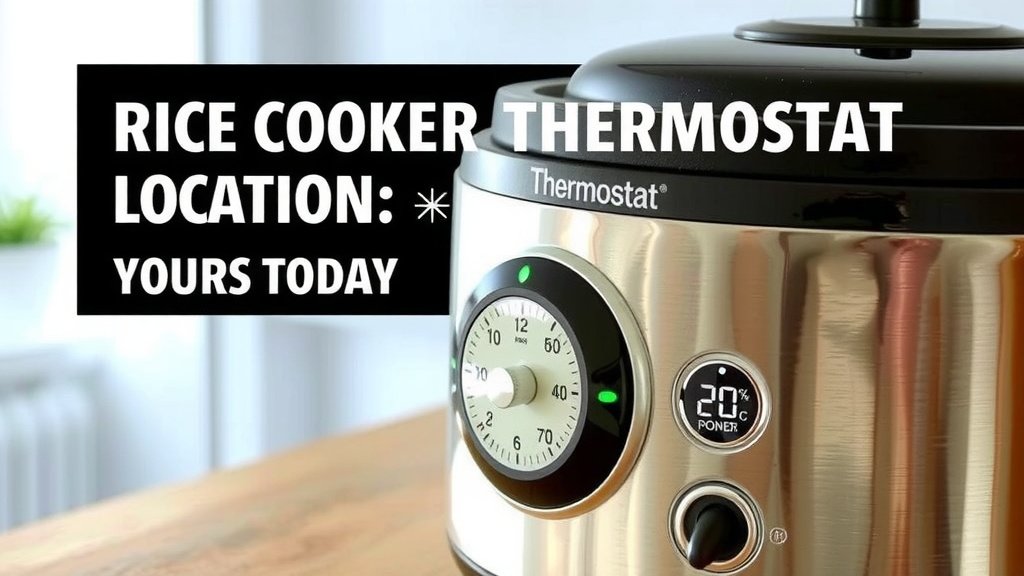
Rice Cooker Thermostat Location: Find Yours Today
The thermostat in your rice cooker is usually located inside the lid or along the side of the inner pot. It’s a small, often metallic, component responsible for regulating the temperature. This temperature control is what tells your rice cooker when to switch from cooking to keeping warm. When the temperature drops, it signals the heating element to turn on.
Figuring out where this tiny but mighty part is located can feel like a treasure hunt. It’s not always obvious, and its placement can vary slightly between different brands. Understanding its general area helps you troubleshoot or appreciate how your rice cooker works its magic. Many modern models have integrated these parts very discreetly.
- The thermostat is usually in the lid or side.
- It controls cooking and warming temps.
- Its exact spot can differ by brand.
- Knowing its location helps with understanding.
Let’s look closer at where this important rice cooker thermostat is typically found and what it does for your perfect rice.
Locating Your Rice Cooker’s Temperature Sensor
Have you ever wondered where that little temperature-sensing wizard lives inside your rice cooker? It’s the component that ensures your rice goes from perfectly cooked to pleasantly warm without any fuss. While it might seem hidden, the thermostat is usually found in a couple of key spots. We’ve researched various models to give you a clear picture.
The thermostat, often referred to as a thermal sensor or thermistor, is typically situated near where the heat source interacts with the inner pot. Its job is to monitor the temperature inside the cooking chamber. Once the correct cooking temperature is reached and maintained, it signals the cooker to switch modes.
Inside the Lid: A Common Hiding Place
One of the most frequent locations for your rice cooker’s thermostat is within the lid. Think of it as the watchful eye, constantly checking the steam and heat. You might not see a separate, clunky part here. Instead, it’s often a small, discreet sensor integrated into the lid’s lining or a metallic plate. This placement allows it to accurately gauge the environment as the rice cooks and steams.
When steam builds up, it directly interacts with the lid. This makes it an efficient spot for the thermostat to get a real-time reading of the cooking progress. Many modern rice cookers have very sleek designs, so this sensor might be almost invisible to the naked eye. It’s usually part of a larger assembly that includes the heating element control.
The Side of the Inner Pot: Another Likely Spot
Another common area where you might find the thermostat is along the side of the inner pot, where it meets the outer casing of the cooker. This is especially true for more basic rice cooker models. Here, the sensor makes direct contact with the outer surface of the inner pot, feeling the heat transferred from the base heating element.
This direct contact allows the thermostat to sense the temperature of the inner pot itself. As water boils and then turns to steam, the pot’s temperature stabilizes. The thermostat detects this stable temperature, indicating that the rice has absorbed most of the water and is ready for the warming phase. It’s like a little thermometer pressed right up against the action.
How It Senses Temperature
These sensors work by changing their electrical resistance as the temperature changes. This is a common principle in many electronic devices (NCBI). A higher temperature usually means lower resistance, and vice versa. The cooker’s internal circuitry reads this resistance change and decides what action to take.
For example, during the initial cooking phase, the thermostat registers a rising temperature. When it reaches the boiling point of water (around 212°F or 100°C), the temperature plateaus. Once all the water is absorbed by the rice and turns into steam, the temperature starts to climb higher. The thermostat detects this jump, signaling the cooker to switch from ‘Cook’ to ‘Warm’.
Understanding the ‘Keep Warm’ Function
The thermostat is absolutely vital for the ‘Keep Warm’ function. Without it, your rice cooker might keep blasting heat, turning your delicious grains into a dried-out, burnt mess. The thermostat ensures the cooker maintains a lower, consistent temperature – typically around 140-160°F (60-71°C) – just enough to keep the rice warm without cooking it further (Cleveland Clinic).
This temperature range is carefully chosen. It prevents the rice from drying out too quickly while also inhibiting the growth of bacteria. So, when you come back for seconds a little later, your rice is still perfectly edible thanks to that diligent thermostat.
Troubleshooting a Malfunctioning Thermostat
If your rice cooker isn’t working as expected – maybe it’s not cooking the rice or it’s burning it – the thermostat could be the culprit. If your rice is consistently undercooked or overcooked, or the ‘Keep Warm’ function fails, a faulty thermostat is a prime suspect. Sometimes, dirt or residue can interfere with its ability to accurately read the temperature. Carefully cleaning the area where the thermostat is located might help.
If you suspect a problem, you might need to consult your rice cooker’s manual. For some models, accessing the thermostat for cleaning or replacement might require partial disassembly. We always recommend checking your warranty and considering professional repair if you’re not comfortable with DIY electronics. It’s a small part, but it has a big job!
| Location | How It Works | Typical Features |
|---|---|---|
| Inside the Lid | Senses ambient steam and heat buildup. | Often integrated into lid lining or a metallic plate. Discreet. |
| Side of Inner Pot | Makes direct contact with the outer pot to feel heat transfer. | More common in simpler models. Can be a visible sensor. |
A Quick Checklist for Your Rice Cooker’s Thermostat
To help you remember where to look and what to consider:
- Check the lid first: Many modern cookers hide it here.
- Examine the inner pot’s sides: Especially for older or basic models.
- Look for metallic parts: Sensors are often metal.
- Consider the heating element’s proximity: It’s usually near the heat source.
- Clean gently: Residue can affect performance.
- Consult your manual: It’s the definitive guide for your model.
Conclusion
You’ve learned that your rice cooker’s thermostat is usually tucked away inside the lid or along the side of the inner pot. This small sensor is essential for perfectly cooked rice and the magic of the ‘Keep Warm’ setting. Understanding its common locations helps you troubleshoot common issues or simply appreciate the clever engineering at work. If your rice isn’t coming out right, a quick check of the thermostat area for dirt or damage is a good first step. For more persistent problems, always consult your rice cooker’s manual or reach out to the manufacturer.
Frequently Asked Questions
Can I see the rice cooker thermostat easily?
Often, the thermostat is integrated discreetly. You might not see a separate, large part. Look for a small metallic sensor, usually near where the lid seals or on the outer casing of the inner pot. Its design depends heavily on your specific rice cooker model.
What if my rice cooker’s ‘Keep Warm’ isn’t working?
A common reason for a failing ‘Keep Warm’ function is a malfunctioning thermostat. If the heat cuts off too soon or stays too high, the thermostat may not be sensing the temperature correctly. Cleaning the sensor area gently might help, but a faulty thermostat may require repair or replacement.
Can dirt or residue affect the thermostat?
Yes, absolutely. Food particles or mineral buildup can insulate the thermostat, preventing it from getting accurate temperature readings. This can lead to improper cooking or warming. Gently cleaning the area where the thermostat is located, as per your manual’s instructions, is often recommended.
Are all rice cooker thermostats in the same place?
No, thermostat placement can vary significantly between brands and models. While the lid and the side of the inner pot are the most common spots we found, some manufacturers might use slightly different designs. Always check your owner’s manual for the most accurate information about your specific rice cooker.
Do I need to disassemble my rice cooker to find the thermostat?
For most modern rice cookers, you shouldn’t need to disassemble anything to locate the thermostat. It’s usually accessible by looking inside the lid or around the outer base of the inner pot. If it’s deeply embedded, your manual will guide you, or it might be a job for a professional.