Cooker Hood Extraction Rate: What It Means For You
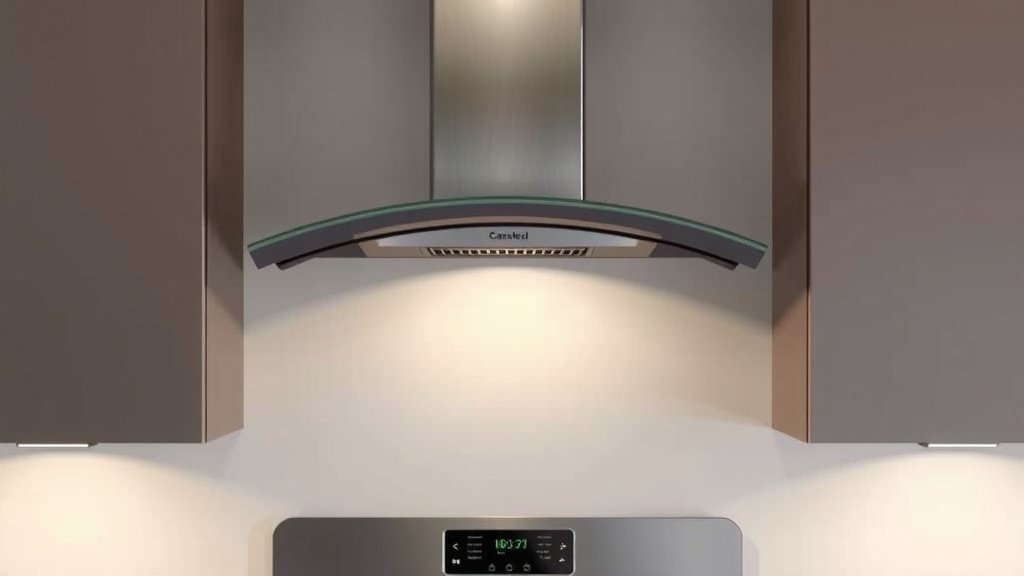
Your cooker hood’s extraction rate, measured in cubic meters per hour (m³/h), tells you how much air it can move. A Your cooker hood is essential for kitchen air quality; learn what it does.higher m³/h means it can clear your kitchen air more effectively. You need to match this to your kitchen size and cooking habits to avoid smoky rooms and lingering smells.
Finding the right extraction rate is key to a pleasant cooking experience. Too low, and your kitchen will feel stuffy and smell like last night’s dinner. We found that many homeowners overlook this detail. A properly sized hood also helps keep your walls and cabinets cleaner by removing grease particles before they settle.
TL;DR:
- Extraction rate is how much air your cooker hood can move (m³/h).
- Higher m³/h means better air cleaning.
- Match the rate to your kitchen size and cooking style.
- A good rate prevents smoke, smells, and grease buildup.
- Don’t ignore this important kitchen feature!
Let’s break down exactly what that extraction rate means for your kitchen and how to pick the best one for your needs.
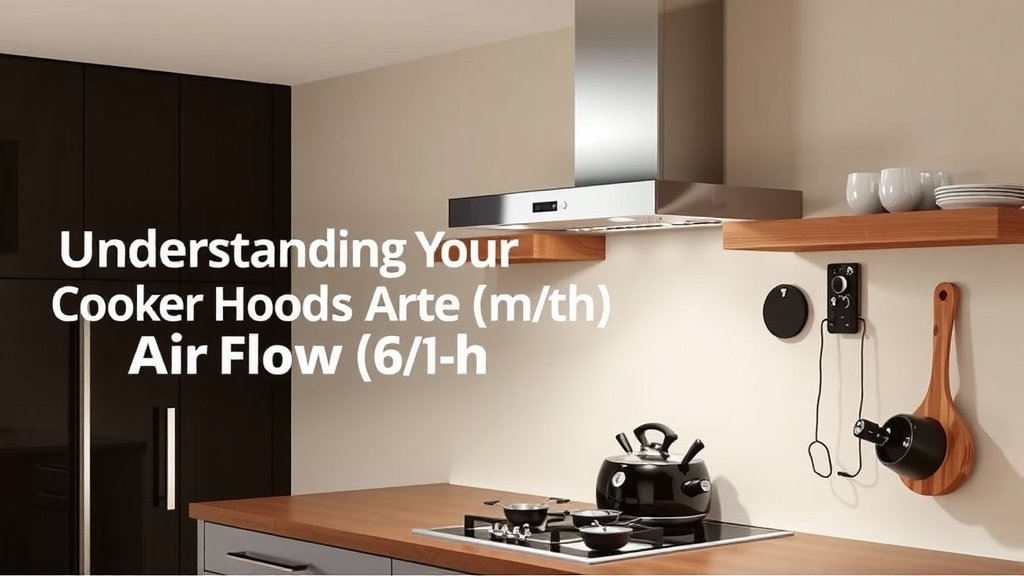
Understanding Your Cooker Hood’s Airflow Power (m³/h)
So, what does that number on the cooker hood box actually mean for your kitchen? Simply put, it’s a measurement of how much air the hood can pull out of your kitchen in one hour. Think of it like a powerful vacuum cleaner for your air. A higher number means it’s working harder to clear out steam, smoke, and cooking odors. We found that this m³/h rating is probably the **most important spec** to check.
This figure is measured in cubic meters per hour (m³/h). It tells you the volume of air the fan inside your hood can move. When you’re cooking, especially something that creates a lot of steam or smoke, you want that air to be whisked away quickly. A cooker hood with a good m³/h rating will do just that, leaving your kitchen air feeling fresh.
Why Airflow Matters: More Than Just Smells
It’s easy to focus on just getting rid of cooking smells. But a cooker hood does so much more. When you fry, boil, or sauté, tiny particles of grease and fat become airborne. If these aren’t captured, they can settle on your kitchen cabinets, walls, and even your appliances. Over time, this creates a sticky, hard-to-clean film. We found that many homeowners don’t realize how much this feature protects their kitchen surfaces.
A well-performing hood also helps manage moisture. Excess steam can lead to condensation, which in turn can contribute to mold growth over time. This is especially true in smaller or less well-ventilated kitchens. Keeping the air moving helps **prevent these damp issues** before they start.
The Science Behind the Airflow: What’s Happening Inside?
Your cooker hood has a motor and a fan. The motor powers the fan, which spins rapidly. This spinning creates a low-pressure area above the fan. Air from your kitchen is then **pulled into the hood** through the filters. From there, it’s either sent outside through an external duct or recirculated back into the room after passing through a carbon filter.
The m³/h rating is essentially the maximum capacity of this fan system. It’s a measure of its raw power. However, it’s important to remember that this is an *ideal* number. Factors like filter cleanliness and duct length can affect the actual airflow you experience.
Calculating Your Kitchen’s Airflow Needs
So, how do you figure out what m³/h number is right for *your* kitchen? It’s not just about picking the biggest number you see! We found that a simple calculation can help you determine the **ideal airflow rate** for your space.
The Kitchen Volume Formula
The first step is to know the volume of your kitchen. You can calculate this easily. Just measure the length, width, and height of your kitchen in meters. Then, multiply these three numbers together: Length x Width x Height = Kitchen Volume (in m³).
For example, if your kitchen is 5 meters long, 4 meters wide, and 2.5 meters high, its volume is 5 x 4 x 2.5 = 50 m³.
How Many Air Changes Per Hour?
Next, you need to decide how many times per hour you want the air in your kitchen to be completely replaced. This is called the “air change rate.” Most experts recommend between 6 and 12 air changes per hour for kitchens. This means the hood should be able to process your entire kitchen volume of air six to twelve times every hour. We found that 10 air changes per hour is a **great starting point** for most homes.
For general cooking, 6-8 air changes might be sufficient. If you frequently do intense cooking, like searing steaks or stir-frying with high heat, you’ll want to aim for 10-12 air changes per hour. It’s better to have a little extra power than not enough!
Putting It All Together: Your Target m³/h
Now, let’s combine your kitchen volume with the desired air change rate. The formula is: Kitchen Volume (m³) x Desired Air Changes Per Hour = Required Extraction Rate (m³/h).
Using our example kitchen with a volume of 50 m³ and aiming for 10 air changes per hour: 50 m³ x 10 = 500 m³/h. This means a cooker hood with an extraction rate of at least 500 m³/h would be suitable for that kitchen.
We recommend always rounding up if your calculation falls between two standard hood sizes. It’s better to have a hood that’s a bit more powerful and can be run on a lower setting than one that struggles to keep up. Many guidelines suggest adding a little extra capacity for **future needs or high-heat cooking** (National Health Service UK).
Factors That Influence Your Hood’s Performance
While that m³/h number is key, it’s not the only thing affecting how well your cooker hood works. Several other elements play a role in its overall effectiveness. Understanding these can help you get the most out of your appliance.
Ducting vs. Recirculating: A Big Difference
Where your hood sends the air makes a difference. Extractor hoods (ducted) push the air outside your home. This is generally **more efficient** because it physically removes the pollutants. Recirculating hoods filter the air and send it back into the kitchen. These are easier to install but may be less effective at removing all odors and grease.
For ducted systems, the length and complexity of the ducting run matter. A long, winding duct will reduce the actual airflow compared to a short, straight one. Experts suggest that for every meter of ducting, you can lose up to 10 m³/h of extraction power (Consumer Reports).
The Role of Filters
Your cooker hood has filters to trap grease particles. These need regular cleaning or replacement. Dirty filters restrict airflow, meaning your hood can’t move as much air as it’s designed to. We found that many users forget to clean their filters, which directly impacts performance and can even be a fire hazard.
Washable metal mesh filters should be cleaned monthly. Disposable charcoal filters, used in recirculating hoods, typically need replacing every 3-6 months, depending on how often you cook. Keeping filters clean ensures your hood operates at its **peak efficiency**.
Cooker Hood Size and Placement
The physical size of the hood matters too. It should ideally be at least as wide as your hob. This ensures it can effectively capture smoke and steam rising from all your pots and pans. The distance from the hob is also important. Too high, and it won’t capture much. Too low, and it can be a hazard.
Always follow the manufacturer’s recommendations for installation height. Typically, this is between 65-80 cm for electric hobs and 70-85 cm for gas hobs. Correct placement ensures the hood is positioned to **maximize capture efficiency**.
Choosing the Right Extraction Rate: A Quick Checklist
Ready to find the perfect cooker hood? Keep these points in mind:
- Measure Your Kitchen: Get accurate length, width, and height measurements.
- Calculate Volume: Multiply your dimensions to find the kitchen’s cubic meter volume.
- Decide Air Changes: Aim for 10 air changes per hour for general cooking.
- Do the Math: Multiply volume by air changes for your target m³/h.
- Consider Your Cooking: If you cook intensely, add a bit more capacity.
- Factor in Ducting: If ducted, account for potential airflow loss.
A Quick Comparison: Hoods for Different Kitchens
To give you a rough idea, here are some common scenarios and suggested m³/h ranges. Remember, these are just general guidelines and your specific calculation is always best.
| Kitchen Size (Approx.) | Cooking Style | Suggested m³/h Range |
|---|---|---|
| Small (up to 15 m³) | Light/Occasional | 150-250 m³/h |
| Medium (15-30 m³) | Moderate/Frequent | 250-400 m³/h |
| Large (30+ m³) | Heavy/Intense | 400-600+ m³/h |
| Open Plan Living | All styles (needs more power) | 500-800+ m³/h |
For open-plan kitchens, we found that you’ll generally need a higher extraction rate. This is because cooking smells and steam can easily drift into your living areas. A more powerful hood helps **contain odors** more effectively in these larger, multi-functional spaces.
Conclusion
Choosing the right cooker hood extraction rate (m³/h) is more than just a spec; it’s essential for a clean and comfortable kitchen. You’ve learned how to calculate your kitchen’s volume and determine the ideal air changes needed. This ensures your hood effectively tackles steam, smoke, and grease. Remember that ducting, filter maintenance, and proper placement also play vital roles in performance. Don’t settle for a hood that struggles! Take your kitchen measurements and use the formula we provided to find a hood that will keep your air fresh, your surfaces cleaner, and your cooking experience enjoyable. Your next step is to apply this knowledge when shopping for your perfect kitchen companion!
Frequently Asked Questions
How often should I clean my cooker hood filters?
You should clean your grease filters monthly. For recirculating hoods with charcoal filters, replace them every 3 to 6 months. Dirty filters significantly reduce your hood’s extraction power and can even pose a fire risk.
What’s the difference between ducted and recirculating cooker hoods?
Ducted hoods vent air and pollutants outside your home, making them generally more effective. Recirculating hoods filter the air and return it to the kitchen, which is easier to install but might not capture all odors and grease as well.
Can a cooker hood be too powerful for my kitchen?
While it’s better to have slightly more power than you need, an excessively powerful hood isn’t ideal. It can create drafts and be noisy. The calculation method helps you find a balance, but always consider running it on lower settings if it has excess capacity.
Does the length of my kitchen ducting affect extraction rate?
Yes, it absolutely does. Longer or more complex duct runs can reduce the actual airflow your cooker hood achieves. Experts suggest accounting for a loss of about 10 m³/h for every meter of ducting.
Is the m³/h rating the only thing to consider when buying a hood?
No, while m³/h is the most critical factor for airflow, you should also consider noise levels (measured in decibels), energy efficiency, lighting, and the hood’s design to match your kitchen aesthetic.