What Is a Low Wattage Slow Cooker? Energy Use Explained
A low wattage slow cooker is a slow cooker that uses less electricity than a standard model, typically drawing between 120 and 200 watts instead of the 250 to 300 watts most regular cookers pull. It cooks food the same way, just with a smaller heating element and lower power draw. If you want easy meals without watching your electric bill climb, this is the appliance for you.
Why does this matter? Because slow cookers run for hours at a time, sometimes 8 to 10 hours straight. We found that many experts say a lower wattage model can cut your energy use noticeably, especially if you cook this way several times a week. They’re also great for small kitchens, dorms, RVs, and office lunches where outlets and space are limited.
Here’s the gist before we get into the details:
- Low wattage slow cookers usually run between 120 and 200 watts.
- They use less electricity than standard slow cookers, which can lower your energy bill.
- Most models are smaller, so they’re perfect for 1 to 3 person households.
- They cook a bit slower, so plan for longer cook times.
- They’re ideal for RVs, dorm rooms, and small kitchens with limited power.
Below, we break down everything you need to know about low wattage slow cookers, from how they work to who should buy one. Let’s dig in.
Understanding Low Wattage Slow Cookers
A low wattage slow cooker is simply a smaller, more energy-friendly version of the classic crockpot. Instead of a big heating element, it uses a compact one that pulls around 120 to 200 watts. Think of it like a scooter versus a truck — same destination, less fuel.
We found that most low wattage models hold between 1 and 3 quarts. That’s enough for a couple of chicken breasts, a small stew, or a pot of oatmeal. If you’re feeding a family of five, you’ll want a standard model instead.
How Low Wattage Slow Cookers Work
Every slow cooker works the same basic way. A heating element warms a ceramic or metal insert, and the lid traps heat inside. Food simmers gently over hours, which makes tough cuts tender. If you’re curious about the mechanics, our guide to how a slow cooker works breaks down the heating element and lid in detail.
The only difference with a low wattage model is the size of that heating element. It heats up more slowly and draws less power from your outlet. Many experts say this is why cook times can run 30 to 60 minutes longer than a standard cooker on low.
Watts, Volts, and What They Mean for You
Watts measure how much electricity an appliance pulls at any moment. Your wall outlet supplies around 120 volts in a typical US home. A 150-watt slow cooker on that outlet is a very light load.
Here’s a quick comparison so you can see the difference:
| Appliance | Typical Wattage | Hours of Use | What It Means |
|---|---|---|---|
| Low wattage slow cooker | 120–200 W | 8 hours | Very light power draw |
| Standard slow cooker | 250–300 W | 8 hours | Moderate draw |
| Electric oven | 2,000–4,000 W | 1 hour | Heavy draw |
| Microwave | 1,000–1,500 W | 15 min | Short, heavy burst |
Notice the oven? It uses more power in one hour than a slow cooker uses all day. That’s why many experts say slow cooking is one of the cheapest ways to cook a meal at home.
Low Wattage vs. Standard Slow Cookers
Both cookers make great food. The difference comes down to size, speed, and energy use. We found that choosing between them mostly depends on your household and your kitchen setup.
- Size: Low wattage models are usually 1–3 quarts. Standard ones run 4–8 quarts.
- Cook speed: Smaller elements heat slower, so add extra time to recipes.
- Energy use: Lower wattage means slightly lower running costs.
- Portability: Small models fit dorms, RVs, and office desks easily.
- Food safety: Both must keep food above 140°F once fully heated (USDA food safety guidelines).
How Much Electricity Does a Slow Cooker Use?
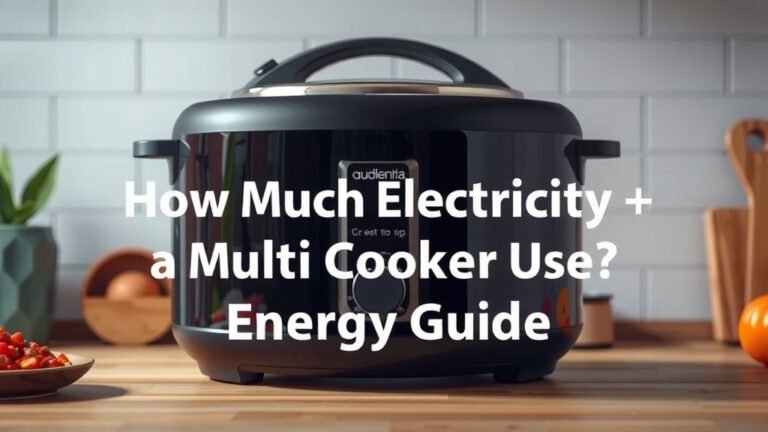
Here’s the math, and it’s refreshingly simple. If you run a 150-watt cooker for 8 hours, that’s 1.2 kilowatt-hours. At the national average price of about 16 to 17 cents per kilowatt-hour (US Energy Information Administration), that’s roughly 20 cents per meal.
A 300-watt standard model doubles that to around 40 cents. So a low wattage cooker saves you maybe 20 cents per meal. Honest answer? The savings are real but modest. The bigger wins are portability and gentler cooking.
Who Should Buy a Low Wattage Slow Cooker?
You don’t need one just to save a few dimes. But certain situations make these little cookers shine. We found they’re most popular with people in tight quarters or tight schedules.
Ask yourself these questions. If you nod along, a low wattage model probably fits your life:
- Do you live alone or with one other person?
- Is your kitchen counter space smaller than a pizza box?
- Do you travel in an RV or stay in dorms or hotels?
- Do you want hot lunch at your desk without a shared kitchen?
- Do you worry about overloading old wiring or weak outlets?
- Do you cook small batches of dips, oatmeal, or sides?
Best Foods to Cook at Low Wattage
Small cookers do best with small, forgiving foods. Recipes with liquid work especially well because they spread heat evenly. We found these are the most reliable picks:
- Oatmeal and grits: Set it at night, wake up to breakfast.
- Soups and stews: One or two servings, no babysitting.
- Chicken thighs: Small cuts get tender without drying out.
- Dips: Queso and buffalo chicken stay warm through a party.
- Beans: Soak first, then let them simmer all day.
Big roasts and whole chickens are a poor fit. A tiny element struggles to heat a dense, cold piece of meat fast enough, which raises food safety concerns. The USDA recommends keeping food out of the 40–140°F danger zone, and a small cooker can’t guarantee that with an oversized roast.
Tips for Cooking Successfully at Low Wattage
Low wattage cooking rewards a little planning. These habits will save you from mushy dinners and cold middles:
- Fill it right: Aim for half to three-quarters full. Too little food cooks fast; too much never heats through.
- Thaw first: Frozen chunks extend cook time and can create safety risks. Defrost in the fridge overnight.
- Cut smaller: Bite-size pieces heat evenly in a small cooker.
- Add dairy late: Milk and cheese can curdle on long, low heat. Stir them in during the last hour.
- Lift the lid rarely: Every peek releases heat and adds 20 minutes to your cook time.
- Use a thermometer: Poultry should reach 165°F and ground meats 160°F (CDC guidelines).
Things to Check Before You Buy
Not all low wattage cookers are equal. We found that a few quick checks separate the keepers from the clutter:
- Wattage label: Look for 120–200 watts listed on the base or box.
- Removable insert: A ceramic crock you can wash makes cleanup painless.
- Wattage settings: Low, high, and warm give you flexibility.
- Lid seal: A tight-fitting glass lid holds heat and lets you peek without losing much.
- Cord length: Short cords are safer around counters, but make sure yours still reaches.
Common Mistakes to Avoid
Even seasoned slow cooker fans slip up with small models. The most common error is treating a 1.5-quart cooker like a 6-quart one. Recipes don’t scale down perfectly.
Another trap? Underfilling. A nearly empty small cooker can overheat food quickly because the element is close to the insert. Keep it at least half full, and your meals will turn out much more consistent.

Conclusion
A low wattage slow cooker is a small, energy-friendly way to get home-cooked meals without much effort. You’ve seen how these compact models pull just 120 to 200 watts, cost roughly a dime or two per meal to run, and fit perfectly in small kitchens, dorms, and RVs. The trade-offs are longer cook times and smaller batches, but the payoff is gentle, reliable cooking with minimal cleanup. We found the biggest wins come from matching the cooker to your lifestyle, not chasing big savings. So here’s your next step: check your typical portion sizes and counter space, then pick a model between 1 and 3 quarts that fits both. Your future self, coming home to a warm dinner, will thank you.
Frequently Asked Questions
Can a low wattage slow cooker run on a generator or inverter?
Yes, and that’s one of its biggest perks. A 150-watt model draws so little power that most portable power stations and small inverters handle it easily. Always check your generator’s rated wattage before plugging in, though.
Does a lower wattage slow cooker cook food safely?
It does, as long as you use it correctly. The key is filling the cooker at least halfway and thawing ingredients before cooking. Use a food thermometer to confirm meats hit safe temperatures, like 165°F for poultry.
Do low wattage slow cookers have a warm setting?
Most compact models do include low, high, and warm settings, just like their bigger cousins. We found some budget models skip the warm option, so double-check the feature list before you buy. A warm setting is handy for dips and party foods.
Can I leave a low wattage slow cooker on while I’m at work?
You can, and many people do. Slow cookers are designed for unattended cooking, and a low wattage model draws minimal power while it runs. Just make sure the cord is clear of curtains or anything flammable, and keep the cooker at least half full.
Are low wattage slow cookers cheap to buy?
Generally, yes. Because they’re smaller and simpler, many compact models cost less than full-size cookers. Prices vary by brand and features like removable inserts or digital timers, but you can usually find a solid option without spending much.