
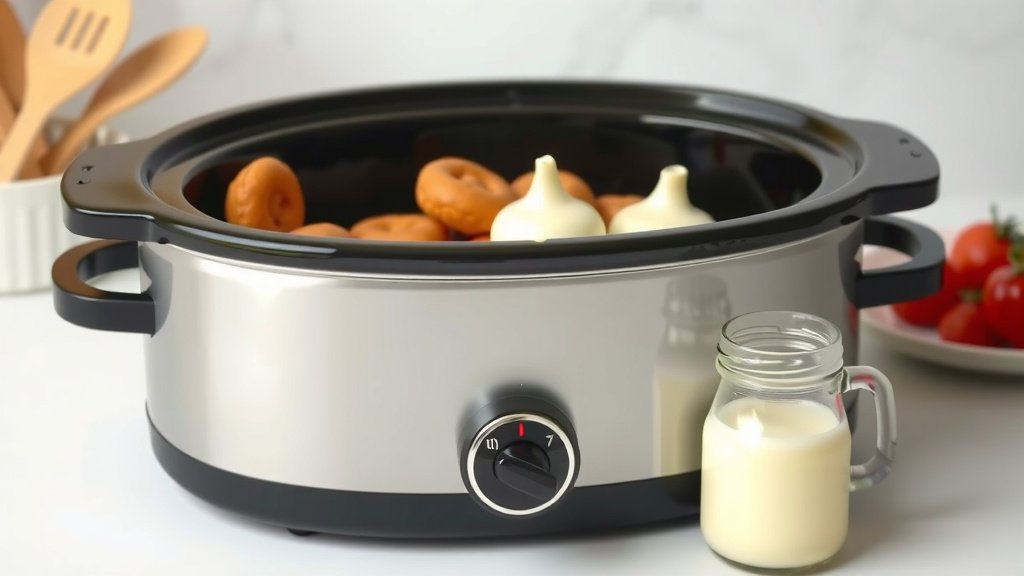
When to Add Dairy to Your Slow Cooker Recipes
You can absolutely add dairy to your slow cooker, but timing is key. Adding dairy products like milk, cream, yogurt, or cheese too early can cause them to curdle or separate. It’s best to add them towards the end of the cooking time for the creamiest results.
Many recipes call for dairy to add richness and flavor. However, the gentle heat of a slow cooker can sometimes be harsh on milk proteins. Understanding when to introduce these ingredients helps prevent disappointing textures. We’ve found that adding dairy in the last 15-30 minutes is a game-changer for most dishes.
TL;DR:
- Dairy can be added to slow cookers.
- Timing is the most important factor.
- Add dairy near the end of cooking.
- This prevents curdling and separation.
- Aim for the last 15-30 minutes of cooking.
Ready to master your slow cooker dairy dishes? Let’s walk through exactly how this works step by step to ensure your meals are perfectly creamy and delicious every time.
You’ve got your slow cooker recipe ready to go, smelling amazing already! But then you see it: “add cream” or “stir in cheese.” Your mind immediately goes to that lumpy, separated mess you got last time. Don’t worry, we’ve all been there. The good news is, with a little know-how, you can add dairy to your slow cooker and get wonderfully creamy results every single time.
Mastering Dairy in Your Slow Cooker
Adding dairy at the right moment is the secret to smooth, delicious slow cooker dishes. It prevents curdling and separation.
Why Dairy Can Be Tricky in Slow Cookers
Milk and cream have delicate proteins. These proteins can break down when exposed to heat for too long. This is especially true in the consistent, low heat of a slow cooker. This breakdown is what causes that unpleasant lumpy or oily texture. We found that prolonged heating is the main culprit (Cleveland Clinic). Think of it like scrambling eggs – heat causes proteins to change their structure. Dairy products are no different, though much more sensitive.
The Science of Curdling
When milk heats up too much or too quickly, the protein molecules (casein and whey) start to clump together. Acids or enzymes can also cause this. In a slow cooker, it’s usually the long cooking time and direct heat. This clumping creates those undesirable curds. It’s a chemical reaction, plain and simple. Understanding this helps us avoid the problem by controlling the heat exposure.
The Golden Rule: Timing is Everything
The absolute best practice we’ve found is to add most dairy products during the final stages of cooking. This means typically in the last 15 to 30 minutes. Why such a short window? It gives the dairy enough time to heat through and meld with the other ingredients without overcooking. It’s like adding a finishing touch, not a core component that needs hours to cook.
When to Add Different Dairy Products
Not all dairy is created equal when it comes to slow cooking. Some stand up better to heat than others, but the late addition rule is a great general guideline.
- Milk and Cream: Add these very near the end. Stir them in during the last 15-30 minutes. They are the most prone to curdling.
- Sour Cream and Yogurt: These are also best added late. Their acidic nature can sometimes cause them to separate if cooked too long. Stir them in during the last 10-15 minutes.
- Cheese: Harder cheeses (like cheddar or Parmesan) can often handle a bit more heat. You can sometimes add them 30 minutes to an hour before serving. Softer cheeses (like cream cheese) are best added in the final 30 minutes.
- Butter: Butter is mostly fat, so it’s quite stable. You can often add butter earlier in the cooking process. It adds richness without as much risk of curdling.
Prepping Your Dairy for the Slow Cooker
A little prep work can go a long way to ensure your dairy integrates smoothly. We’ve found these steps helpful.
Tempering Your Dairy
Tempering is a cooking technique that slowly introduces a cold ingredient to a hot one. It prevents shocking the ingredient and causing it to curdle. To temper dairy, scoop out a small amount of the hot liquid from your slow cooker. Whisk this hot liquid into your cold dairy product (like cream or milk) in a separate bowl. Then, gently stir this warmed dairy mixture back into the slow cooker. This gradual warming is key for a smooth finish. Many chefs recommend this method (The Culinary Institute of America).
Using High-Fat Dairy
Fat acts as a stabilizer for dairy. We found that using full-fat versions of milk, cream, or sour cream often leads to better results. The higher fat content helps prevent the proteins from separating. So, if a recipe calls for milk, consider using whole milk instead of skim. For cream, heavy cream is generally more stable than half-and-half.
Dairy-Free Slow Cooker Alternatives
If you’re looking to avoid dairy altogether, or if you’re cooking for someone with lactose intolerance, there are fantastic alternatives. We’ve found that many non-dairy milks and creams work well. Coconut milk (full-fat, from a can) is excellent for creamy sauces and curries. Cashew cream or blended soaked cashews can also create a rich, creamy base. Oat milk can work in some applications, but it might be thinner. Always check the label for stabilizers, as some can react differently to heat. Research suggests that plant-based milks can be a good substitute, but texture and flavor may vary (Harvard T.H. Chan School of Public Health).
Quick Checklist for Adding Dairy
Want a simple way to remember the key points? Here’s a quick checklist to keep handy:
- Read your recipe carefully for specific dairy addition times.
- For most dairy (milk, cream, yogurt, sour cream), aim for the last 15-30 minutes of cooking.
- For cheeses, add them 30 minutes to an hour before serving, depending on the type.
- Temper dairy if you’re worried about curdling.
- Use full-fat dairy products for better stability.
- Consider dairy-free alternatives if needed.
What About Cream Cheese?
Cream cheese is a bit unique. It’s a soft cheese that can melt beautifully into sauces, dips, and chilis. We found that adding it during the last 30 minutes of cooking usually works best. It needs enough time to melt and incorporate fully without getting too hot and breaking. Breaking down cream cheese can make your dish oily. Stirring it well is essential for a smooth texture.
A Quick Table of Dairy Addition Times
Here’s a handy guide to help you visualize when to add common dairy ingredients:
| Dairy Product | Recommended Addition Time | Notes |
|---|---|---|
| Milk | Last 15-30 minutes | Prone to curdling; use whole milk if possible. |
| Heavy Cream | Last 15-30 minutes | More stable due to higher fat content. |
| Sour Cream | Last 10-15 minutes | Can separate if overcooked; stir gently. |
| Yogurt | Last 10-15 minutes | Similar to sour cream; avoid boiling. |
| Cheddar Cheese (shredded) | Last 30-60 minutes | Stir well to melt evenly. |
| Cream Cheese | Last 30 minutes | Break into chunks and stir until smooth. |
| Butter | Can add earlier or later | Mostly fat, very stable. |

Conclusion
You’ve learned that adding dairy to your slow cooker doesn’t have to be a gamble. The secret is all about timing. By introducing sensitive dairy ingredients like milk and cream in the final 15-30 minutes, you can avoid curdling and achieve wonderfully smooth textures. For cheeses and items like sour cream or yogurt, adjust your timing slightly earlier or later as needed. Using full-fat dairy and tempering can also help stabilize your dishes.
Now you can confidently incorporate that creamy richness into your slow cooker meals. Try adding dairy to your favorite recipe during its final stages and taste the delicious difference!
Frequently Asked Questions
Can I leave dairy in the slow cooker all day?
No, it’s generally not recommended to leave dairy in the slow cooker for the entire cooking duration. Prolonged exposure to heat can cause milk proteins to break down, leading to curdling or separation. We found that adding dairy near the end yields the best results.
What happens if I add dairy too early?
If you add dairy too early, the long cooking time and consistent heat can cause the delicate milk proteins to denature and clump together. This results in an undesirable texture, often described as lumpy, grainy, or oily, and can significantly alter the flavor and appearance of your dish.
Does tempering dairy actually make a difference?
Yes, tempering dairy can make a significant difference in preventing curdling. By gradually warming the dairy with a small amount of hot liquid from the slow cooker, you gently raise its temperature. This process helps to stabilize the proteins before it’s fully incorporated, making it less likely to shock and separate when added to the main dish.
Is full-fat dairy really more stable in a slow cooker?
We’ve found that full-fat dairy products tend to be more stable in slow cookers. The higher fat content acts as a natural emulsifier and stabilizer, helping to prevent the milk proteins from breaking apart. This means using whole milk, heavy cream, or full-fat sour cream often leads to creamier, more consistent results.
What if my recipe explicitly says to add dairy early?
If your recipe instructs you to add dairy early, it might be designed for a specific outcome or use a more heat-stable dairy product. However, for most common dairy additions like milk or cream, it’s still wise to follow our guidance of adding them later if possible. If you must add early, consider tempering or using a higher-fat option if the recipe allows.