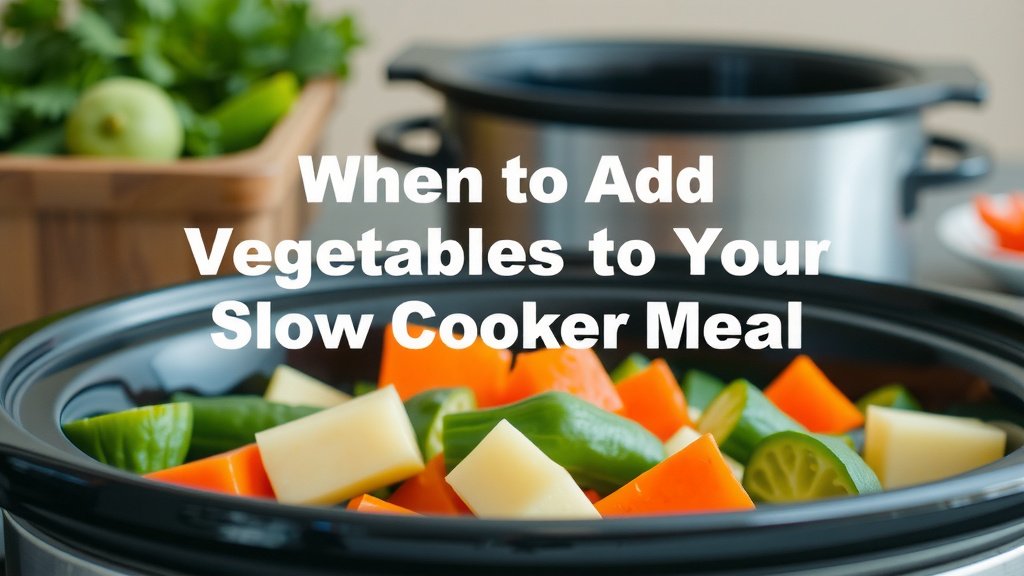
When to Add Vegetables to Your Slow Cooker Meal
You’re probably wondering when to add vegetables to your slow cooker to get the Understanding slow cooker settings like low vs. high is key to timing your vegetables correctly.best flavor and texture. The general rule is to add hard vegetables like carrots and potatoes early in the cooking process, usually at the beginning, because they need the longest time to soften. Softer vegetables like peas, corn, or spinach should be added in the last 30-60 minutes to prevent them from becoming mushy and losing their vibrant color.
Getting your veggies just right in the slow cooker can make all the difference. Many home cooks find that timing is key to avoid ending up with either undercooked or overcooked produce. Understanding which veggies need more time versus less helps ensure your meal is delicious and visually appealing, not a sad, soggy mess. We’ve found that a little planning goes a long way!
- Add tough veggies (like potatoes, carrots, onions) at the start.
- Toss in softer veggies (like peas, corn, leafy greens) near the end.
- This keeps veggies tender but not mushy.
- It also helps them keep their bright, appealing colors.
Let’s walk through exactly when to add different types of vegetables to your slow cooker for the most delicious results.
You’ve got your slow cooker ready to go. The ingredients are prepped. Now comes the big question: when do you toss those veggies in? It’s not just about throwing everything in at once. Getting the timing right makes a huge difference for your meal. We’ve learned that adding vegetables at different stages can mean the difference between a dish bursting with fresh flavor and one where the veggies are sad and mushy.
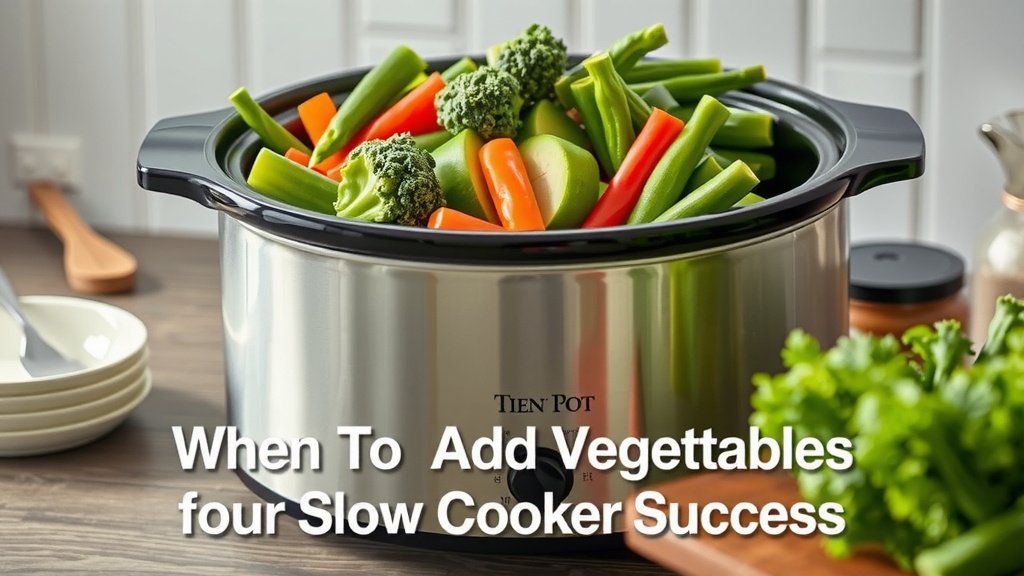
Timing Your Veggies for Slow Cooker Success
Figuring out the right moment to add your vegetables is key. It helps them cook through perfectly. You want them tender, not tough. You also don’t want them to disintegrate into mush. We’ve found that most recipes benefit from a little strategic vegetable timing.
Understanding Vegetable Cooking Times
Not all vegetables are created equal in the kitchen. Some are tougher and need more time to soften. Others are delicate and can turn to mush if cooked too long. Think of it like a race; some ingredients need a head start.
Root Vegetables: The Marathon Runners
Tougher vegetables like potatoes, carrots, parsnips, and sweet potatoes belong in the slow cooker from the very beginning. These dense veggies need several hours to become tender. Adding them early ensures they cook through properly alongside your meat or beans. For example, potatoes can take 4-6 hours on low or 2-3 hours on high heat to soften completely (USDA).
Alliums: The Foundation Builders
Onions, garlic, and leeks are also sturdy. They benefit from cooking low and slow. They release their flavors early on. This builds a rich base for your dish. You can add them at the start with the tougher root vegetables.
Cruciferous Vegetables: The Mid-Packers
Vegetables like broccoli, cauliflower, and Brussels sprouts fall somewhere in the middle. They don’t need as long as root vegetables. They also don’t cook as fast as leafy greens. Many home cooks find adding these about 1-2 hours before serving works best. This keeps them tender-crisp, not mushy.
Peas, Corn, and Beans: The Sprinters
These tender vegetables cook very quickly. If added too early, they can become mealy or lose their bright color. Frozen peas and corn are perfect examples. They only need about 30 minutes to heat through. You can toss them in during the last 30-60 minutes of cooking. This preserves their texture and color.
Leafy Greens: The Quick Finishers
Spinach, kale, and Swiss chard wilt down significantly. They cook in mere minutes. It’s best to add them in the last 15-30 minutes. This allows them to soften without overcooking. For spinach, even 5-10 minutes is often enough.
A Simple Guide to Vegetable Addition Times
To make things super clear, we’ve put together a quick reference. This can help you decide when to add your veggies. It’s based on common cooking times and expert recommendations.
| Vegetable Type | When to Add | Notes |
|---|---|---|
| Potatoes, Carrots, Sweet Potatoes, Parsnips | At the beginning | Need the longest cooking time. |
| Onions, Garlic, Leeks | At the beginning | Build flavor base. |
| Broccoli, Cauliflower, Brussels Sprouts | Last 1-2 hours | Aim for tender-crisp. |
| Bell Peppers, Zucchini, Mushrooms | Last 30-60 minutes | Soften without getting mushy. |
| Peas, Corn (frozen or canned) | Last 30 minutes | Heat through and retain texture. |
| Spinach, Kale, Swiss Chard | Last 15-30 minutes | Wilt and soften. |
What About “Set It and Forget It” Recipes?
Some recipes call for adding all vegetables at the start. This usually works for very hearty stews or soups. The vegetables are often cut into large chunks. The goal is a very soft, integrated texture. If your recipe says to add everything at once, trust it. But if you’re adapting a recipe, consider the cooking times. You might want to adjust. We’ve learned that experimenting can lead to delicious discoveries!
Tips for Perfect Slow Cooker Vegetables
Beyond timing, a few other tricks can help. Cutting your vegetables into uniform sizes is important. This ensures they cook evenly. Smaller pieces of tougher vegetables might cook faster. Larger pieces of softer vegetables might hold up better. You’re essentially controlling how much surface area is exposed to the heat.
Uniform Cuts are Your Friend
When you add your root vegetables, cut them into roughly equal-sized pieces. This helps them cook at the same rate. If one potato chunk is twice the size of another, one will be perfectly tender, and the other might still be firm. Aim for consistency!
Don’t Overcrowd the Pot
Too many ingredients can affect cooking time. It can also lead to uneven cooking. If you pack your slow cooker too full, the heat won’t circulate properly. This can result in some items being undercooked. Leave some space for the magic to happen.
Frozen vs. Fresh Veggies
Using frozen vegetables in the slow cooker is often a time-saver. They are already prepped and often pre-cut. They also tend to release moisture as they cook. This can add to the liquid in your dish. So, if you use a lot of frozen vegetables, you might not need as much added liquid. Many cooking guides suggest slightly reducing liquid when using frozen produce (FDA).
Your Slow Cooker Vegetable Checklist
Ready to put this into practice? Here’s a quick checklist to keep in mind:
- Root veggies first: Potatoes, carrots, etc., go in at the start.
- Tender veggies last: Peas, corn, spinach near the end.
- Uniform cuts: Make sure your veggie pieces are similar in size.
- Consider frozen: They often add moisture, so adjust liquid if needed.
- Don’t overstuff: Allow heat to circulate for even cooking.
- Taste and adjust: Your slow cooker might run hotter or cooler.
By paying attention to when you add your vegetables, you’re setting yourself up for a wonderfully cooked meal. It’s all about giving each ingredient the time it needs to shine. You’ve got this!
Conclusion
Mastering the art of when to add vegetables to your slow cooker is your ticket to consistently delicious meals. Remember, tough root vegetables and alliums build your dish’s flavor base from the start. Softer veggies and leafy greens join the party later to maintain their texture and vibrant colors. By following these simple timing guidelines, you ensure every ingredient reaches its peak doneness without turning mushy. Your next slow cooker creation is sure to be a hit – so grab your ingredients and get cooking!
Frequently Asked Questions
What if I forget to add vegetables at the right time?
Don’t worry if you forget! If you added softer vegetables too early, they might be a bit mushy but still edible. If you forgot to add harder vegetables until the end, they might remain undercooked. You can try to let them cook longer if time allows, or quickly sauté them on the stovetop to finish.
Can I use all fresh vegetables in a slow cooker?
Yes, you absolutely can use all fresh vegetables! The key is just knowing their individual cooking times. Harder root vegetables will go in at the beginning, while tender items like bell peppers or zucchini can be added in the last hour or so. Leafy greens will go in during the final 30 minutes.
How do I know if my vegetables are cooked enough in the slow cooker?
The best way to check is to gently poke them with a fork. Root vegetables should be easily pierced and tender. Softer vegetables should be heated through but still hold their shape. For cruciferous vegetables like broccoli, aim for tender-crisp rather than completely soft.
Does cutting vegetables into smaller pieces make them cook faster in a slow cooker?
Yes, cutting vegetables into smaller, uniform pieces will generally make them cook faster. This is especially true for harder vegetables like potatoes and carrots. Be mindful of this when prepping; you may need to adjust your timing if you cut them smaller than the recipe suggests.
Will adding frozen vegetables change the liquid content of my slow cooker meal?
Yes, frozen vegetables often release more water as they cook compared to fresh ones. This can increase the overall liquid in your slow cooker. If you’re using a lot of frozen vegetables, you might want to slightly reduce the amount of broth or water called for in your recipe to avoid a too-thin sauce.