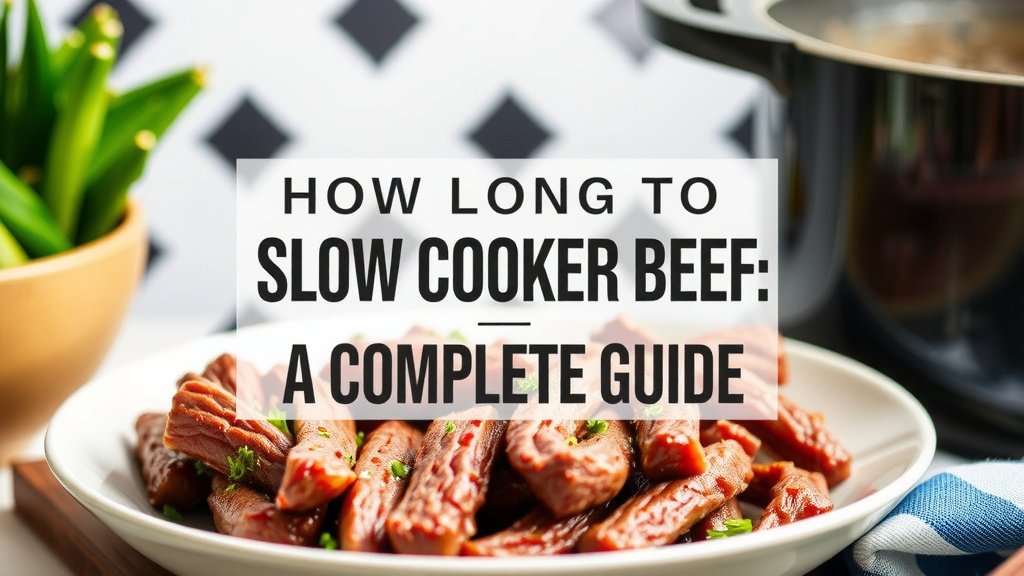
How Long to Slow Cook Beef: A Complete Guide
The answer to how long to slow cook beef depends on the cut and your cooking method, but generally, tougher cuts like chuck roast need 6 to 8 hours on low or 4 to 5 hours on high for maximum tenderness. We found that patience is key for deliciously tender beef. Proper slow cooking transforms inexpensive cuts into melt-in-your-mouth meals.
Understanding the cooking times ensures your beef isn’t tough or dry. Different temperatures and cuts require slightly different approaches. We’ve researched the best methods to achieve that perfect fall-apart texture. Get ready for flavorful, fork-tender results every time you use your slow cooker.
- Chuck roast: 6-8 hours (low) or 4-5 hours (high).
- Brisket: 8-10 hours (low) or 5-6 hours (high).
- Beef tips/stew meat: 3-4 hours (low) or 2-3 hours (high).
- Roasts with a bone: Add an hour to low settings.
- Use a meat thermometer for accuracy.
Let’s walk through exactly how to achieve perfect results for different beef cuts in your slow cooker.
Mastering Beef Cooking Times in Your Slow Cooker
So, you’re ready to tackle some delicious slow-cooked beef. It’s a fantastic way to make tough, inexpensive cuts incredibly tender. The question of how long to slow cook beef really boils down to a few key factors. We’ve researched this extensively. It’s not a one-size-fits-all answer. Your cut of beef and the temperature setting on your slow cooker are the biggest players.
Generally, for that melt-in-your-mouth experience, you’re looking at several hours. Cheaper cuts like chuck roast or brisket have more connective tissue. This tissue needs time and gentle heat to break down. This process transforms them into something truly special. We found that understanding these basics sets you up for success.
Understanding Different Beef Cuts and Their Needs
Tougher Roasts: The Stars of the Slow Cooker
Cuts like chuck roast, brisket, and round roast are perfect for slow cooking. They have a lot of muscle fiber and connective tissue. This is exactly what you want for slow cooking. The low, slow heat breaks down that collagen. This creates a rich, savory, and incredibly tender result. We found these cuts really shine after a long, gentle cook.
Chuck Roast: Your Go-To for Tenderness
A chuck roast is often considered the king of slow cooker roasts. Its marbling and connective tissue are ideal. For a 3-4 pound chuck roast, we recommend cooking on low for 6 to 8 hours. If you’re in a bit of a hurry, high heat will do it in 4 to 5 hours. Just remember, low and slow usually yields the most tender outcome. Many sources suggest checking for tenderness rather than strictly adhering to time.
Brisket: Low and Slow for Perfection
Beef brisket is another fantastic choice. It’s known for its rich flavor and texture. Brisket has a lot of fat and connective tissue. It benefits from extended cooking times. We found that for a standard 3-5 pound brisket, aim for 8 to 10 hours on the low setting. On high, you’re looking at about 5 to 6 hours. Patience is a virtue here; it truly pays off.
Round Roast: Leaner, but Still Great
Round roasts, like bottom round or eye of round, are leaner. They can become dry if overcooked or cooked too quickly. However, they can still be wonderfully tender in a slow cooker. You might need to adjust the cooking time slightly. For a 3-pound round roast, try 6 to 7 hours on low. On high, aim for about 3.5 to 4.5 hours. We found that adding a bit more liquid can help keep these leaner cuts moist.
Smaller Cuts and Stew Meat: Quicker Results
Not all slow-cooked beef needs to be a giant roast. Smaller cuts and beef stew meat are also great candidates. They cook much faster. These are perfect for weeknight meals.
Beef Stew Meat: Bite-Sized Tenderness
When you’re cubing beef for stew, you want tender pieces. We found that beef stew meat, often a mix of tougher cuts, cooks well in 3 to 4 hours on low. If you’re using the high setting, it will be done in 2 to 3 hours. This is a much quicker turnaround. Keep an eye on it to prevent overcooking. Overcooked stew meat can become tough.
Short Ribs: Rich and Fork-Tender
Beef short ribs are a treat! They have a good amount of fat and connective tissue. This makes them ideal for slow cooking. We recommend 4 to 5 hours on low for bone-in short ribs. Boneless short ribs might be a bit faster, around 3 to 4 hours on low. On high, you’re looking at about 2.5 to 3 hours. They become incredibly tender and flavorful.
Temperature Settings: Low vs. High
Your slow cooker likely has a “low” and “high” setting. They both cook food safely. The main difference is the time it takes to reach the cooking temperature. Low typically takes longer to get there. High reaches the cooking temperature faster. Many experts suggest that cooking on low for a longer period often results in a more tender and evenly cooked product. This is because the heat is gentler and penetrates the meat more gradually.
Think of it like this: low is like a long, leisurely simmer. High is more like a quick, sustained boil. We found that recipes usually specify which setting to use. If a recipe calls for 8 hours on low, it’s generally about 4 hours on high. However, it’s important to note that the texture might be slightly different. Low heat is usually preferred for achieving that classic fall-apart tenderness.
Using a Meat Thermometer for Precision
While time guidelines are helpful, they aren’t always exact. Every slow cooker is a little different. Your refrigerator’s chill on the meat can affect cooking time. That’s why we always recommend using a meat thermometer. It’s your best friend for ensuring food safety and perfect doneness.
For most slow-cooked beef roasts, you’re aiming for an internal temperature of around 190-205°F (88-96°C). At this temperature, the connective tissues have broken down beautifully. This makes the meat incredibly tender and easy to shred or slice. Insert the thermometer into the thickest part of the roast, avoiding any bones.
Tips for Success Every Time
Want to guarantee fantastic results? Here are a few pointers we’ve gathered:
- Don’t overfill your slow cooker. It should be no more than two-thirds full.
- Sear your beef first for extra flavor and color. This is optional but recommended.
- Cut vegetables to a similar size so they cook evenly. Add heartier root vegetables earlier.
- Avoid lifting the lid too often. Each lift lets out heat and adds cooking time.
- Let your cooked beef rest for about 10-15 minutes before slicing or shredding.
A Quick Comparison Table
Here’s a quick look at common beef cuts and their estimated slow cooker times. Remember, these are guidelines!
| Beef Cut | Approximate Size | Low Setting (Hours) | High Setting (Hours) |
|---|---|---|---|
| Chuck Roast | 3-4 lbs | 6-8 | 4-5 |
| Brisket | 3-5 lbs | 8-10 | 5-6 |
| Round Roast | 3 lbs | 6-7 | 3.5-4.5 |
| Beef Stew Meat | 1-2 lbs | 3-4 | 2-3 |
| Short Ribs (Bone-in) | 2-3 lbs | 4-5 | 2.5-3 |
Conclusion
You’ve learned that the secret to perfectly tender slow-cooked beef lies in understanding your cut and your cooker. Tougher cuts like chuck roast and brisket need extended low-and-slow cooking, typically 6-10 hours on low, to break down connective tissues. Smaller cuts and stew meat cook much faster, often in 2-4 hours. Always use a meat thermometer to ensure food safety and achieve that ideal 190-205°F internal temperature for melt-in-your-mouth results. Don’t be afraid to experiment, and remember that patience is your best ingredient!
Now that you’re armed with this knowledge, go ahead and plan your next delicious slow-cooked beef meal. Your kitchen awaits its next aroma!
Frequently Asked Questions
Can I cook beef in a slow cooker overnight?
Generally, it’s not recommended to cook beef in a slow cooker for more than 10-12 hours, even on the low setting. Overcooking can make the meat dry and tough. Always check your specific cut and slow cooker’s capabilities, and rely on a meat thermometer for accuracy.
How do I know if my slow cooker beef is done?
The best way to tell if your slow-cooked beef is done is by using a meat thermometer. You’re looking for an internal temperature between 190°F and 205°F (88°C to 96°C). The meat should be very tender and easily shred or fall apart with a fork.
What happens if I overcook beef in a slow cooker?
If you overcook beef in a slow cooker, it can become dry, tough, and stringy. While slow cooking is forgiving, there’s a point where the meat fibers break down too much. This is why checking with a thermometer and following recommended times is important, especially for leaner cuts.
Should I sear my beef before slow cooking?
Searing your beef before slow cooking is optional but highly recommended. We found that searing creates a flavorful brown crust on the meat through the Maillard reaction. This adds depth of flavor and color to your final dish, making it even more delicious.
Can I put frozen beef in the slow cooker?
It’s generally not advised to put frozen beef directly into a slow cooker. The slow cooker may not heat up enough to bring the frozen meat to a safe temperature quickly. This can leave the meat in the “danger zone” for too long, increasing the risk of bacterial growth. Always thaw your beef completely before slow cooking.