Best Oil for Rice Cookers: A Quick Guide
You can use a wide variety of oils in your rice cooker, with vegetable oil or canola oil being your safest and most common choices. These oils help prevent rice from sticking to the bottom of the pot. You generally want to avoid oils with very low smoke points or strong flavors unless that’s a specific taste you’re going for.
When deciding what oil to use, think about flavor and heat tolerance. Oils like olive oil or sesame oil can add a distinct taste. It’s wise to consider the smoke point to prevent burning your rice. A little bit of oil goes a long way to ensure fluffy, non-stick rice.
- Choose oils like vegetable or canola for neutral flavor and good heat tolerance.
- Consider the smoke point to avoid burnt or bitter rice.
- Avoid strongly flavored oils unless you want that taste profile.
- A small amount is usually enough to prevent sticking.
Let’s walk through the best oil options for your rice cooker to ensure perfect rice every time.
Choosing the Right Oil for Your Rice Cooker Needs
So, you’ve got your rice cooker ready to go, but a tiny question pops up: “What oil should I actually put in there?” It’s a simple step, but using the wrong oil can lead to a sticky mess or even a burnt smell. We’re here to guide you through picking the perfect oil. Think of it like choosing the right outfit for an event – you want something that performs well and looks good (or in this case, tastes good!).
The Role of Oil in Rice Cooking
Before we dive into types of oil, let’s quickly cover why we use it at all. A little bit of oil helps prevent rice from sticking to the bottom and sides of the rice cooker pot. This makes cleanup a breeze! It can also contribute to a slightly fluffier texture. Plus, some oils can add a subtle flavor if you’re aiming for something beyond plain rice.
Understanding Smoke Points: Your Key to Non-Burned Rice
One of the most important factors when selecting an oil is its smoke point. This is the temperature at which an oil starts to produce visible smoke. When an oil smokes, it’s breaking down and can impart a bitter, burnt flavor to your food. Rice cookers operate at different temperatures depending on the setting, but generally, they get quite hot. You want an oil that can handle this heat without smoking.
What is a Smoke Point?
Essentially, it’s the heat limit for your oil. For rice cooking, especially if you’re using a high-heat setting or a fancier rice cooker, you’ll want an oil with a medium to high smoke point. This ensures the oil stays stable and doesn’t burn during the cooking cycle.
Oils to Consider for Their Smoke Points
Many common cooking oils are perfectly suitable. We found that oils with higher smoke points are generally safer bets. Here are a few you can rely on:
- Vegetable Oil: This is a workhorse for a reason. It has a high smoke point (around 400-450°F or 204-232°C) and a neutral flavor. It’s widely available and budget-friendly.
- Canola Oil: Similar to vegetable oil, canola oil offers a high smoke point (around 400°F or 204°C) and a mild taste. It’s another excellent, everyday choice.
- Grapeseed Oil: This oil has a high smoke point (around 420°F or 216°C) and a very neutral taste. It’s a fantastic option if you want absolutely no added flavor from the oil itself.
- Sunflower Oil: Refined sunflower oil has a good smoke point (around 450°F or 232°C) and a light flavor, making it a suitable choice for rice.
Flavor Profiles: When You Want More Than Just Rice
While neutral oils are great for versatility, sometimes you might want to add a little something extra to your rice. Certain oils can impart distinct flavors that complement specific dishes. Just be mindful of their smoke points if you go this route.
Oils with Distinct Flavors
These oils can elevate your rice, but use them wisely. Their flavors are more pronounced.
- Sesame Oil: Toasted sesame oil, in particular, has a rich, nutty flavor. It’s often used in Asian cuisine. However, it has a lower smoke point (around 350°F or 177°C), so it’s best added towards the end of cooking or as a finishing oil, not necessarily put directly into the rice cooker pot at the start for plain rice.
- Olive Oil: Extra virgin olive oil has a robust flavor and a lower smoke point (around 375°F or 190°C). While you *can* use it, a lighter, refined olive oil or just a tiny amount of extra virgin might be better if you’re not aiming for a strong olive taste or worrying about it burning.
- Coconut Oil: This oil can add a subtle tropical sweetness. Refined coconut oil has a higher smoke point than unrefined (around 400°F or 204°C for refined vs. 350°F or 177°C for unrefined). It can be lovely with certain types of rice or dishes.
Oils to Generally Avoid in Your Rice Cooker
Some oils are just not cut out for the heat of a rice cooker. Their low smoke points mean they’ll likely burn, ruining your rice and potentially creating a smoky kitchen.
Low Smoke Point Oils
These are best saved for dressings, sautéing delicate ingredients, or finishing dishes where they aren’t exposed to high heat for extended periods.
- Unrefined Oils: Many unrefined oils, like unrefined avocado oil or unrefined flaxseed oil, have lower smoke points.
- Butter: While butter can add flavor, it contains milk solids that can burn easily at rice cooker temperatures.
How Much Oil Do You Actually Need?
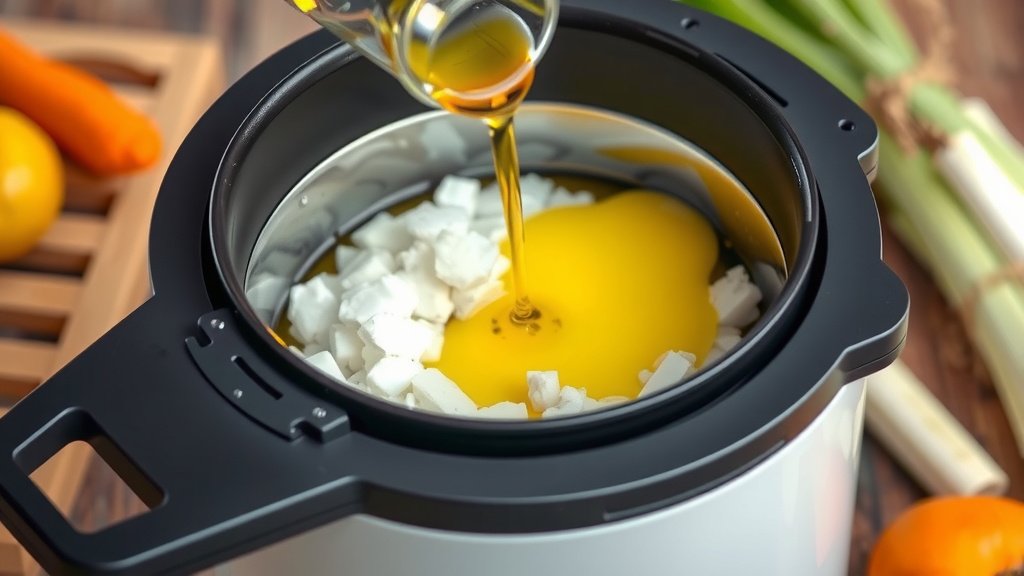
A common mistake is using too much oil. Remember, the goal is just to create a slight barrier. For most standard rice cooker sizes (e.g., 3-cup or 5-cup), 1/2 to 1 teaspoon of oil is usually more than enough. A little goes a very long way. Too much oil can make your rice greasy and heavy.
A Quick Comparison of Popular Rice Cooker Oils
Let’s summarize some of the best choices. We put together a simple table to help you visualize:
| Oil Type | Typical Smoke Point (°F) | Flavor Profile | Best For |
|---|---|---|---|
| Vegetable Oil | 400-450°F (204-232°C) | Neutral | Everyday use, non-stick, versatile |
| Canola Oil | ~400°F (204°C) | Mild | Similar to vegetable oil, good all-rounder |
| Grapeseed Oil | ~420°F (216°C) | Very Neutral | When you want zero oil flavor influence |
| Refined Coconut Oil | ~400°F (204°C) | Subtle Sweetness | Pairs well with certain cuisines |
| Toasted Sesame Oil | ~350°F (177°C) | Nutty, Rich | Finishing oil or small amounts for specific dishes; use with caution in the cooker itself. |
Your Rice Cooker Oil Checklist
Need a quick reminder before you head to the kitchen? Keep this handy:
- Check the smoke point: Aim for medium-high heat tolerance.
- Consider flavor: Neutral is usually best, unless you want added taste.
- Measure sparingly: A little oil is plenty.
- Avoid highly refined oils: Stick to standard cooking oils.
- Clean-up ease: Oil prevents sticking for simpler washing.
Conclusion
You’ve now learned that choosing the right oil for your rice cooker is simple. For most cooks, vegetable or canola oil are your best friends, offering a neutral flavor and high smoke points. These ensure your rice cooks perfectly without any burnt taste. Remember that a little oil goes a long way – just about half a teaspoon is often enough to prevent sticking and make cleanup a breeze. So, grab your preferred neutral oil, measure sparingly, and get ready for your best batch of rice yet!
Frequently Asked Questions
Can I use olive oil in my rice cooker?
You can use olive oil, but it’s best to be mindful of its smoke point. Extra virgin olive oil has a lower smoke point and a stronger flavor, which might burn or alter the taste of your rice. A lighter, refined olive oil or just a very small amount is a safer bet if you choose to use it.
Is it okay to put butter in my rice cooker instead of oil?
While butter adds great flavor, it’s generally not recommended for rice cookers. Butter contains milk solids that can burn at the temperatures a rice cooker reaches, leading to a burnt smell and taste. It also doesn’t prevent sticking quite as effectively as oils with higher smoke points.
What happens if I don’t use any oil in my rice cooker?
If you don’t use any oil, your rice might stick to the bottom and sides of the cooker pot. This can make serving a bit messier and cleanup more challenging. While your rice will still cook, adding a small amount of the right oil significantly improves the experience.
Can I use flavored oils like garlic or chili oil in my rice cooker?
You can, but use them with caution! Flavored oils often have lower smoke points and their strong flavors can overpower your rice. If you want to add a garlic or chili flavor, it might be better to add these ingredients during or after cooking, or use a tiny amount of a high-heat neutral oil alongside them.
How do I clean my rice cooker pot if some rice sticks despite using oil?
Even with oil, some sticking can occasionally happen. To clean, fill the pot with warm water and a little dish soap, and let it soak for 15-30 minutes. This usually loosens any stuck-on bits, making them easy to wipe away with a non-abrasive sponge or cloth.