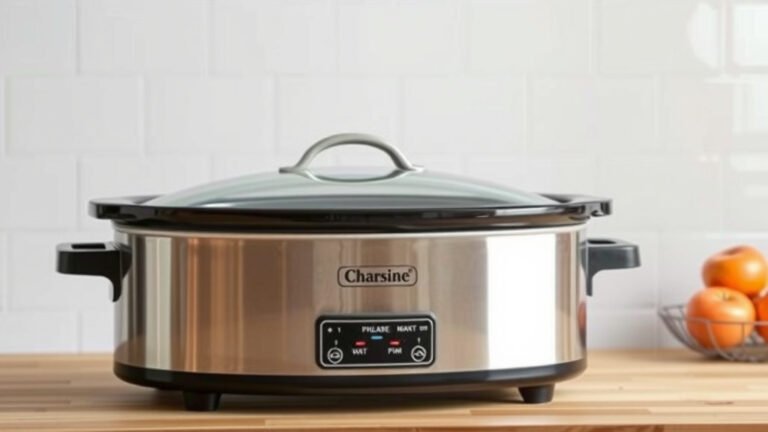
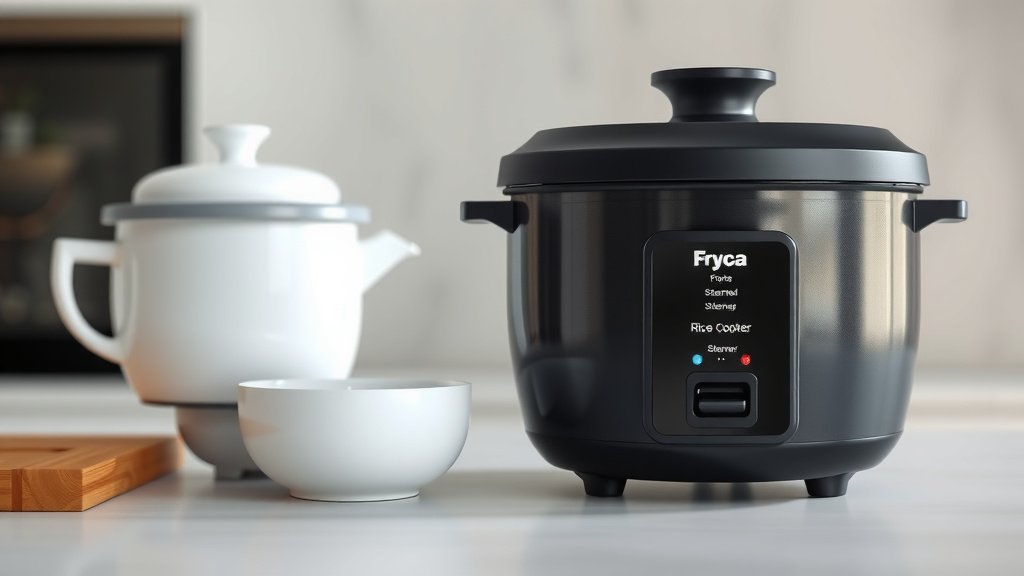
Rice Cooker vs Steamer: What’s the Difference
The main difference between a rice cooker and a steamer is their primary function. A rice cooker is designed to cook rice perfectly, while a steamer uses steam to cook a variety of foods. Though some rice cookers have steaming baskets, a dedicated steamer offers more versatility for steaming different ingredients.
While a rice cooker excels at producing fluffy rice with minimal effort, a steamer is your go-to for healthy cooking methods. You can steam vegetables, fish, dumplings, and more. Many modern rice cookers include advanced settings, but they often still prioritize rice as their main event.
- Rice cookers specialize in making rice.
- Steamers are for cooking many foods with steam.
- Some rice cookers can steam, but aren’t as versatile.
- Dedicated steamers offer more cooking options.
Let’s break down what makes each appliance unique and how you can choose the best one for your kitchen.
Rice Cooker vs. Steamer: Understanding the Core Differences
So, you’re looking to add a new kitchen gadget, or maybe just understand what’s already there. You’ve likely seen both rice cookers and steamers. They both use heat and water, but what really sets them apart? Think of it like this: a rice cooker is a specialist, and a steamer is a generalist.
A rice cooker is built with one primary goal: to make perfect rice every single time. It takes the guesswork out of it. You add your rice and water, press a button, and walk away. It handles the rest. A steamer, on the other hand, is designed to cook a wide range of foods using only the power of steam.
How a Rice Cooker Works Its Magic
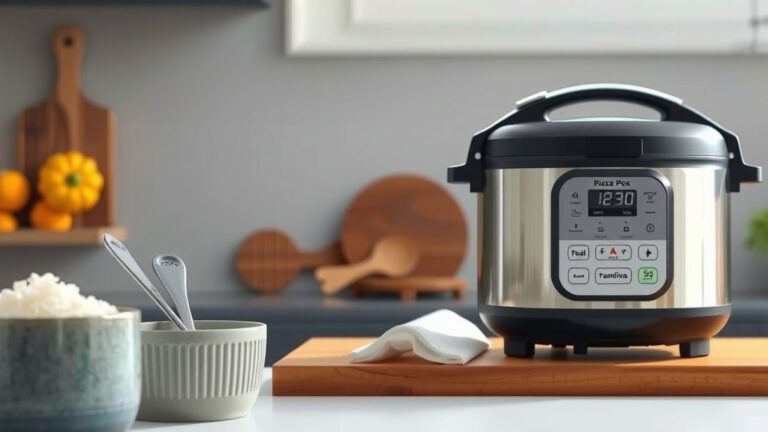
Rice cookers are quite clever. They typically have a heating element at the bottom. You place your rice and water in an inner pot. When you turn it on, the heating element brings the water to a boil. The cooker then maintains a precise temperature, usually around boiling point.
Once the water is absorbed by the rice, the temperature inside the cooker will start to rise above boiling. Most rice cookers have a thermostat that detects this change. It then switches to a “keep warm” mode. This ensures your rice is perfectly cooked and ready when you are, without getting mushy or burnt.
The Science Behind the Perfect Grain
It’s all about temperature control. A good rice cooker uses sensors to monitor the internal temperature. It knows exactly when the rice is done. This is different from just boiling rice in a pot on the stove, where it’s easy to undercook or overcook it.
We’ve found that many rice cookers have multiple settings for different types of rice, like white, brown, or sushi rice. This further refines the cooking process. They adjust the water-to-rice ratio and cooking time for each. It’s a highly specialized appliance.
What Makes a Steamer Different?
A steamer works on a simpler principle. It has a water reservoir at the bottom. Above that, there are one or more tiers of perforated baskets. You add water to the reservoir and turn it on. The water heats up and produces steam.
This steam then rises through the food in the baskets. It gently cooks everything evenly. The perforated baskets allow the steam to circulate freely. This is a healthy cooking method because it doesn’t require added fats or oils. Plus, nutrients are less likely to leach out compared to boiling.
The Versatility of Steam Cooking
While a rice cooker is focused on rice, a steamer is your kitchen’s multi-tasker. You can steam vegetables to keep them crisp and vibrant. Fish becomes incredibly tender and flaky. Dumplings come out perfectly plump. Even things like tamales can be steamed.
Think about how many different meals you can prepare. You can steam chicken breasts. You can cook couscous or even certain grains. The options are quite broad. It’s a flexible tool for a varied diet.
Beyond Basic Steaming
Some advanced steamers have features like multiple steaming bowls. You can cook different foods at the same time. Others have timers so you don’t have to watch them constantly. You can even get multi-level steamers that allow you to cook an entire meal at once.
We found that the design is key. Good steam circulation ensures even cooking. Some models offer different steam intensities. This lets you customize the cooking for delicate items. It’s a dynamic cooking process.
Can a Rice Cooker Steam?
Yes, many modern rice cookers come with a steaming basket. This basket sits above the rice as it cooks. You can add vegetables or other items to this basket. The steam generated by the cooking rice will then cook your food.
However, there’s a catch. The steam is often less intense. The cooking time is also tied to the rice-cooking cycle. This means it might not be ideal for all steaming tasks. Delicate items might overcook while waiting for the rice. Or, heartier items might not cook through.
Limitations of Rice Cooker Steaming
The primary limitation is control. You can’t usually set a separate steaming time or temperature. The steam produced is a byproduct of the rice cooking. It’s a nice bonus feature, but it’s not the main event. Think of it as a convenient addition, not a replacement for a dedicated steamer.
If you want to steam a variety of foods regularly, or if you need precise steaming control, a rice cooker’s steaming function might feel a bit limiting. It’s best for simple items that can cook alongside your rice.
What About Dedicated Steamers?
A dedicated steamer is built from the ground up for one purpose: to create steam and cook food with it. They have more powerful heating elements. This allows for faster steam production and higher temperatures. You have much more control over the cooking process.
You can set timers specifically for steaming. You can often adjust the steam intensity. This is important for different types of food. You’re not tied to a rice-cooking cycle at all. It’s a true steaming appliance.
The Advantages of a Standalone Steamer
The biggest advantage is versatility. You can steam a whole fish, delicate dumplings, or hardy root vegetables. Each can be cooked to perfection. You can also cook multiple items at once in different tiers without flavors mixing.
Many models offer a “boost” or “turbo” steam function. This gets the steam going quickly. This is great when you’re in a hurry. You also don’t have to worry about having rice ready. It’s a purpose-built solution.
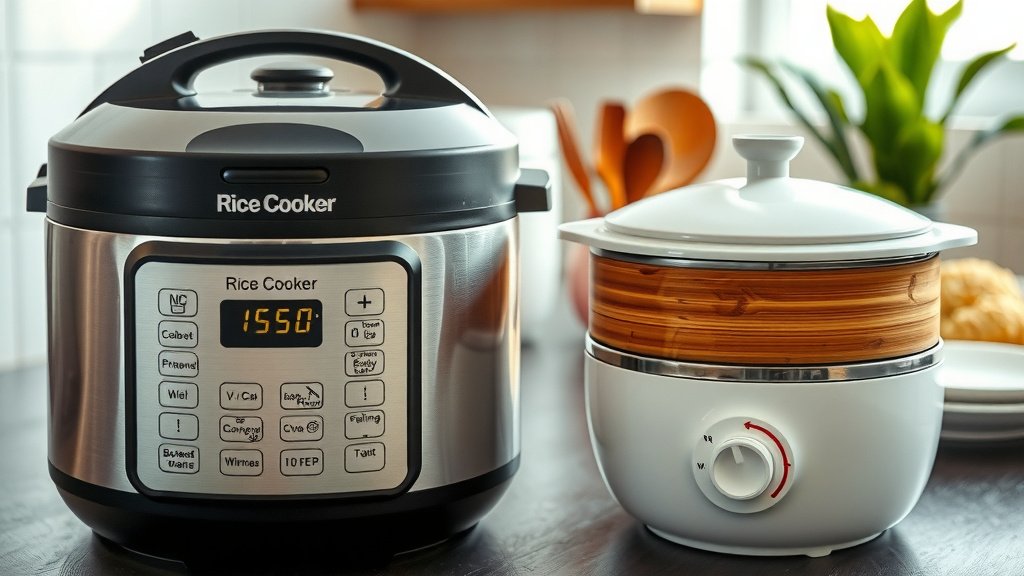
Key Features to Consider
When deciding between the two, or even which model to get, think about your needs. How often will you cook rice? How often will you steam other foods?
- Capacity: How much rice or food do you typically cook?
- Features: Do you need special rice settings? Or advanced steaming timers?
- Ease of Cleaning: Removable inner pots and dishwasher-safe parts are a plus.
- Counter Space: Both take up space, so consider your kitchen size.
When to Choose Which Appliance
Let’s break it down to help you decide:
| Appliance | Best For | Key Strengths | Potential Downsides |
|---|---|---|---|
| Rice Cooker | Perfecting rice; occasional steaming | Effortless rice; consistent results; keep-warm function | Limited steaming versatility; steaming tied to rice cycle |
| Steamer | Healthy cooking; diverse foods; vegetables, fish, dumplings | High versatility; healthy cooking method; precise control | Doesn’t cook rice well; requires separate rice cooking |
If your primary goal is fluffy, perfectly cooked rice with minimal fuss, a rice cooker is likely your best bet. It simplifies a daily staple for many. If you’re focused on healthy eating and want to steam a variety of vegetables, fish, and other dishes regularly, a dedicated steamer offers more flexibility.
Making Your Final Kitchen Choice
Many kitchens benefit from having both! But if you have to choose one, consider your eating habits. Do you eat rice every day? Or do you prefer steaming a variety of healthy meals a few times a week?
Think about it this way: if you’re a rice aficionado, a rice cooker is your champion. If you’re on a health kick and love vibrant veggies and tender fish, a steamer will be your new best friend. Both bring convenience to the table, but in different ways.
A Quick Checklist for Your Decision
Here’s a little guide to help you solidify your choice:
- Prioritize Rice? Go for a rice cooker.
- Love Steamed Veggies? A steamer is the way to go.
- Limited Counter Space? Consider a rice cooker with a good steamer basket.
- Cook Many Different Foods? A dedicated steamer offers more options.
- Want Simple & Effortless? Rice cooker for rice, steamer for everything else.
- Health is Key? Steaming is a fantastic healthy cooking method.
Conclusion
Choosing between a rice cooker and a steamer really comes down to your kitchen priorities. A rice cooker is your dedicated champion for perfectly fluffy rice, making a daily staple effortless. On the other hand, a dedicated steamer shines as a versatile tool for healthy cooking, letting you prepare a wide array of vegetables, fish, and more with precision. While some rice cookers offer a steaming function, it’s often a secondary feature. If your heart is set on consistent, perfect rice, invest in a rice cooker. If a healthy, varied diet is your goal, a steamer will serve you best.
Frequently Asked Questions
Can I use a rice cooker as a primary steamer?
You can use a rice cooker’s steaming basket for small tasks or alongside rice. However, it’s not ideal for steaming a full meal or diverse ingredients. The steam output and control are generally less robust than a dedicated steamer.
Which appliance is better for healthy cooking?
A dedicated steamer is generally better for healthy cooking. Steaming preserves more nutrients and doesn’t require added fats, unlike some other cooking methods. While rice cookers are healthy for rice, they aren’t designed for the broad range of healthy steaming a steamer offers.
Do I really need both a rice cooker and a steamer?
It depends on your cooking habits. If you eat rice daily and also love steaming vegetables and proteins, having both offers maximum convenience and versatility. If you only occasionally steam or only cook rice, one might suffice.
Are steamers harder to clean than rice cookers?
Cleaning difficulty varies by model. Most rice cookers have non-stick inner pots that are easy to wash. Many steamers also feature removable parts that are dishwasher-safe. Check reviews for specific cleaning ease before purchasing.
Can a steamer cook rice?
No, a dedicated steamer cannot cook rice effectively. Rice requires a specific water-to-rice ratio and absorption process that a steamer’s design does not support. You would still need a separate pot or rice cooker to prepare rice.