High Altitude Cooking: Adjusting Times for Success
Adjusting cooking times at high altitude is essential for delicious results. You’ll need to increase cooking times for most recipes because water boils at a lower temperature, making food cook slower. Baking is especially tricky, often requiring higher temperatures and shorter baking times.
Living miles above sea level changes how heat transfers to your food. Lower atmospheric pressure means moisture evaporates faster. This can dry out your meals or prevent them from cooking through properly. Understanding these basic principles will help you adapt any recipe with confidence.
- Boiling point is lower at high altitudes.
- This means foods cook slower.
- Baking often needs adjustments to temperature and time.
- Moisture evaporates more quickly, so watch for dryness.
Let’s walk through the specific adjustments you’ll need to make in your kitchen, whether you’re boiling, baking, or roasting.
Cooking and Baking at Higher Elevations
Living miles above sea level introduces some fun culinary challenges. You’re probably wondering why your favorite recipes don’t turn out the same. It’s all about the atmospheric pressure. At higher altitudes, this pressure drops. That might sound like it has nothing to do with cooking, but it affects everything from how your water boils to how your cakes rise.
The good news is that with a few simple tweaks, you can achieve delicious results. We’ve researched the common issues and found straightforward solutions. You don’t need to be a gourmet chef to make these adjustments. Let’s look at what happens and what you can do.
Understanding the Science Behind Altitude Cooking
The main player here is water’s boiling point. At sea level, water boils at 212°F (100°C). As you gain altitude, the atmospheric pressure decreases. This means water boils at a lower temperature. For every 500 feet you go up, the boiling point drops by about 1°F (U.S. Geological Survey). So, at 5,000 feet, water boils around 202°F (94.4°C).
What does this mean for your food? Well, water is a primary cooking medium. Lower boiling temperatures mean food cooks more slowly. Think of it like trying to boil pasta in lukewarm water – it just won’t get done as quickly. This is why you’ll often need to increase cooking times for many dishes.
Why Moisture Evaporates Faster
Beyond just the boiling point, lower pressure also means moisture evaporates from your food at a quicker rate. This is especially true for baked goods. The water and fat in your doughs and batters can escape into the air more easily. This can lead to dry, dense results if you’re not careful.
This faster evaporation is another reason why you might need to adjust your recipes. You might find yourself adding a little more liquid to maintain the right consistency. It’s a delicate balance, but one you can master with practice.
Adjusting Cooking Times for Different Methods
Boiling and Simmering Foods
For things like pasta, rice, beans, or hard-boiled eggs, you’ll generally need to increase the cooking time. Since the water is boiling at a lower temperature, it takes longer for heat to transfer and cook the food thoroughly. How much longer? It varies, but many sources suggest adding about 25% more cooking time for every mile of altitude.
So, if a recipe calls for 20 minutes of boiling pasta at sea level, you might need 25 minutes at 5,000 feet. For dried beans, which already have a long cooking time, you might need to add an extra hour or more. Don’t be afraid to taste as you go. That’s your best guide!
Roasting and Baking Meats and Vegetables
When you’re roasting meats or vegetables, the lower atmospheric pressure can cause moisture to escape more quickly. This can lead to dry poultry or tough roasts. To combat this, you might need to slightly increase the oven temperature or cover your food during part of the cooking time. Some experts recommend increasing the temperature by 25°F (about 15°C).
Alternatively, you can simply extend the cooking time. However, you’ll need to watch closely to prevent overcooking and drying out. Using a meat thermometer is your best friend here. Ensure the internal temperature is reached safely without making the food tough.
Pressure Cooking at High Altitudes
You might think pressure cookers are immune to altitude effects, but they’re not entirely. While they build up internal pressure, that pressure is still relative to the outside atmospheric pressure. At higher altitudes, the pressure inside the cooker won’t reach the same levels as at sea level for a given temperature.
Most pressure cooker manufacturers provide charts or specific instructions for high-altitude use. Generally, you’ll need to increase the cooking time or increase the pressure (if your cooker allows it). For example, a recipe that takes 10 minutes at sea level might need 15 minutes at 5,000 feet. Always consult your cooker’s manual for specific guidance.
Baking: Where Altitude Really Matters
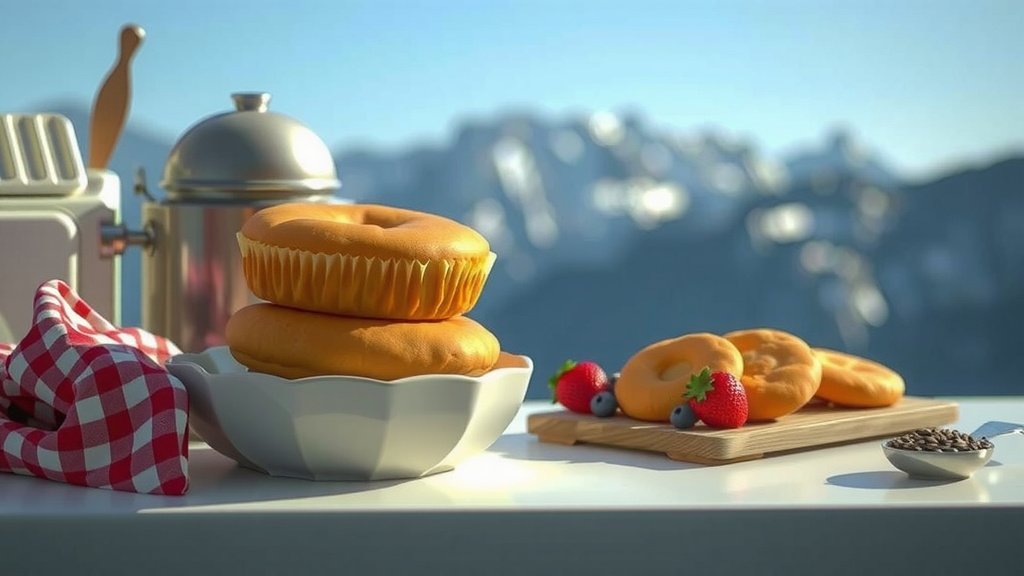
Baking is often the trickiest part of high-altitude cooking. The combination of lower boiling points and faster moisture evaporation can throw off your leavening agents, fats, and liquids. Yeast breads might rise too quickly and then collapse. Cakes might be dry, crumbly, or dense.
Leavening Agents Need Love
Baking soda and baking powder rely on gas production to make things rise. At higher altitudes, these gases expand more rapidly. This can cause your baked goods to rise too fast, creating a coarse texture and then collapsing.
To fix this, you might need to reduce the amount of baking powder or baking soda slightly. For every teaspoon of baking powder, try reducing it by 1/8 to 1/4 teaspoon. Similarly, reduce baking soda by an even smaller amount, perhaps 1/8 teaspoon per recipe. Many baking experts suggest starting with small reductions and testing.
Moisture and Sugar Adjustments
As we’ve discussed, moisture evaporates faster. This means you might need to increase the liquid in your recipes. Add an extra tablespoon or two of milk, water, or oil. For every cup of flour, you might need to add an extra tablespoon of liquid.
Sugar also plays a role. It tends to hold onto moisture. At high altitudes, you might find that baked goods become *too* moist if you don’t adjust. Some sources suggest reducing sugar slightly, especially in cakes and cookies. Try cutting back by 1 to 2 tablespoons per cup of sugar.
Temperature and Time Tweaks
Because your oven’s heat is affected by altitude (though less dramatically than water’s boiling point), and to counteract the faster evaporation, you often need to increase the oven temperature. A common recommendation is to add 15-25°F (about 8-15°C) to your recipe’s suggested temperature. This helps set the structure of your baked goods more quickly.
With a higher temperature, you’ll likely need to shorten the baking time. Keep a close eye on your creations. Use the toothpick test: insert a toothpick into the center of a cake or muffin; if it comes out clean, it’s done. Start checking about 5-10 minutes before the recipe’s original time suggests.
Eggs and Fat
Eggs also help provide structure and moisture. At high altitudes, some bakers recommend adding an extra egg to recipes like cakes and quick breads. The extra egg can provide more structure and moisture, helping to prevent dryness and collapse.
Regarding fat, it can help tenderize. Some bakers find that slightly increasing fat (like butter or oil) can help keep baked goods moist. However, this is a more subtle adjustment and may not be necessary in all recipes.
Quick Checklist for High Altitude Adjustments
Here’s a handy guide to remember the key changes:
- For boiling/simmering, increase cooking time by about 25% per mile.
- For roasting, consider a slightly higher oven temp or cover meats.
- In baking, reduce leavening agents (baking soda/powder) slightly.
- In baking, you may need to increase liquids by a tablespoon or two.
- In baking, increase oven temperature by 15-25°F and shorten bake time.
- Use a thermometer for meats and a toothpick for baked goods to check doneness.
Conclusion
You’ve learned that cooking and baking at high altitudes require a few thoughtful adjustments. Lower atmospheric pressure affects water’s boiling point and moisture evaporation. This means you’ll often need to increase cooking times for boiling and simmering, and potentially for roasting. Baking presents its own set of challenges, but by tweaking leavening agents, liquids, sugar, and oven temperatures, you can achieve fantastic results.
Don’t be discouraged by these changes! With a little practice and by following these guidelines, you’ll be able to confidently prepare delicious meals in your mountain kitchen. Your next step is to try one of these adjustments on your favorite recipe and see the difference it makes!
Frequently Asked Questions
Do I really need to change my recipes for high altitude?
Yes, you will likely need to make adjustments. The lower atmospheric pressure at higher elevations changes how heat transfers and how moisture behaves. Ignoring these factors can lead to undercooked food or baked goods that don’t turn out as expected.
How much longer should I cook food at high altitude?
For boiling and simmering, a good rule of thumb is to increase cooking time by about 25% for every mile of altitude. For example, if a recipe takes 20 minutes at sea level, try 25 minutes at 5,000 feet. Always taste and check for doneness.
Why do my cakes come out dry when I bake at high altitude?
This is common because moisture evaporates faster at higher altitudes. You might need to add a little more liquid to your batter, like an extra tablespoon of milk or oil. Also, increasing the oven temperature slightly and reducing the baking time can help set the structure before too much moisture escapes.
Can I still use my favorite pressure cooker at high altitude?
Yes, but you’ll need to make adjustments. Pressure cookers are affected by external pressure. Most manufacturers provide guides for high-altitude use, which typically involve increasing the cooking time. Always consult your cooker’s manual for specific instructions.
Is there a simple way to remember baking adjustments for altitude?
Think about counteracting dryness and rapid rising. You’ll generally want to reduce leavening agents, increase liquids, and increase oven temperature while shortening baking time. Using a toothpick test is also key for checking doneness.