What Is a Cooker Hob? Your Essential Kitchen Guide
A cooker hob is essentially the flat cooking surface on your stove. It’s where you place your pots and pans to heat your meals. Think of it as the engine of your kitchen for stovetop cooking.
Most people use their cooker hob daily without much thought. But understanding its different types can help you choose the best one for your cooking style. We found that different hobs offer varying levels of speed, control, and efficiency.
- A cooker hob is the flat top part of your stove.
- It’s where you put your cookware to cook.
- Hobs come in different types like electric, gas, and induction.
- Each type has its own pros and cons for cooking.
Below, we’ll help you understand the main types of cooker hobs available so you can make the best choice for your kitchen.
Understanding Your Cooker Hob’s Role
Your cooker hob is more than just a flat surface. It’s the heart of your stovetop cooking. This is where the magic happens, transforming raw ingredients into delicious meals. We found that understanding its different types can greatly impact your cooking experience.
Choosing the right hob depends on your cooking habits. Do you love a quick sear or slow simmering? Your hob choice affects speed, precision, and energy efficiency. Let’s break down the main types you’ll find in kitchens today.
Exploring the Different Types of Cooker Hobs
Electric Coil Hobs
These are often the most budget-friendly option. They feature exposed metal coils that heat up. When you turn them on, electricity flows through the coils, making them glow red hot. You then place your pots and pans directly on top of these coils.
They are pretty straightforward to use. You simply turn a dial to control the heat level. However, we found that they can be slow to heat up and cool down. This makes precise temperature control a bit tricky. Cleaning can also be a chore, as spills can bake onto the coils.
Electric Smooth-Top Hobs (Ceramic)
These look sleeker than coil tops. They have a smooth glass-ceramic surface. Beneath this glass, you’ll find heating elements, usually radiant coils or halogen lamps. They heat the surface from below. Your cookware sits directly on the glass.
One of the biggest advantages is their ease of cleaning. Spills tend to stay on the surface and can be wiped away easily. They also offer a more modern aesthetic for your kitchen. We found that they heat up faster than coil tops, but still lag behind other types for quick adjustments.
Pros:
- Easy to clean
- Modern look
- Safer surface than exposed coils
Cons:
- Can scratch easily
- Slower to respond to temperature changes
- Not as energy-efficient as induction
Electric Smooth-Top Hobs (Halogen)
These are a subtype of smooth-top hobs. Instead of traditional heating elements, they use halogen lamps. These lamps heat up very quickly. This means you get faster cooking times and quicker temperature adjustments.
We found that the quick response time is a major benefit for cooks who need precise heat control. However, they can be less energy-efficient than other electric options. The halogen bulbs also have a limited lifespan.
Gas Hobs
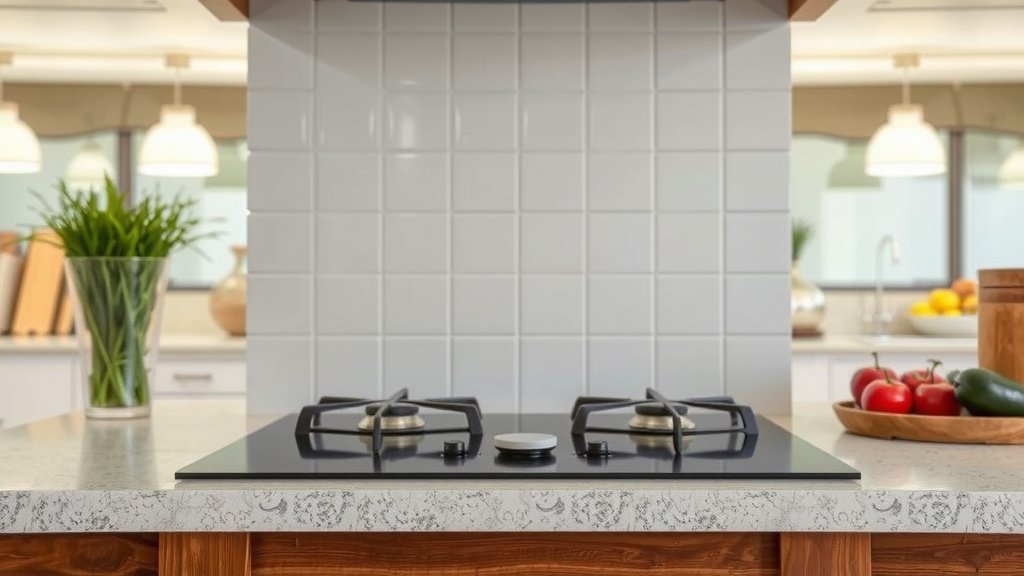
Gas hobs are a long-time favorite for many home cooks. They use natural gas or propane to produce an open flame. This flame directly heats your cookware. Burners have grates on top where you place your pots and pans.
The main draw of gas is instantaneous heat control. You can see the flame and adjust it up or down in real-time. This level of control is fantastic for delicate tasks like simmering sauces or achieving a perfect sear. Many professional chefs prefer gas for this reason.
We found that gas offers excellent heat responsiveness. It’s also quite easy to see and adjust the heat precisely. However, gas hobs can be harder to clean, with grease and food often getting into the burner areas. Safety is also a consideration, as an open flame poses a fire risk. Additionally, installation requires a gas line, which might not be available in all homes.
Pros:
- Excellent heat control and responsiveness
- Visible flame for visual cues
- Works during power outages
Cons:
- Can be difficult to clean thoroughly
- Requires a gas line
- Open flame poses a safety risk
Induction Hobs
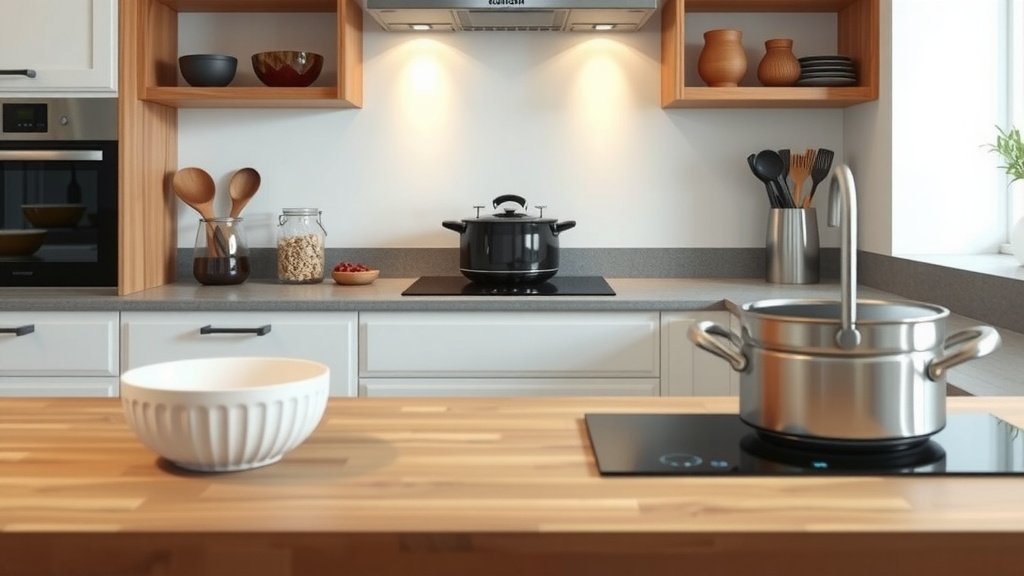
Induction hobs use electromagnetism to heat your cookware directly. There are no exposed coils or flames. Instead, an electric current passes through a coil beneath the smooth glass surface. This creates a magnetic field.
When you place a magnetic pot or pan on the hob, the magnetic field causes the pan itself to heat up. The hob surface stays relatively cool. This makes induction hobs incredibly energy-efficient and safe. Spills are less likely to burn onto the surface because it doesn’t get very hot.
We found that induction hobs offer the fastest heating times. They also provide very precise temperature control, rivaling gas hobs. The surface itself is a breeze to clean. However, there’s a catch: you need specific types of cookware. Your pots and pans must be magnetic. A simple test is to see if a magnet sticks to the bottom of your pan. If it does, it will work on an induction hob.
Pros:
- Very fast heating
- Precise temperature control
- Highly energy-efficient
- Safe surface, less risk of burns
- Easy to clean
Cons:
- Requires magnetic cookware
- Can be the most expensive option upfront
- Some users report a slight humming noise
Comparing Hob Types at a Glance
To help you decide, here’s a quick look at how they stack up:
| Hob Type | Heating Method | Speed | Control | Cleaning | Cookware Needed | Energy Efficiency |
|---|---|---|---|---|---|---|
| Electric Coil | Resistance coils | Slow | Poor | Difficult | Any | Low |
| Electric Smooth-Top | Radiant/Halogen elements | Moderate | Fair | Easy | Any | Moderate |
| Gas | Open flame | Fast | Excellent | Difficult | Any | Moderate |
| Induction | Electromagnetism | Very Fast | Excellent | Very Easy | Magnetic Only | High |
Making the Right Choice for Your Kitchen
So, which hob is best for you? Consider your cooking style. If you do a lot of precise, fast-paced cooking, induction might be your top pick. Many culinary experts and consumer reports suggest induction for its speed and control (Consumer Reports).
If you love the instant visual feedback of a flame and don’t mind a bit more cleaning, gas is a solid choice. For those on a tighter budget or who prefer simplicity, an electric smooth-top offers a good balance. We found that even basic electric hobs can get the job done for everyday meals.
Key Features to Consider
Beyond the basic type, look for these features:
- Number of Burners: How many dishes do you typically cook at once?
- Burner Size Variety: Do you use small saucepans and large stockpots?
- Safety Features: Automatic shut-off or child locks can be helpful.
- Ease of Use: Simple controls are always a plus.
Ultimately, your cooker hob is a tool that should make your life easier. By understanding the differences, you can select one that perfectly fits your cooking needs and kitchen.
Quick Checklist for Choosing Your Hob
- Assess your cooking habits (speed, precision, types of dishes).
- Check your existing cookware for magnetic properties if considering induction.
- Determine your budget for the appliance and potential installation.
- Think about cleaning preferences – how much effort are you willing to put in?
- Consider safety features important for your household.
- Read reviews on specific models you’re interested in.
Conclusion
You’ve learned that your cooker hob is the core of your stovetop cooking. We’ve seen how electric coil, smooth-top, gas, and induction hobs each offer unique benefits and drawbacks. Your choice depends on your cooking style, budget, and cleaning preferences. If you prioritize speed and control, induction is a top contender, but requires special cookware. Gas offers great responsiveness, while electric options provide simpler solutions. Take a moment to review your kitchen needs and cookware. This will help you select the perfect hob that makes meal preparation a joy.
Frequently Asked Questions
What is the main difference between a smooth-top electric hob and an induction hob?
A smooth-top electric hob heats the glass surface itself, which then transfers heat to your cookware. An induction hob uses electromagnetism to heat your cookware directly, leaving the glass surface cooler and safer. We found induction heats much faster and is more energy-efficient.
Can I use any pots and pans on any type of cooker hob?
Generally, you can use most cookware on electric coil and smooth-top, as well as gas hobs. However, induction hobs require magnetic cookware. A simple way to check is to see if a magnet sticks to the bottom of your pot or pan.
Which type of cooker hob is the easiest to clean?
Induction and electric smooth-top hobs are typically the easiest to clean. Their flat, smooth surfaces allow you to wipe away spills quickly. Gas hobs can be more challenging due to grates and burner components where food can get trapped.
Is a gas hob better than an induction hob for cooking?
It often comes down to personal preference. Gas hobs offer visible flames and instant heat adjustment, which many chefs love. Induction hobs provide faster heating and superior energy efficiency with precise control, but require magnetic cookware.
How do I know if my current cookware will work with an induction hob?
The easiest test is to grab a magnet. If the magnet sticks firmly to the bottom of your pot or pan, it’s magnetic and should work on an induction hob. Cookware specifically labeled as “induction compatible” is also a safe bet.