Rice Cooker Energy Use: How Much Electricity It Really Takes
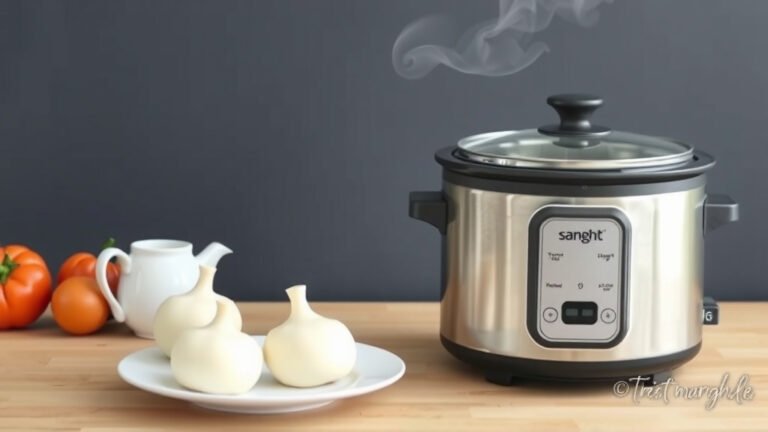
A typical rice cooker uses about 500 to 1500 watts of power while cooking. This energy consumption is quite efficient for the task. It’s similar to a microwave or a large toaster. The wattage can vary depending on the size and features of your cooker.
While cooking, your rice cooker draws power to heat water and steam your rice. Most of its energy use happens during the initial heating and cooking phases. Once it switches to keep-warm mode, the power draw drops significantly. This makes it a relatively low-energy appliance for everyday use.
- Rice cookers use 500-1500 watts when cooking.
- Keep-warm mode uses much less power.
- Energy use is comparable to a microwave.
- Larger cookers may use more watts.
Ready to get a better picture of your rice cooker’s energy habits? Let’s break down the wattage and how it affects your electricity bill.
Understanding Your Rice Cooker’s Power Needs
So, you’re curious about how much juice your trusty rice cooker sips? It’s a great question! Understanding this helps you manage your electricity use. Most rice cookers fall into a similar power range while they’re actively cooking. We found that the wattage can vary, but it’s generally quite reasonable for the convenience it offers.
Wattage: The Basics
Wattage tells you how much electricity an appliance uses at any given moment. Think of it like the engine size in a car. A bigger engine generally uses more fuel. Similarly, a higher wattage means your rice cooker is drawing more power. For rice cookers, this power is used to generate heat. This heat is what cooks your rice perfectly.
You’ll usually see wattage listed on the appliance itself or in its manual. It’s often expressed as a range. For example, a smaller cooker might be rated at 500 watts, while a larger, more feature-rich model could be 1000 watts or even 1500 watts. Don’t let the higher numbers scare you; we’ll talk about how long it actually uses that power soon.
Factors Influencing Wattage
Several things can affect the exact wattage your rice cooker uses. The size of the cooker is a big one. A larger pot needs more power to heat a greater volume of water and rice. The type of rice cooker also plays a role. Basic models are simpler. Advanced “fuzzy logic” or induction heating models might have different power demands.
The cooking cycle is another key factor. Your rice cooker doesn’t use its peak wattage for the entire cooking time. It uses a lot of power initially to bring the water to a boil. Then, the power draw often drops as it steams the rice. Some models might even have a pre-soak or advanced steaming function that affects wattage.
How Long Does Your Rice Cooker Actually Cook?
The wattage figure is important, but it’s only half the story. The other half is how long your rice cooker stays plugged in and actively cooking. Most standard rice cookers will take anywhere from 20 to 45 minutes to cook a batch of rice. This duration depends on the amount of rice and water, and the type of rice.
The Cooking vs. Keep-Warm Difference
This is where you see a huge energy difference. When your rice cooker is in its main cooking mode, it’s using its higher wattage. This is when it’s actively heating and boiling water. Once the rice is cooked, most models automatically switch to “keep-warm” mode.
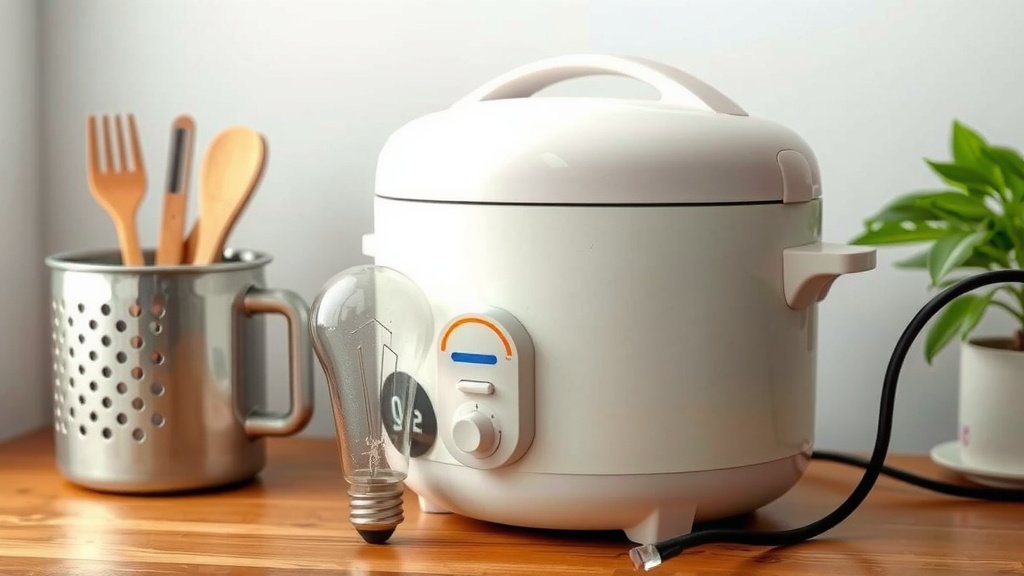
The keep-warm function is much more energy-efficient. It uses a significantly lower wattage, often around 30-50 watts. This is similar to a small LED light bulb. It’s just enough to maintain the temperature of the cooked rice without continuing to cook it. So, while the initial cooking uses more power, the extended keep-warm phase is very gentle on your electricity bill.
We found that a typical cooking cycle might use around 700 watts for about 30 minutes. Then, if you leave it on keep-warm for an hour, it might only use 40 watts during that hour. That’s a big difference in energy consumption!
Calculating Your Rice Cooker’s Energy Use
To get a real sense of your rice cooker’s impact, you need to consider both wattage and time. The formula is simple: Wattage x Hours of Use = Watt-hours. Watt-hours are then converted to kilowatt-hours (kWh), which is how your utility company measures your electricity usage.
Putting Numbers to It: An Example
Let’s say you have a rice cooker that uses 800 watts while cooking. You cook rice for 30 minutes (0.5 hours) per day. You also use the keep-warm function for another 30 minutes (0.5 hours) per day.
| Mode | Wattage | Time (Hours) | Energy Used (Wh) |
|---|---|---|---|
| Cooking | 800 W | 0.5 | 400 Wh |
| Keep-Warm | 40 W | 0.5 | 20 Wh |
| Total Daily Use | 420 Wh |
To convert this to kilowatt-hours (kWh), which is what you’re billed for, you divide by 1000. So, 420 Wh / 1000 = 0.42 kWh per day. If you cook rice every day for a month (30 days), that’s 0.42 kWh/day * 30 days = 12.6 kWh per month.
If your electricity costs $0.15 per kWh, your monthly cost for rice cooking would be 12.6 kWh * $0.15/kWh = $1.89. Pretty affordable, right?
Comparing Rice Cookers: What to Look For
When comparing models, a lower wattage *while cooking* might seem better. However, the cooking time and efficiency of the design are often more important. A slightly higher wattage cooker that cooks faster might actually use less energy overall than a lower wattage one that takes much longer. Many experts recommend looking at the overall energy rating of the appliance, if available.
Tips for Energy-Efficient Rice Cooking
Want to make sure your rice cooker is as energy-smart as possible? Here are a few simple tips:
- Match the Size: Use a rice cooker that’s appropriately sized for the amount of rice you’re cooking. Overfilling or cooking very small amounts in a large cooker can affect efficiency.
- Lid On Tight: Always ensure the lid is securely closed during cooking. This traps heat and steam, allowing the rice to cook faster and more evenly.
- Mind the Keep-Warm: Don’t leave the rice on keep-warm for hours longer than needed. Serve it promptly if possible, or turn off the cooker if you don’t plan to eat it soon.
- Clean and Maintain: A clean inner pot and heating element can help your cooker perform at its best, potentially using energy more efficiently.
- Consider Your Needs: If you only cook rice occasionally, a basic model might be sufficient. If you cook large batches frequently, you might explore models with better insulation or more precise temperature control.
Conclusion
You’ve learned that your rice cooker is a surprisingly energy-efficient appliance. While its wattage during cooking can seem high, it’s on par with other kitchen staples like microwaves. Remember, the real energy savings come from the drastic drop in power when it switches to keep-warm mode. By understanding how wattage and cooking time add up, you can easily calculate your rice cooker’s impact on your electricity bill.
Take a moment to check the wattage on your own rice cooker. Use this knowledge to make small adjustments, like serving rice promptly after cooking. You’ve got the power to keep your kitchen running smoothly and your energy costs low!
Frequently Asked Questions
How does the size of a rice cooker affect its electricity usage?
Larger rice cookers generally use more watts than smaller ones. This is because they need more power to heat a greater volume of water and rice. However, a larger cooker might cook faster, potentially balancing out the higher wattage over time.
Is leaving the rice cooker on ‘keep-warm’ all day expensive?
No, the keep-warm function uses very little electricity, typically around 30-50 watts. While it’s much less than the cooking mode, leaving it on for many hours still adds up over time. It’s best to turn it off if you don’t plan to eat the rice soon.
Can older rice cookers use more electricity than newer models?
Older models may be less energy-efficient than newer ones. Technology has advanced, and modern rice cookers often feature better insulation and more precise temperature controls. This can lead to shorter cooking times and less energy waste.
Does the type of rice affect how much electricity the cooker uses?
The type of rice can indirectly affect electricity usage because different types may require different cooking times. Brown rice, for example, often takes longer to cook than white rice. A longer cooking time means the rice cooker is using its higher wattage for a longer period.
What is the difference between wattage and kilowatt-hours (kWh)?
Wattage tells you how much power an appliance uses at any given moment. Kilowatt-hours (kWh) measure the total energy consumed over a period of time. Your electricity bill is based on kWh, calculated by multiplying wattage by the hours of use and dividing by 1000.