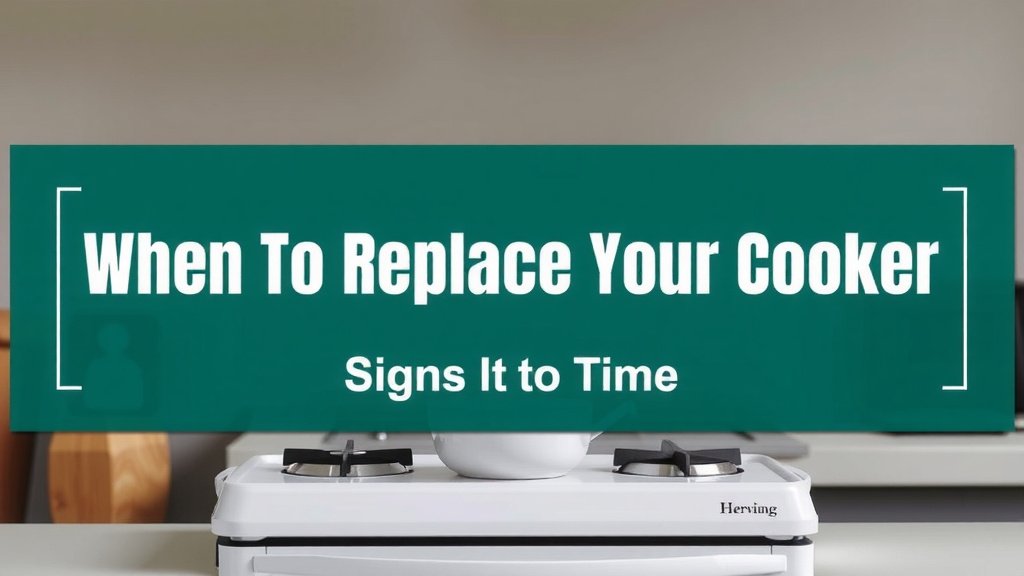
When to Replace Your Cooker: Signs It’s Time
You might need to replace your cooker when it starts showing signs of wear and tear or if its energy efficiency has dropped significantly. Older models can become unreliable and costly to run, making a replacement a smart move for your kitchen.
We found that a cooker typically lasts between 10 to 15 years, but this can vary based on usage and maintenance. Ignoring warning signs can lead to inconvenience and even safety issues in your home. It’s wise to keep an eye on its performance.
- Cookers generally last 10-15 years.
- Look for signs of damage or poor performance.
- Safety should always be a top concern.
- Energy efficiency can also be a good indicator.
- Unexpected repair costs can signal replacement time.
Let’s walk through the specific signs that tell you it’s time to consider a new cooker for your kitchen.
Signs It’s Time to Upgrade Your Cooker
Your trusty cooker has likely served you well, whipping up countless meals. But like any appliance, it has a lifespan. You might be wondering when it’s officially time to wave goodbye to your old friend and welcome a new one. We found that paying attention to a few key indicators can save you a lot of hassle and even some money.
Performance Problems That Signal Replacement
When your cooker starts acting up, it’s usually the first clue that something’s not quite right. These aren’t just minor annoyances; they can affect how well your food cooks and even how safe your kitchen is.
Uneven Cooking and Hot Spots
Are your cakes always slightly burnt on one side? Do your cookies come out looking like a gradient of golden brown to charcoal? This is a classic sign of uneven heating. Your oven’s heating elements might be failing or wearing out. This means you’ll have to constantly rotate your food, which is a real pain. We found that this inconsistency can make even simple baking a frustrating experience.
Burners or Elements Not Heating Properly
On the stovetop, if a burner takes forever to boil water or doesn’t get hot enough to sear meat, that’s a red flag. For electric cookers, if the coils don’t glow red or seem weak, they’re likely on their last legs. Gas cookers might show weaker flames or an inconsistent flame pattern. Many repair technicians say this is a very common reason for cooker replacement.
Temperature Inaccuracy
Does your oven run hotter or cooler than the dial suggests? Using an oven thermometer can reveal this. If it’s off by more than 25 degrees Fahrenheit consistently, it’s a problem. This inaccuracy can ruin delicate recipes and make cooking unpredictable. You want your cooker to be a reliable partner, not a guessing game.
Age and Wear and Tear Indicators
Beyond performance issues, the sheer age and visible condition of your cooker can also tell you it’s time for an upgrade. Think of it like an old car; when repairs become more frequent than drives, it’s time to trade up.
Visible Damage and Rust
Look closely at your cooker. Is the enamel chipping inside the oven? Are there deep scratches on the stovetop? Is rust starting to appear, especially around seals or edges? This damage isn’t just unsightly; it can lead to further problems. For instance, rust can compromise the integrity of components or become a hygiene issue.
Worn-Out Seals and Gaskets
The seals around your oven door keep heat in and cooking smells out. If these seals are cracked, brittle, or peeling away, heat is escaping. This means your oven has to work harder to maintain temperature. We found that this often leads to longer cooking times and increased energy bills. Replacing these seals can be tricky and costly, sometimes making a new cooker a better option.
Flickering Lights or Faulty Controls
Are the lights inside your oven flickering, or are the control knobs loose and wobbly? Modern cookers have sophisticated electronic controls. If these are glitching, it can be a sign of internal issues. For older models, mechanical parts can wear down. These issues can be difficult and expensive to repair, and sometimes impossible on very old units.
Safety Concerns That Mandate Replacement
Safety should always be your top priority in the kitchen. When your cooker starts posing a risk, it’s time to seriously consider a replacement. Don’t wait for an accident to happen.
Gas Leaks or Unusual Smells
If you ever smell gas, turn off the cooker immediately and ventilate the area. If the smell persists, it’s a serious safety hazard. For gas cookers, this could indicate a faulty valve, hose, or burner. Many fire safety guidelines strongly advise replacing any appliance showing signs of potential gas leaks. This is one area where you absolutely cannot afford to take chances.
Electrical Issues
Do you notice sparks when you turn on an electric burner or the oven? Does the circuit breaker trip frequently when using the cooker? These are clear signs of an electrical fault. Faulty wiring or internal shorts can be a fire risk. We found that old or damaged electrical components in an appliance are a major safety concern.
Energy Efficiency and Running Costs
Even if your cooker seems to be working, it might be costing you more than it should to run. Older appliances are often far less energy-efficient than newer models.
Increased Energy Bills
Have you noticed your electricity or gas bills creeping up without any other explanation? Your cooker could be the culprit. Older models, especially those with poor insulation or inefficient heating elements, consume more power to do the same job. Government energy websites often highlight how much newer appliances can save homeowners on utility costs. If your electricity bills are creeping up, learn how much it costs to run an electric cooker.
Outdated Technology
Newer cookers come with improved insulation, more precise temperature controls, and better energy management systems. Many models are now Energy Star certified, meaning they meet strict energy efficiency guidelines set by the EPA. If your cooker is over 10-15 years old, it’s likely missing out on these advancements.
Cost of Repairs vs. Replacement
Sometimes, the decision comes down to dollars and cents. How much are you spending on repairs?
Frequent or Expensive Repairs
If you’ve found yourself calling a repair person more than once in a year, or if a single repair costs a significant percentage of a new cooker’s price, it’s time to think about the long term. We found that accumulating repair bills can quickly exceed the cost of a new, reliable appliance. Consider a simple checklist:
- Has your cooker needed repairs in the last 12 months?
- Are the repair costs approaching half the price of a new cooker?
- Is the faulty part no longer available or very expensive to source?
- Are there multiple issues needing repair?
- Are you constantly worried about it breaking down?
- Does it fail to perform basic cooking tasks reliably?
If you answered yes to several of these, a new cooker is likely a more sensible investment. It offers peace of mind, better performance, and often improved energy savings over its lifespan.
Conclusion
You’ve learned a lot about knowing when your cooker is past its prime. Keep an eye out for performance issues like uneven cooking or weak burners. Visible damage, failing seals, and safety concerns such as gas smells or electrical faults are major red flags. Don’t ignore rising energy bills or the cost of repeated repairs.
If your cooker is showing multiple signs of wear or poses a safety risk, it’s likely time for an upgrade. We found that investing in a new, energy-efficient model offers better performance and peace of mind. Take the next step and start researching new cookers that fit your kitchen and cooking needs.
Frequently Asked Questions
How often should I expect to repair my cooker?
You shouldn’t have to repair your cooker often, especially if it’s less than 10 years old. If you find yourself scheduling repairs more than once a year, or if the repairs are becoming increasingly expensive, it’s a strong sign that replacement might be more economical in the long run.
Can a faulty cooker increase my energy bills?
Yes, absolutely. Older cookers, or those with worn-out seals and inefficient heating elements, have to work much harder to reach and maintain the desired temperature. This increased effort directly translates to higher gas or electricity consumption, leading to noticeably higher utility bills.
What’s the biggest safety risk with an old cooker?
The biggest safety risks typically involve gas leaks in gas cookers or electrical faults in electric models. These issues can create fire hazards or lead to carbon monoxide poisoning. If you ever suspect a gas leak or notice sparks, turn it off immediately and consider a replacement. Your safety is not worth the risk.
Is it worth fixing a cooker if it’s older than 15 years?
Generally, if your cooker is over 15 years old and requires a significant repair, it’s usually more cost-effective to replace it. Parts for very old models can be hard to find and expensive. Newer models are also much more energy-efficient, which can save you money over time.
How do I know if my oven temperature is accurate?
The best way to check your oven’s temperature accuracy is by using an oven thermometer. Place it inside your preheated oven and compare the reading to the temperature you set on the dial. If it’s consistently off by more than 25 degrees Fahrenheit, your oven is likely not heating accurately, impacting your cooking results.