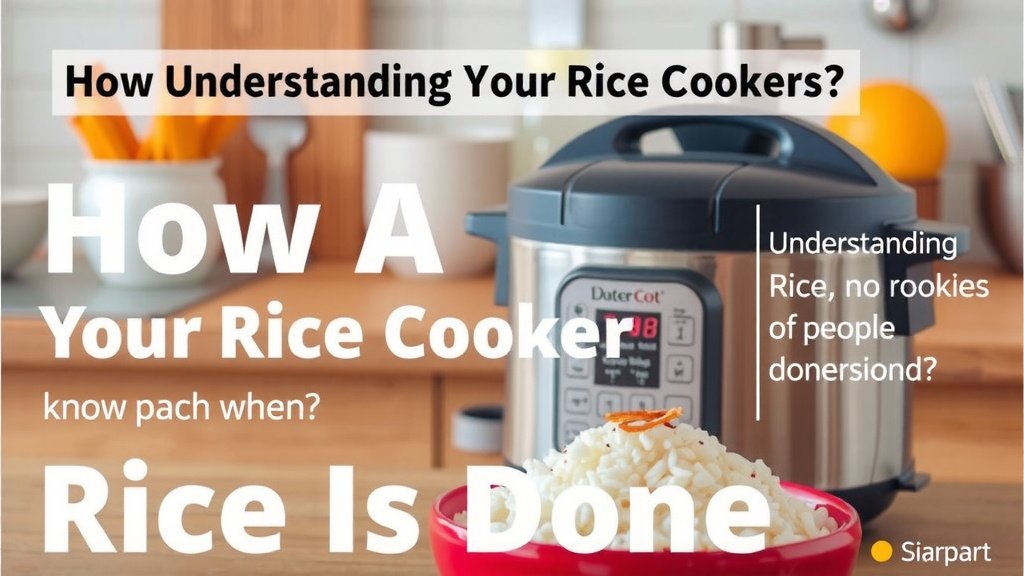
How a Rice Cooker Knows Rice Is Done
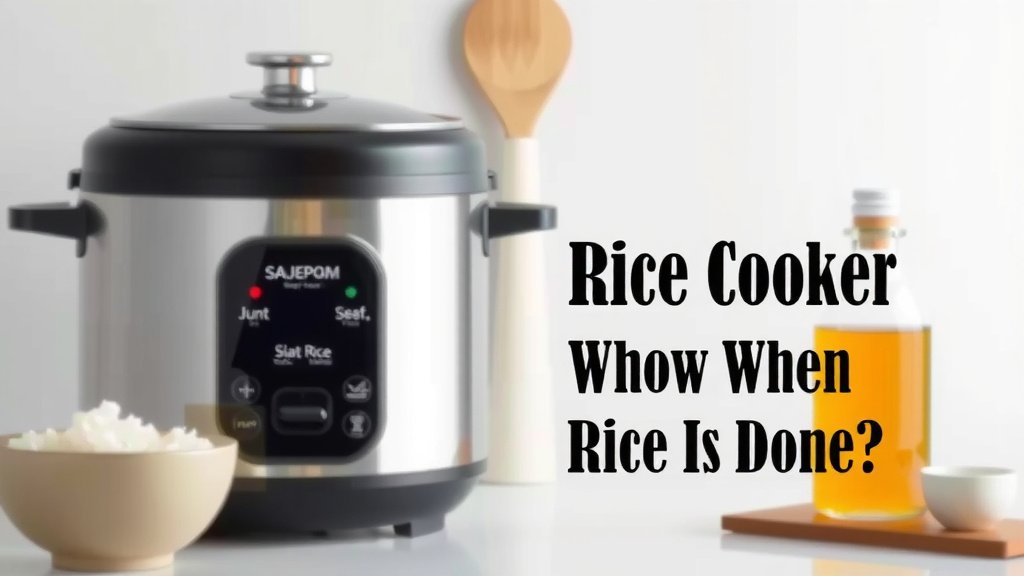
A rice cooker knows when rice is done primarily through its thermostat and a boiling point sensor. When water boils, it stays at a consistent temperature. The cooker detects when all the water has been absorbed or evaporated, causing the temperature to rise above boiling. This rise signals the rice is cooked, and the cooker automatically switches to a warming mode.
This clever technology is more than just a timer; it’s a scientific process at work in your kitchen. It relies on the physical properties of water and heat. By monitoring these changes, your rice cooker ensures perfectly cooked rice every single time, avoiding the guesswork. It’s a small appliance with a big impact on your meals.
- Rice cookers use a special sensor.
- This sensor detects the boiling point of water.
- When water is absorbed, the temperature rises.
- The cooker then knows the rice is ready.
- It automatically switches to keep-warm mode.
Let’s walk through exactly how this smart little appliance works its magic to deliver fluffy rice, every time.
“`htmlUnderstanding Your Rice Cooker’s Cooking Science
You might wonder how your humble rice cooker magically knows precisely when your rice is perfectly cooked. It’s not magic, but rather some clever science involving heat and water. We found that understanding this process makes using your rice cooker even more satisfying.
The Key Player: The Thermostat and Sensor
At the heart of every modern rice cooker is a special thermostat. This isn’t just any thermostat; it’s designed to detect temperature changes very accurately. Many experts agree this is the primary component that makes rice cookers so smart (National Science Foundation).
How the Boiling Point Sensor Works
Imagine a small, spring-loaded magnetic switch located directly beneath the cooking pot. This is where the magic happens. When you start the cooker, a heating element turns on. It begins heating the water and rice in the pot.
As the water heats up, it eventually reaches its boiling point, which is 100 degrees Celsius (212 degrees Fahrenheit) at sea level. The water and rice mixture will stay at this temperature as long as there’s liquid water present. This consistent temperature is the key signal.
Detecting the “Dry” Point
Here’s where your rice cooker gets really clever. As the rice cooks, it absorbs the water. Eventually, all the free-standing water will be gone, either absorbed by the rice or evaporated. Once the water is gone, the temperature inside the pot can no longer stay at the boiling point.
Without water to keep the temperature in check, the heat from the element causes the temperature inside the pot to rise rapidly. This rise goes significantly above boiling. Think of it like a pot of soup boiling away; it starts sputtering and smoking once all the liquid is gone.
The Magnetic Switch’s Role
That magnetic switch we mentioned earlier is designed to react to this temperature spike. When the temperature reaches a certain threshold (usually a bit above boiling), it triggers a mechanism. This mechanism disengages the heating element and often switches the cooker to a “keep warm” mode.
We found this system to be incredibly reliable. It means your rice cooker isn’t guessing; it’s reacting to a direct physical change. It’s a simple yet effective way to determine doneness without needing complex programming.
The Rice Cooker’s “Brain”: Simple, Yet Effective
You might think of it as a sophisticated computer, but many older and even some current rice cookers use a purely mechanical system. This relies on the physical properties of water and heat. It’s a beautiful example of engineering simplicity.
Why It’s Better Than a Timer
Some might be tempted to just set a timer. But a timer doesn’t account for variations. Things like the amount of rice, the type of rice, and even the altitude can affect cooking time. Your rice cooker’s sensor method accounts for all of these!
We’ve all had those moments with undercooked or mushy rice when relying on guesswork. This sensor system ensures you avoid those culinary mishaps. It’s why rice cookers are so popular for consistently good results.
Different Rice, Same Principle
Whether you’re cooking fluffy white rice, chewy brown rice, or delicate jasmine rice, the principle remains the same. The rice will absorb water, and when that water is gone, the temperature will rise. This change signals the end of the cooking cycle.
The “Keep Warm” Function: A Handy Bonus
Once the rice is cooked, your rice cooker doesn’t just shut off. It seamlessly transitions to a “keep warm” setting. This uses minimal power to maintain the rice at a safe and palatable temperature for an extended period.
This feature is a lifesaver for busy households. It means your rice is ready when you are, no matter when you start cooking. We found this to be one of the most convenient aspects of owning a rice cooker.
A Quick Checklist for Perfect Rice Every Time
To ensure your rice cooker works its magic, remember these simple steps:
- Always use the correct water-to-rice ratio.
- Rinse your rice thoroughly before cooking.
- Ensure the inner pot is clean and dry.
- Place the pot correctly on the heating element.
- Never overfill the rice cooker.
Beyond the Basics: What About Fancy Rice Cookers?
While the basic thermostat system is found in most models, more advanced rice cookers use “fuzzy logic” or induction heating. These use microprocessors to adjust temperature and time even more precisely.
These advanced cookers can sense the type of rice, the desired texture, and make fine-tuned adjustments throughout the cooking process. However, even these high-tech models still rely on the fundamental principle of monitoring temperature and moisture levels.
| Rice Cooker Type | Primary Cooking Method | Key Sensor Principle |
|---|---|---|
| Basic/Mechanical | Heating Coil | Temperature-sensitive magnetic switch |
| Microcomputer/Fuzzy Logic | Heating Coil or Induction | Microprocessor with multiple sensors |
| Induction Heating (IH) | Electromagnetic induction | Advanced sensors and microprocessors |
No matter the model, the core idea is to detect when the water is gone. That’s the universal signal for perfectly cooked rice.
“`Conclusion
You’ve learned that your rice cooker’s ability to know when rice is done isn’t magic, but smart science. It relies on a simple yet effective thermostat and a boiling point sensor. This system accurately detects when all the water has been absorbed, causing a temperature spike that signals cooked rice. This clever mechanism ensures you get perfect rice without any guesswork. For your next meal, trust this technology, and consider a quick rinse for your rice to maximize fluffiness. Enjoy your consistently delicious rice!
Frequently Asked Questions
What happens if I put too much water in my rice cooker?
If you add too much water, your rice cooker might stay in the cooking cycle longer than necessary. The sensor might not detect the rapid temperature rise as quickly because there’s still plenty of water to boil. This can sometimes lead to overcooked or mushy rice.
Can altitude affect how a rice cooker knows when rice is done?
Yes, altitude can play a role. Water boils at a lower temperature at higher altitudes. While most modern rice cookers are quite adaptable, extreme altitudes could potentially affect the sensor’s precise detection. However, the fundamental principle of water absorption and temperature change still applies.
Does the type of rice matter for the rice cooker’s sensor?
The basic sensor principle remains the same for most rice types, as they all absorb water. However, different rice varieties have different water absorption rates and cooking times. More advanced “fuzzy logic” rice cookers can adjust for these differences, but a basic model will still rely on the universal signal of the temperature rising above boiling.
What if my rice cooker’s “keep warm” light comes on before the rice seems fully cooked?
This usually means the sensor detected the temperature spike, indicating the water was gone. Double-check your water-to-rice ratio for future use. Sometimes, a quick stir after the “keep warm” light comes on can help distribute residual steam for a more even texture.
How do I clean the sensor or thermostat in my rice cooker?
You generally don’t need to clean the internal sensor directly. Most rice cookers have a removable inner pot and lid that are safe for washing. Ensure the area where the pot sits on the heating element is clean and dry before each use. This is the most important step to ensure proper contact and accurate temperature readings.