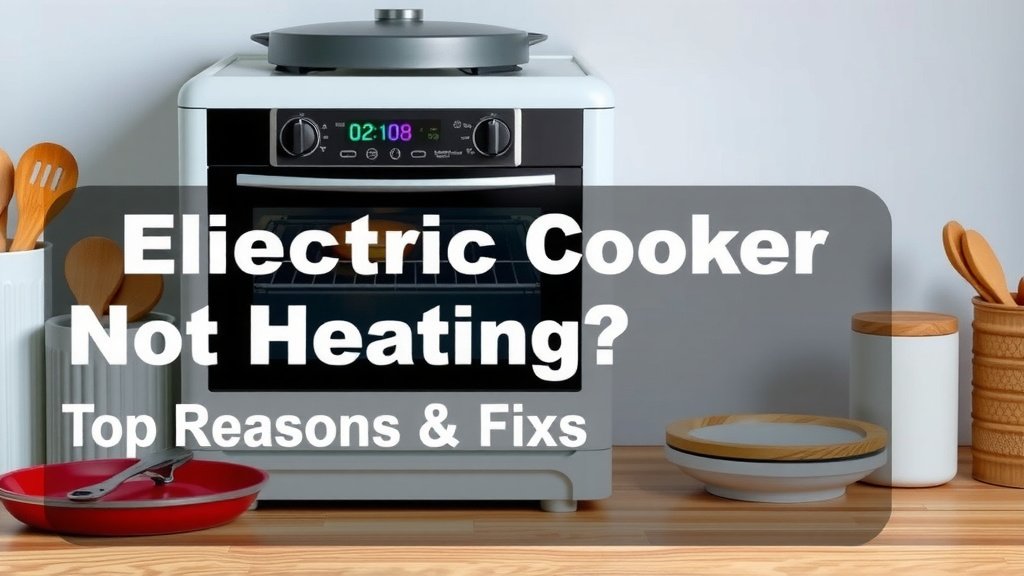
Electric Cooker Not Heating? Top Reasons & Fixes
Your electric cooker isn’t heating because of a few common culprits, often related to the power supply, the heating element itself, or a faulty thermostat. Don’t worry, you’re not alone in facing this frustrating kitchen problem!
When your electric cooker stops getting hot, it can really disrupt your meal prep. We found that checking the circuit breaker is the first and easiest step. Sometimes a simple reset can fix the issue entirely, but if that doesn’t work, there might be a deeper problem within the cooker’s components.
- Check your circuit breaker for a tripped switch.
- Inspect the heating element for visible damage.
- Ensure the oven temperature setting is correct.
- Consider a faulty thermostat or control board.
- A loose connection could also be the cause.
Let’s walk through the most likely reasons your electric cooker has gone cold and what you can do about it.
Troubleshooting Your Electric Cooker’s Heating Issues
It’s incredibly frustrating when your electric cooker decides to take an unexpected break and stop heating. You might have a meal planned, and suddenly, you’re left with a cold oven or stovetop. We understand how disruptive this can be to your kitchen routine. Fortunately, many common heating problems are surprisingly straightforward to diagnose and fix yourself.
Power Supply Problems: The First Place to Look
Before we dive into the cooker’s internal components, let’s make sure it’s actually getting the power it needs. A lack of power is the most frequent reason an electric cooker won’t heat up.
Check Your Home’s Circuit Breaker
Your electric cooker draws a lot of power, so it has its own dedicated circuit. Sometimes, this circuit can trip, cutting off power to the appliance. Have you recently overloaded a circuit or experienced a power surge? It’s worth checking your home’s electrical panel.
Look for any breakers that are in the “off” position or somewhere in between “on” and “off.” If you find one, try flipping it completely to the “off” position and then back to “on.” This simple reset can often restore power to your cooker.
Inspect the Power Cord and Outlet
Is the cooker’s power cord securely plugged in? It sounds obvious, but sometimes cords can get jostled loose. Make sure it’s pushed all the way into the wall outlet. Also, examine the cord for any signs of damage, like fraying or melted plastic. A damaged cord is a serious safety hazard and needs immediate attention.
Similarly, inspect the wall outlet itself. Do you see any scorch marks or signs of damage? If the outlet looks damaged, you’ll need to have it replaced by a qualified electrician. It’s also a good idea to test the outlet with another small appliance, like a toaster or a lamp, to confirm it’s providing power.
Heating Element Issues: The Heart of the Matter
The heating elements are responsible for generating the heat for both your oven and stovetop. If these are faulty, your cooker won’t get hot. We found that visible damage is often a strong indicator of a problem here.
Examining the Oven Heating Elements
Most electric ovens have two heating elements: one in the upper broiler and one in the lower bake position. Turn off the power to your oven at the circuit breaker before you inspect them. Carefully look for any breaks, cracks, or areas that appear to be burned out.
If you see visible damage, the element likely needs replacement. Sometimes, elements can look intact but still be faulty. You might notice them glowing dimly or not at all when the oven is turned on. If you suspect an element is bad but see no visible damage, further testing by a professional might be needed.
Stovetop Burner Problems
For electric stovetops, each burner has its own heating element, often called a coil. Check if the affected burner coil is properly seated in its socket. Sometimes, a burner can become slightly dislodged, preventing it from heating.
Remove the burner coil (if it’s designed to be removed) and check the connection points for any signs of corrosion or damage. If the coil itself looks damaged, warped, or if the connection points are burnt, it likely needs to be replaced. Again, always ensure the power is off at the breaker before touching these components.
Thermostat and Control Board: The Brains of the Operation
If your cooker is receiving power and the heating elements appear to be in good condition, the issue might lie with the internal controls. The thermostat tells the heating element when to turn on and off, and the control board manages various functions.
The Role of the Thermostat
Your oven’s thermostat is like the temperature police. It monitors the internal temperature and signals the heating elements to heat up or cool down to maintain your desired setting. If the thermostat is malfunctioning, it might not be sending the correct signals, leaving your oven cold.
Many experts say a faulty thermostat is a common cause for ovens not heating properly (Cleveland Clinic). If your oven temperature seems wildly inaccurate or if it never reaches the set temperature, the thermostat could be the culprit. Diagnosing a thermostat often requires specialized tools to test its accuracy.
Understanding the Electronic Control Board (ECB)
Modern electric cookers often have an electronic control board, which acts as the appliance’s brain. This board controls everything from the oven temperature to the timer and various cooking modes. If this board fails, it can prevent the cooker from heating altogether.
Signs of a faulty control board can be varied. You might see error codes on the display, or buttons might not respond. Sometimes, a complete failure of the ECB can cause all heating functions to stop working. Repairing or replacing an ECB can be more complex and is often best left to a service technician.
Loose Connections and Wiring
Even if all the components seem fine, a loose wire or connection somewhere within the cooker can interrupt the flow of electricity. Vibrations from use or installation issues can sometimes cause these connections to loosen over time.
Checking internal wiring requires a good deal of caution and technical know-how. It’s essential to disconnect the power at the circuit breaker before attempting any inspection. If you’re not comfortable working with electrical wiring, it’s safest to call a professional. We found that a loose connection at the heating element terminals or where the power cord enters the appliance are common points of failure.
Quick Checklist: What to Try First
Before calling for professional help, run through this quick checklist:
- Check the circuit breaker: Ensure it’s not tripped.
- Verify plug connection: Make sure the power cord is fully seated.
- Inspect the power cord: Look for any visible damage.
- Visually inspect elements: Check oven elements and stovetop coils for breaks.
- Confirm settings: Double-check that the temperature and cooking mode are correctly selected.
Conclusion
It’s definitely frustrating when your electric cooker won’t heat up, but as we’ve explored, the reasons are often common and manageable. You’ve learned to check your home’s power supply, including the circuit breaker and the cooker’s plug and cord. We also looked at potential issues with the heating elements themselves and the internal thermostats or control boards. Remember, starting with simple checks can save you time and money.
If these initial steps don’t solve the problem, and you’re not comfortable with electrical components, don’t hesitate to contact a qualified appliance repair technician. They have the tools and expertise to safely diagnose and fix more complex issues, getting your cooker back to full working order.
Frequently Asked Questions
Why won’t my electric oven heat, but the stovetop burners still work?
This often points to an issue specific to the oven’s heating system. It could be a problem with the oven’s internal heating elements or its thermostat, while the stovetop burners operate on a separate circuit. You should still check your circuit breaker, but focus inspection efforts on the oven’s components.
Can a dirty oven cause it not to heat?
Generally, a dirty oven won’t prevent it from heating altogether. However, heavy grease buildup around the heating elements or convection fan (if applicable) could potentially interfere with heat distribution or, in extreme cases, trigger safety cut-offs. Regular cleaning is good practice, but it’s unlikely the sole cause of a complete heating failure.
My electric cooker only heats on one setting, what could be wrong?
This might indicate a problem with the control board or a specific setting’s associated component. If only the broiler works, but the bake function doesn’t, the bake element or its relay on the control board could be faulty. Conversely, if only the bake works, the broiler element or its circuit might be the issue.
How do I know if my oven’s heating element is bad?
Visually inspecting the heating elements is a good start. Look for any visible breaks, cracks, or areas that appear scorched or melted. If you turn on the oven and the element doesn’t glow red (or glows very dimly) after a reasonable time, it’s likely faulty. A professional can perform more precise tests if no damage is visible.
Is it safe to test an electrical outlet myself?
Yes, it is generally safe to test an electrical outlet using a simple plug-in outlet tester or by plugging in a small, known-working appliance like a lamp or hairdryer. If the outlet sparks, smells burnt, or doesn’t power the test appliance, do not use it and call a qualified electrician immediately to assess and repair it.