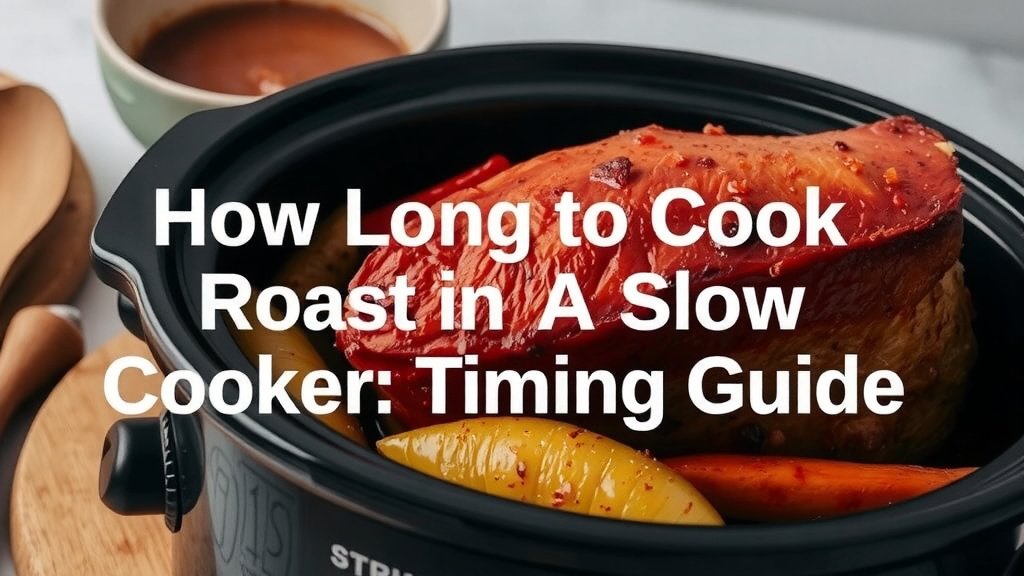
How Long to Cook a Roast in a Slow Cooker: Timing Guide
Most roasts need 4 to 6 hours on high or 8 to 10 hours on low in a slow cooker. The exact time depends on the cut, size, and whether you want it fall-apart tender or sliceable. That is the quick answer, but there is a bit more to getting it just right. Our complete guide to slow cooking beef times breaks down every cut in detail.
Here is the thing: a 3-pound chuck roast and a 5-pound rump roast do not cook on the same clock. Bigger cuts need more time, and fattier cuts actually benefit from longer, slower cooking. We researched common slow cooker guidelines and found that most experts agree on a few simple timing rules, which we will share below.
- High setting: about 4 to 6 hours for most 3 to 4 pound roasts.
- Low setting: about 8 to 10 hours for the same size roast.
- Larger cuts (5+ pounds) may need an extra 1 to 2 hours.
- Always check that the internal temperature hits 145°F for beef.
- Tough cuts like chuck get more tender the longer they cook.
Below, we break down exact cooking times for every popular roast, plus tips to avoid a dry dinner. Because nobody wants to serve a shoe with gravy, right?
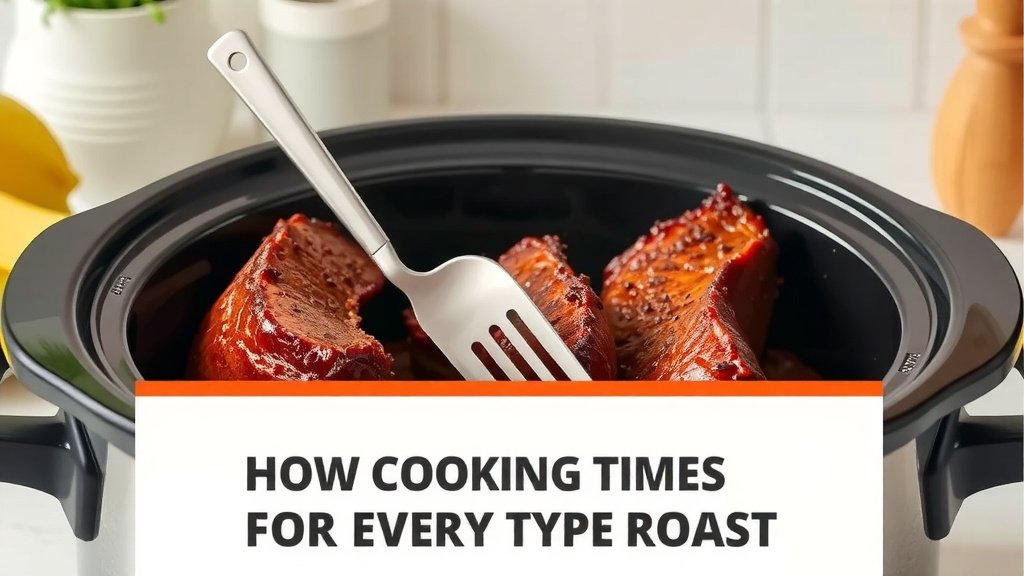
Cooking Times for Every Type of Roast
Not all roasts follow the same schedule. A tough chuck roast loves a long bath on low, while a leaner cut can dry out if you push it too far. We researched USDA and food-safety guidelines to put together the times you actually need.
Here is a simple rule of thumb: the tougher the cut, the longer it should cook. Fat and connective tissue need time to melt. That is what turns a rock-hard piece of beef into something you can cut with a fork.
| Roast Type | Low Setting | High Setting |
|---|---|---|
| Chuck roast (3 lbs) | 8–10 hours | 4–5 hours |
| Rump roast (3 lbs) | 7–9 hours | 4–5 hours |
| Round roast (3 lbs) | 7–8 hours | 3–4 hours |
| Brisket (4 lbs) | 8–10 hours | 5–6 hours |
| Pork shoulder (4 lbs) | 8–10 hours | 5–6 hours |
| 5+ lb roast (any cut) | 10–12 hours | 6–7 hours |
Treat this table as a starting point, not a strict contract. Slow cookers run a little hot or cool depending on the brand. Once you know your own machine, you can adjust with confidence.
Why the Low Setting Is Usually Your Best Friend
If you have the time, use low. Many experts say the low setting produces a more tender, juicy roast because the meat cooks gently over many hours (Mayo Clinic).
Think of it like a slow simmer on the stove. Collagen in the meat breaks down gradually instead of seizing up. Rush it on high, and you can end up with a roast that is both dry and tough. That is the worst of both worlds.
When High Setting Makes Sense
Sometimes you just forgot to start dinner at 8 a.m. We have all been there. The high setting is your backup plan, and it still makes a decent meal in 4 to 6 hours.
Just add a little extra liquid and check the meat earlier than you think you need to. Lean cuts especially can go from juicy to jerky fast on high.
How Roast Size Changes Your Cooking Time
Size matters more than most people realize. A 2-pound roast and a 6-pound roast are not the same project. We found that most slow cooker guides add roughly 1 to 2 hours per extra pound on low.
There is also a fill-line rule worth knowing. Your slow cooker should be between half and two-thirds full. Too empty, and the meat cooks faster and can dry out. Too full, and heat cannot circulate, which drags out cooking time. If you are unsure your pot is the right capacity, our slow cooker size guide walks through the quart system.
Quick Size Adjustments
- Under 3 pounds: shave off about 1 hour on low.
- 4 to 5 pounds: stick with the standard 8 to 10 hours.
- Over 5 pounds: add 1 to 2 hours and check with a thermometer.
Checking Doneness Without Guessing
Your eyes can lie to you. A roast can look done on the outside and still be undercooked in the middle. The only reliable method is a meat thermometer.
Food safety guidelines call for beef to reach an internal temperature of 145°F, followed by a short rest (USDA). For pulled-style roasts like chuck or pork shoulder, most cooks aim for 195°F to 205°F. That higher temperature fully breaks down the connective tissue.
Where to Place the Thermometer
Insert it into the thickest part of the roast. Avoid touching bone, since bone conducts heat and gives a false reading. If your roast has no clear thick end, check two spots and trust the lower number.
Common Mistakes That Ruin a Slow Cooker Roast
Even with perfect timing, a few small errors can sabotage dinner. We found these issues come up again and again in cooking guides and reader questions alike.
- Lifting the lid to peek. Every peek releases heat and adds 20 to 30 minutes of cooking time.
- Skip searing? You lose flavor. A quick browns in a skillet first makes a big difference.
- Using too little liquid. A cup of broth keeps lean roasts from drying out.
- Adding dairy too early. Milk and cream can curdle over long cooks. Stir them in during the last 30 minutes.
- Cooking a frozen roast. Food safety experts advise thawing first so the meat passes through the danger zone quickly (USDA).
Adding Vegetables at the Right Time
Vegetables and roasts are natural partners, but they cook at different speeds. Hearty roots like carrots, potatoes, and onions can go in at the start. They hold up well over long hours.
Tender vegetables are another story. Peas, spinach, or zucchini turn to mush if they cook for 8 hours. Add them in the final hour instead, and they will keep some bite and color.
Layering Order That Works
Root vegetables go on the bottom, closest to the heat source. The roast sits in the middle. Anything delicate goes on top last. This simple stacking trick keeps everything cooking at its own pace.
Keeping Your Roast Juicy Until Dinner
Timing is only half the battle. The other half is moisture. Here is a short checklist we put together from common expert advice.
- Sear the roast on all sides before it goes in the pot.
- Add at least 1 cup of broth, wine, or water.
- Keep the lid closed until the final hour of cooking.
- Let the roast rest 10 to 15 minutes before slicing.
- Skim fat off the cooking liquid and use it as gravy.
- Slice against the grain for the most tender bites.
Troubleshooting a Roast That Is Still Tough
So the timer went off, you tested a bite, and it is chewy. Do not panic and do not toss it. A tough roast almost always just needs more time.
This surprises a lot of people. Toughness usually means undercooked, not overcooked, especially with chuck or brisket. Put the lid back on and give it another hour on low. Check again. Repeat until it falls apart.
What If It Is Overcooked and Dry?
Unfortunately, you cannot re-moisten meat that cooked past its point. But you can disguise it. Shred the beef and toss it back into the warm cooking liquid for 20 minutes. Served as sandwiches or over mashed potatoes, it can still taste great. A little gravy hides a lot of sins.
Conclusion
Getting a perfect slow cooker roast comes down to a few simple habits. Cook it low and slow when you can, match your timing to the size and cut of the meat, and trust a meat thermometer over your eyes. Remember that tough usually means it needs more time, not less. With a seared roast, enough liquid, and a lid you resist lifting, dinner will practically make itself.
Your next step is easy: pick a roast at the store this week, jot down the timing from our table, and set the pot before you leave the house. By dinnertime, you will have something tender enough to brag about.
Frequently Asked Questions
Can I put a roast in the slow cooker the night before?
Yes, and it works well for long-cooking cuts like chuck or pork shoulder. Assemble everything in the crock, cover it, and refrigerate overnight. Then set the pot on low in the morning so it is ready by evening.
Do I need to add water to the slow cooker for a roast?
You do not need much, but you need some. About 1 cup of broth, wine, or water keeps lean roasts from drying out and gives you liquid for gravy. Fattier cuts like chuck release their own juices and need less.
Is it better to cook a roast on low or high in a slow cooker?
Low is almost always better for roasts. The gentle heat breaks down connective tissue slowly, giving you a more tender result. Save high for days when you are short on time.
Can I open the slow cooker to stir a roast?
Stirring is rarely needed with a roast, so keep the lid closed. Every peek lets heat escape and adds 20 to 30 minutes to your cook time. Wait until the final hour if you want to add delicate ingredients.
What if my roast finishes early and dinner is hours away?
Flip the slow cooker to the warm setting and let it rest in the juices. It can hold for 1 to 2 hours without a problem. Just avoid switching it back to low or high, which will keep cooking it.