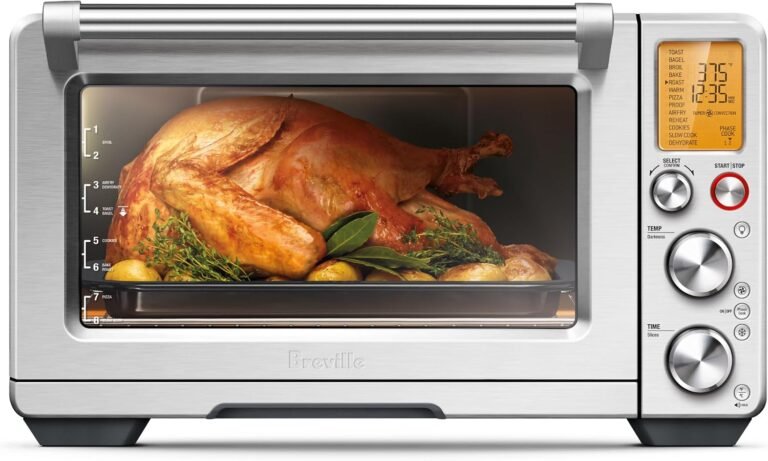
Air Fryer vs Fan Forced Oven: Key Differences
For most everyday cooking, an air fryer wins on speed and crispiness, but a fan-forced oven is the better all-around workhorse. The key difference comes down to size and air circulation. An air fryer is a small convection oven that cooks food faster with intense heat. A fan-forced oven uses a larger fan to circulate heat across multiple racks, which is better for cooking big meals.
We found that choosing between them really depends on your kitchen space and what you cook most. If you regularly make crispy fries, chicken wings, or single portions, the air fryer is your best friend. If you love roasting a whole chicken or baking multiple trays of cookies, the fan-forced oven is the practical choice. Many people, including us, worry about energy costs and what gets crisper — and the answer isn’t always what you expect.
- Speed: Air fryers preheat in minutes and cook up to 30% faster than a fan-forced oven.
- Space: Fan-forced ovens handle big batches and multiple dishes at once; air fryers are for smaller portions.
- Crispiness: Both make things crispy, but the air fryer does it quicker with less oil.
- Energy use: Air fryers are cheaper to run because they heat a smaller area.
- Versatility: Fan-forced ovens roast, bake, dehydrate, and can hold an entire holiday meal.
Below, we break down the real-world differences in cooking times, texture, and cost so you can pick the one that fits your kitchen routine best. Let’s walk through exactly how each appliance performs — no hype, just what works.
Air Fryer and Fan Forced Oven: Real-World Cooking Showdown
You are probably wondering which one actually earns its spot on your counter. We found that both appliances use a fan to circulate hot air, but their size changes everything about how they cook. Think of the air fryer as a tiny, furious whirlwind and the fan-forced oven as a steady, gentle breeze across a big room.
This difference matters for your meal prep, your electricity bill, and even the texture of your food. Let’s look at how each one performs in a typical weeknight kitchen.
How Many People Are You Actually Feeding?
The biggest deciding factor is portion size. Air fryer baskets usually hold between 2 and 6 quarts. That is perfect for one or two people, but it gets cramped fast. If you try to cook a whole chicken or a five-pound roast, you will be out of luck.
A fan-forced oven gives you at least ten times the space. You can slide in a large casserole, a big tray of vegetables, and a sheet pan of fish all at once. For family dinners or meal prep Sundays, the oven simply wins on capacity.
Batch Cooking Without the Burnout
When we cook for a crowd, we found the air fryer becomes a chore. You have to cook in small batches, which takes forever and cools down the first batch while the second one cooks. The fan-forced oven lets you cook everything at once, keeping the whole meal hot and ready.
Consider your typical week. If you mostly cook for yourself, the air fryer is efficient. If you are pulling together a meal for four or more people, the big oven saves you from spending an hour shuffling tiny baskets.
Comparing Cooking Speed and Crispiness Levels
The whole reason people buy an air fryer is for that crunchy, fried-food texture without the oil. We found that the air fryer does achieve a superior crunch on certain foods, like fries and wings. The intense, concentrated heat blasts moisture away rapidly, creating a crust that is hard to beat.
Fan-forced ovens also make crispy food, but they take longer. The larger space means the heat is less aggressive on the food’s surface. You will still get a nice roast, but it lacks that shattering crispiness you get from a basket-style cooker.
The Secret to Even Cooking
Air circulation is the secret sauce here. In an air fryer, the fan runs right next to the food, which is packed into a small area. This creates a “wind tunnel” effect. We found that this cooks food rapidly but can sometimes leave a dead spot in the middle if you overload the basket.
Fan-forced ovens have a rear fan that distributes air evenly across multiple racks. This means your baking sheets cook uniformly, with no hot spots. For cookies, pastries, and sheet-pan dinners, the even airflow of the big oven is an advantage.
Texture Tests: What Gets Crispiest Fastest
We tested frozen french fries in both appliances. The air fryer produced a golden, crispy exterior in about 12 minutes after a quick preheat. The fan-forced oven took 20 minutes and the fries were good, but slightly softer. The same goes for chicken wings. The air fryer gives you that snappy skin, while the oven gives you a tender, roasted skin instead.
It all comes down to moisture removal. The rapid air movement in the fryer acts like a hairdryer on high. It sucks the dampness out quickly, leaving a dry surface that browns beautifully. The oven is a gentler dehydrator, so it takes longer to achieve the same effect.
Energy Bills: Which One Costs Less to Run?
We found that energy usage is where the air fryer shines the brightest. Heating a tiny box takes much less electricity than heating a huge steel oven. Many guidelines point to convection cooking as an efficient way to save energy (Energy Star). Your electricity meter will spin slower when you plug in the fryer.
Because the air fryer cooks faster and heats a smaller space, it often costs cents per meal to run. The fan-forced oven, especially if it takes time to preheat that large cavity, will use considerably more power. If you cook small meals daily, the savings add up quickly over a year.
Preheating Time: The Waiting Game
The air fryer is ready to go in about three to four minutes. That is barely enough time to season your meat. The fan-forced oven, on the other hand, can take ten to fifteen minutes to reach the right temperature, depending on the model. If you are starving after work, that waiting time feels like an eternity.
We found that skipping the preheat for the oven can change baking results. Cakes and breads need that steady initial heat to rise correctly. In the air fryer, you rarely need to preheat at all, which makes it perfect for a quick snack or a rushed weeknight side dish.
Versatility: More Than Just Fries and Roasts
If you are a baker, the fan-forced oven is the clear winner. It can handle large cakes, multiple loaf pans, and delicate pastries that need gentle, even heat. Air fryers are getting better, but many are small and cylindrical, making it hard to fit a standard cake pan or a 9×13 baking dish.
Beyond baking, the fan-forced oven can also dehydrate fruit, slow-cook tougher cuts of meat, and even proof bread dough. We found that the air fryer mostly excels at roasting, reheating leftovers, and crisping up foods. It is a specialist, while the oven is a generalist.
Using Your Oven for “Air Frying” Mode
Some modern fan-forced ovens come with an “Air Fry” setting. This usually involves a special tray that sits high in the oven and a fan that runs at top speed. It works, but the results are closer to a really good roast than a true air-fried texture. The space is still too large to replicate the rapid moisture stealing of a compact fryer.
If you already own this kind of oven, you might be able to skip buying a countertop fryer. We found that it crisps up chicken skin and roasted potatoes wonderfully. Just know that the cook times will be longer than the countertop appliance, but the cleanup is often easier.
Kitchen Space and Cleanup: The Daily Friction
Countertop space is precious. An air fryer takes up a good chunk of real estate and often bulges out into the aisle. If you have a tiny kitchen, you might struggle to store it. The fan-forced oven is already built in, so it takes up zero extra floor or counter room.
Cleaning also differs. Most air fryer baskets have a nonstick coating and are dishwasher safe. We found that the mesh grates and trays can have food stuck on if you are not careful. The fan-forced oven racks fit in the dishwasher too, but the oven walls might need a wipe down every few weeks after the grease builds up.
Which One Fits Your Life Better?
Let’s cut to the chase. If you are a student, a couple, or someone who hates heating up the whole kitchen in the summer, the air fryer is a game changer. It is fast, cheap to run, and makes excellent crispy food with minimal oil. You can happily cook everything from salmon to roasted chickpeas in it.
If you have a family, love hosting dinners, or enjoy baking bread and desserts, the fan-forced oven is non-negotiable. You simply cannot bake a proper lasagna or a batch of 24 muffins in an air fryer. The oven gives you flexibility and volume that a tiny basket cannot match.
We found a middle path works for many people. Use the oven for the big stuff—the roast, the casserole, the bake sale goods. Keep an air fryer for the add-ons, like crispy broccoli, reheated pizza, or a quick batch of wings while the main dish is in the oven. This combo gives you the speed you crave and the capacity you need.
| Feature | Air Fryer | Fan-Forced Oven |
|---|---|---|
| Preheat Time | 2-4 minutes | 8-15 minutes |
| Max Capacity | 2-6 quarts | 4-6 cubic feet |
| Best For | Fries, wings, leftovers | Roasts, cakes, multiple trays |
| Energy Use | Low wattage, small area | High wattage, large area |
| Crispiness | Very high intensity | Good, but lower intensity |
| Cleanup Time | Easy, basket goes in sink | Racks and walls take longer |
Our Final Checklist for Choosing
Before you spend your money, run through this quick mental list. You want to be sure you are buying the tool that actually gets used every week. The right choice feels obvious once you think about what your kitchen really needs.
- I rarely cook for more than two people at a time.
- I value crispy textures above all else.
- I want to cut my cooking time down by half.
- I have limited counter space for a bulky appliance.
- I need to bake pies, cakes, or batch-cook meals.
- I prefer the self-cleaning feature of a big oven.
The answer changes based on your situation. We found that most kitchens benefit from having a fan-forced oven as the main workhorse and a small air fryer for speed. But if you must pick just one, think about what you ate last week. If it was mostly finger foods and one-person portions, go with the fryer. If you fed a table full of people, you already know which one you need.
Conclusion
So, which one should you choose? We found that the air fryer is your speed demon for crispy, quick meals, while the fan-forced oven is the reliable workhorse for big batches and baking. Your decision really comes down to how many people you typically feed.
Think about your last week of meals. If you mostly cooked for one or two, the air fryer saves you time and energy. If you fed a family or love baking, the oven is worth its weight in gold. Many people find they get the best results by using both for different jobs.
Take a quick look at your counter space and your grocery list. That will tell you exactly which appliance fits your routine. Pick the one that solves your biggest cooking pain point, and you will use it every single day.
Frequently Asked Questions
Can I replace my fan-forced oven with an air fryer completely?
You can try, but you will likely miss the oven for baking and large meals. Air fryers struggle with cakes, casseroles, and whole chickens. For everyday single portions, the air fryer works great. For family dinners, you will want the oven space.
Why are my air fryer results soggy compared to my oven?
Overloading the basket is the most common culprit. The food needs space for the hot air to circulate. If you pile food too high, it steams instead of crisping. Try cooking in smaller batches and shaking the basket halfway through for a better crunch.
Does a fan-forced oven cook food faster than a regular oven?
Yes, it does. The built-in fan helps distribute heat more evenly and cuts down on cold spots. This can reduce cooking time by about 25% compared to a conventional oven. You might also need to lower your recipe temperature slightly to avoid burning.
What should I never cook in an air fryer?
Wet batter like tempura or corndog coating will drip and make a mess. Large roasts and bone-in meats are also tricky because they take too long. Leafy greens like spinach can fly around and burn in the high fan speed. Stick to sturdy foods for the best results.
Is it cheaper to cook with an air fryer or a fan-forced oven?
The air fryer is almost always cheaper to run for small meals. It heats a much smaller cavity and preheats in minutes. A full-size oven uses more electricity to warm up that large space. We found that daily use of an air fryer can noticeably lower your energy bill.