Cooker vs Oven: What’s the Difference?
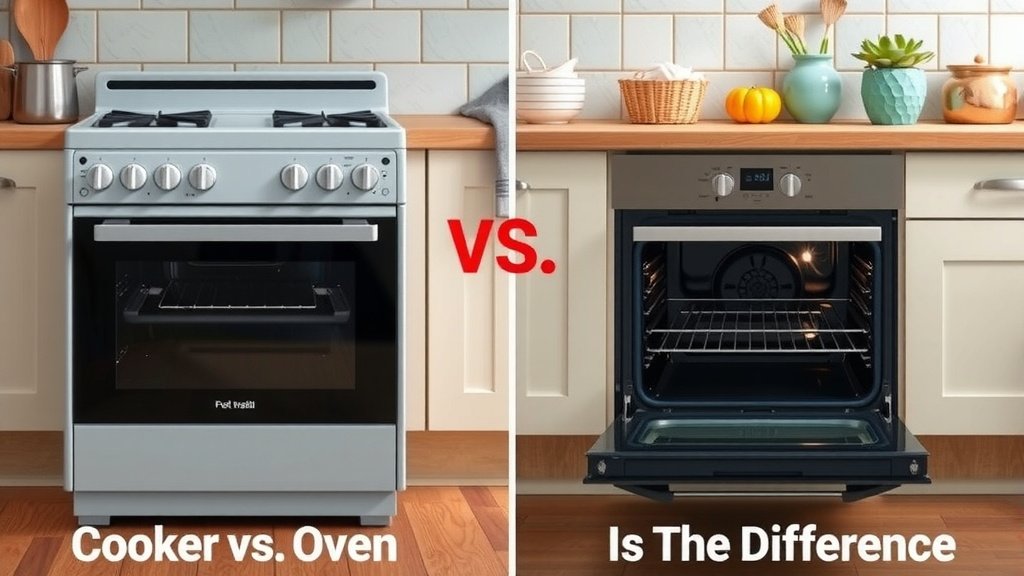
The main difference between a cooker and an oven is that a cooker is a complete kitchen appliance with both a stovetop and an oven built-in, while an oven is just the enclosed compartment used for baking or roasting. Think of a cooker as the whole package, and an oven as just one part of it, often found within a cooker or as a standalone unit.
You might see cookers referred to as ranges or stoves, especially in American kitchens. They provide a versatile cooking solution for your home. Understanding this distinction helps when you’re shopping for new kitchen appliances or trying to figure out what your current setup can do.
- A cooker includes both a stovetop and an oven.
- An oven is just the compartment for baking and roasting.
- Cookers are often called ranges or stoves.
- Ovens can be part of a cooker or standalone units.
- Knowing the difference helps with appliance choices.
Let’s walk through the key distinctions and help you understand which is which.
Understanding Your Kitchen Appliances: Cooker vs. Oven
When you’re setting up your kitchen or looking to upgrade, you’ll often hear terms like “cooker,” “range,” and “oven” used. They can sound similar, but they refer to different things. Let’s clear up the confusion.
What Exactly is a Cooker?
A cooker is a kitchen appliance that combines two essential cooking functions into one unit. It typically includes a stovetop (also called a hob or cooktop) on top and an oven compartment below. Think of it as the all-in-one station for most of your cooking needs. In many parts of the world, this is the standard appliance in a home kitchen. You’ll often find them powered by gas or electricity.
The Cooker’s Dual Nature
The beauty of a cooker lies in its versatility. You can use the stovetop for everyday tasks like boiling water, frying eggs, or sautéing vegetables. Meanwhile, the oven is ready for baking cakes, roasting chickens, or preparing casseroles. This integrated design makes it a very efficient use of space in your kitchen.
Cookers: More Than Just a Name
You might hear a cooker called a range or a stove, especially in the United States. While these terms are often used interchangeably, they all generally refer to this same combination appliance. So, if you see a “gas range” or an “electric stove,” it’s likely referring to what others might call a cooker.
Breaking Down the Oven Component
An oven is the enclosed compartment where you bake, roast, or broil food. Its primary job is to surround your food with consistent heat. Ovens can be powered by gas or electricity, and they come in various types and sizes. They are designed to maintain a specific temperature for extended periods, which is key for successful baking and roasting.
Ovens: Found in Many Forms
While ovens are a standard part of a cooker, they also exist as standalone appliances. These are often called built-in ovens. They are installed directly into your kitchen cabinetry, offering a sleeker look and more flexibility in kitchen design. You might also see them referred to as wall ovens.
The Science of Baking and Roasting
Inside an oven, heat circulates around the food. This convection process, or radiant heat from elements, cooks the food evenly. Many modern ovens come with advanced features like convection fans, which help distribute heat more effectively for crispier results. Experts at the Food and Drug Administration (FDA) suggest maintaining consistent oven temperatures for safe food preparation.
Electric vs. Gas Ovens
You’ll find both electric and gas ovens. Electric ovens tend to offer more precise temperature control and even heating, which many bakers prefer. Gas ovens heat up quickly and often provide a moist cooking environment, which can be great for roasting. The choice often comes down to personal preference and the type of cooking you do most often. We found that checking your home’s existing utility hookups is the first step in deciding.
Key Differences at a Glance
To put it simply, a cooker is the entire package, and an oven is a key component. Here’s a quick comparison:
| Feature | Cooker | Oven |
|---|---|---|
| What it is | A combined appliance with stovetop and oven. | The enclosed compartment for baking and roasting. |
| Components | Includes stovetop (hob/cooktop) and oven. | Just the oven compartment itself. |
| Common Names | Range, Stove | Oven, Wall Oven, Built-in Oven |
| Functionality | Boiling, frying, baking, roasting, broiling. | Baking, roasting, broiling. |
| Standalone Option | No (it’s always a combination). | Yes (can be built-in or a countertop model). |
Why Does This Distinction Matter?
Understanding the difference helps you when you’re shopping for new appliances. If you need both a stovetop and an oven, a cooker (or range) is likely your best bet. It’s a space-saving, integrated solution. If you already have a stovetop or are planning a custom kitchen layout, you might opt for a separate built-in oven.
Making the Right Choice for Your Kitchen
Consider your cooking habits. Do you do a lot of stovetop cooking and also need an oven for baking? A cooker simplifies things. Are you replacing just one part of your kitchen setup, or do you have specific design ideas? A standalone oven might fit better. Many kitchen designers suggest measuring your available space carefully before making a decision.
Quick Checklist for Identifying Your Appliance
Here’s a simple way to check what you have:
- Does it have burners or a flat surface on top for pots and pans?
- Is there a door below the stovetop that opens to a cooking cavity?
- If yes to both, you likely have a cooker (or range/stove).
- If you only have the enclosed cooking cavity (perhaps installed in a wall), that is an oven.
- If you have a separate stovetop and a separate oven, you have two distinct appliances.
Conclusion
You’ve learned that a cooker is your all-in-one kitchen workhorse, combining a stovetop and oven into a single unit, often called a range or stove. In contrast, an oven is the dedicated compartment for baking and roasting, which can be part of a cooker or a separate built-in appliance. Understanding this difference ensures you choose the right appliance for your cooking style and kitchen space. Before you shop, measure your space carefully and consider your cooking habits to make the best decision for your home.
Frequently Asked Questions
Can I buy just an oven without a stovetop?
Yes, you absolutely can. Standalone ovens, often called built-in or wall ovens, are common. These are installed directly into your kitchen cabinetry, giving you flexibility in your kitchen design. You can pair them with a separate cooktop if you prefer.
Are “range” and “cooker” the exact same thing?
Generally, yes. In the US, the term range is very common and refers to the same combined appliance that might be called a cooker elsewhere. Both terms describe a unit with a stovetop and an oven built together.
If I have a stovetop, do I also have an oven?
Not necessarily. You might have a standalone stovetop (also known as a hob or cooktop) and a separate built-in oven. Or, you might just have a stovetop if you don’t have a separate oven unit installed. It’s best to check your kitchen setup to be sure.
What’s the main advantage of a cooker over separate appliances?
The primary advantage of a cooker is its space-saving design. It integrates two essential cooking functions into one appliance, which is ideal for smaller kitchens. It also offers a streamlined look without the need for separate installations for a stovetop and oven.
Are there different types of ovens within a cooker?
Yes, the oven component within a cooker can vary. They can be electric or gas, just like standalone ovens. Many modern cookers also feature convection fans to help circulate heat for more even cooking and crispier results. You’ll want to check the specifications for the specific model.