Why Is Your Electric Cooker Tripping? Common Causes Explained
Your electric cooker tripping the breaker usually means there’s an electrical overload or a short circuit. This is a safety feature designed to prevent damage and fires. It often happens when too many appliances are on the same circuit, or if there’s a problem with the cooker itself.
It can be frustrating when your cooking is interrupted. We found that understanding the common causes helps you troubleshoot effectively. Whether it’s a simple fix or a sign of a larger issue, knowing why your breaker trips is key to restoring your kitchen’s power.
- Breaker trips mean too much power draw or a fault.
- Check for overloaded circuits first.
- Inspect your cooker for wiring issues.
- A professional electrician might be needed.
- Safety is the main reason for tripping.
Let’s walk through exactly why your electric cooker might be causing that breaker to flip and what you can do about it.
Troubleshooting Your Electric Cooker Tripping the Breaker
It’s a real bummer when your electric cooker decides to take a break by flipping the circuit breaker. You’re mid-recipe, and suddenly, silence. This isn’t just annoying; it’s your home’s electrical system telling you something needs attention. We found that understanding the common culprits can save you time and stress.
Most often, a tripping breaker is a safety mechanism doing its job. It’s there to protect your wiring from overheating and prevent potential fires. So, while it’s inconvenient, view it as a helpful alert system. Let’s figure out what might be causing this interruption in your kitchen.
Understanding Circuit Overloads
One of the most frequent reasons your electric cooker trips the breaker is a simple overload. Think of your electrical circuit like a highway. It can only handle so much traffic (power) at once.
Too Many Appliances on One Circuit
Your electric cooker, especially when heating up or baking, draws a significant amount of power. If you have other high-draw appliances running on the same circuit at the same time, you can easily exceed the circuit’s limit. We found that common partners in crime include microwaves, toasters, coffee makers, and even hair dryers plugged into outlets on the same electrical line.
When this happens:
- The breaker detects too much current flowing.
- It trips to shut off power and prevent overheating.
- It’s a sign your electrical panel isn’t set up for all your modern kitchen gadgets.
The Cooker’s Power Draw
Different electric cooker models have different power requirements. Larger, more powerful ovens or those with multiple heating elements running simultaneously will naturally pull more electricity. If your cooker is particularly robust, it might be pushing the limits of the circuit on its own, especially if the wiring is older or undersized for its needs.
We’ve seen cases where a cooker that worked fine suddenly starts tripping breakers. This can happen if the cooker’s heating element starts to degrade, drawing more power than it should. It’s like a car engine needing more fuel to maintain the same speed.
Potential Issues with Your Electric Cooker
Sometimes, the problem isn’t just what’s plugged in; it’s something within the cooker itself. Electrical faults inside the appliance can cause a sudden surge of power or a short circuit, which will immediately trip the breaker.
Faulty Heating Element
The heating elements in your oven or on your stovetop are essentially large resistors. Over time, they can develop cracks or wear down, leading to a short circuit. When this happens, electricity takes an unintended, direct path, causing a massive surge.
We found that a faulty heating element is a common culprit for breakers tripping unexpectedly. You might notice uneven heating or a smell of burning if an element is going bad, but sometimes it trips the breaker without any prior warning signs. We found that a faulty heating element is a common culprit for breakers tripping unexpectedly; learn how to replace a cooker element.
Wiring Problems
Internal wiring connections can become loose or damaged over time. This can be due to heat, vibration, or even pests. A loose wire can arc, or two wires can touch that shouldn’t, creating a short circuit.
Look out for:
- Frayed or damaged wires.
- Loose connections at terminals.
- Signs of scorching or melting around electrical components.
Thermostat or Control Board Issues
The thermostat and control board manage the power going to the heating elements. If these components malfunction, they can send incorrect signals, leading to an excessive power draw or a short circuit condition.
Many appliance repair professionals point to the control board as a potential failure point. If it’s not functioning correctly, it can cause all sorts of electrical anomalies, including tripping your breaker. This is a bit more advanced and usually requires professional diagnosis.
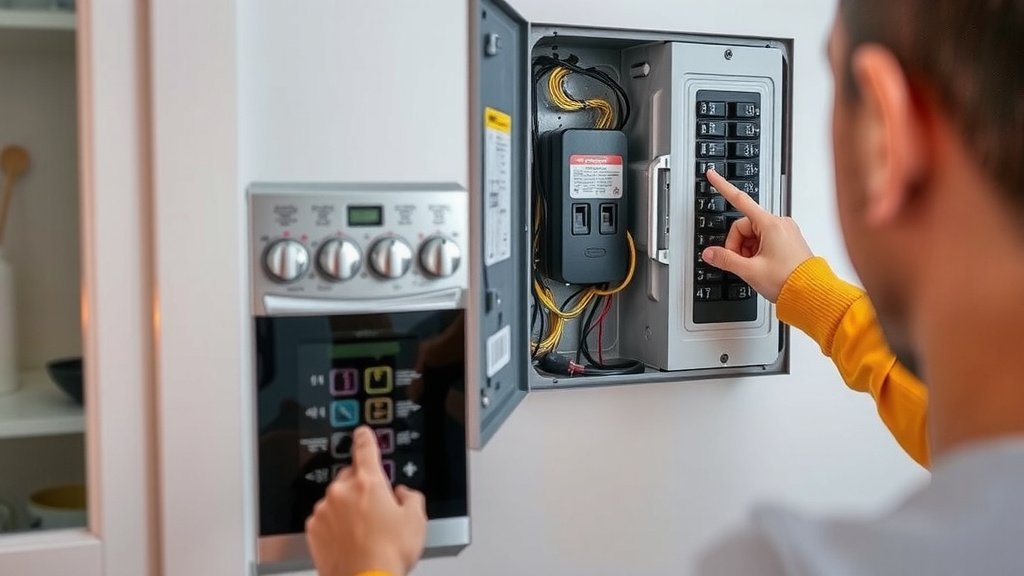
When to Call a Professional Electrician
While some issues, like circuit overload, are relatively easy to diagnose and fix, others point to deeper electrical problems. If you’ve tried the simpler solutions and your cooker still trips the breaker, it’s time to call in an expert.
Safety First: Don’t Risk It
Working with electricity can be dangerous if you’re not trained. A qualified electrician has the tools and knowledge to safely inspect your cooker’s wiring, your home’s electrical panel, and the circuit itself. They can identify issues that are invisible to the untrained eye.
We found that trying to fix complex electrical issues yourself can void warranties and, more importantly, put you at risk of shock or fire. Your home’s electrical system is complex, and safety should always be your top priority. It’s often more cost-effective in the long run to get it done right the first time.
Signs It’s Beyond a Simple Fix
Consider calling an electrician if:
- The breaker trips every time you use the cooker, even when nothing else is on.
- You notice burning smells or see sparks coming from the cooker or outlets.
- Your home’s wiring is very old (e.g., pre-1970s).
- You’ve already moved appliances to different circuits and the problem persists.
- The breaker itself looks damaged or feels unusually hot.
A professional can also advise you if your home’s electrical system is adequate for your appliances. Sometimes, an upgrade might be necessary, especially in older homes that weren’t built to handle the power demands of modern kitchens.
Quick Checklist: What to Do First
Before you panic or reach for the phone, run through these quick checks. You might solve the problem faster than you think!
- Check Other Appliances: Are other high-power devices running on the same circuit? Unplug them temporarily.
- Reset the Breaker: Turn the breaker completely off, then firmly back on. Sometimes it just needs a reset.
- Isolate the Cooker: Turn off everything else on that circuit and try using just the cooker.
- Inspect the Cooker: Look for any obvious signs of damage to the cord or the appliance itself.
- Test a Different Outlet (if applicable): If your cooker has a plug, try a different, known-good outlet on a different circuit.
- Consult Your Cooker Manual: It might have specific troubleshooting tips for electrical issues.
Conclusion
We’ve explored how your electric cooker tripping the breaker is usually a safety feature at play. Overloaded circuits are the most common reason, often due to too many appliances sharing the same power line. Sometimes, the issue lies within the cooker itself, like a faulty heating element or wiring problem.
If you’ve tried simple fixes like redistributing appliance loads or resetting the breaker without success, it’s time to call in a professional electrician. They can safely diagnose and repair more complex electrical faults.
Don’t hesitate to reach out to an expert to ensure your kitchen is safe and fully functional again.
Frequently Asked Questions
How do I know if my cooker is overloading the circuit?
If the breaker trips only when you use the cooker and other appliances are also running on the same circuit, you likely have an overload. Try unplugging other devices and see if the cooker still trips the breaker on its own.
Can a damaged power cord cause the breaker to trip?
Yes, a damaged or frayed power cord can create a short circuit. This happens when wires inside the cord become exposed and touch each other or the cooker’s metal casing, drawing too much power and tripping the breaker.
What’s the difference between an overload and a short circuit?
An overload happens when a circuit tries to draw more power than it can handle, usually by having too many devices plugged in. A short circuit is a fault where electricity takes an unintended, direct path, causing an immediate surge of current.
My breaker trips as soon as I turn on the oven. What should I do?
This often points to an issue within the cooker itself, such as a faulty heating element or a problem with the thermostat or control board. It’s a good idea to call an electrician or an appliance repair technician for diagnosis.
Is it safe to keep resetting the breaker if it keeps tripping?
No, it’s not safe to repeatedly reset a breaker that keeps tripping. This indicates an ongoing electrical problem that needs to be addressed. Continuing to reset it could lead to overheating or fire hazards.