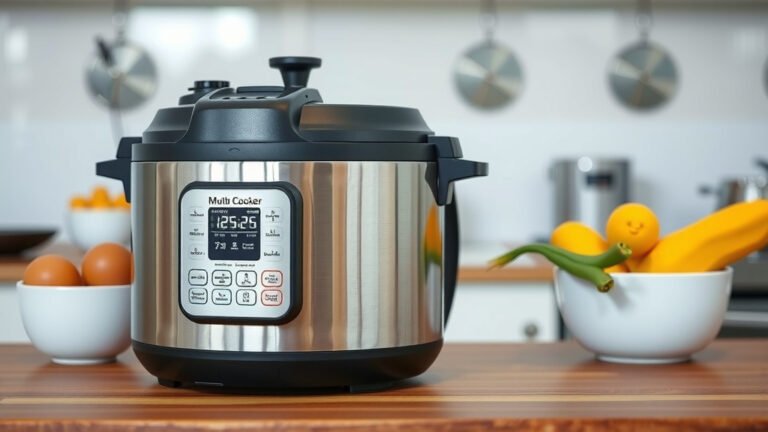
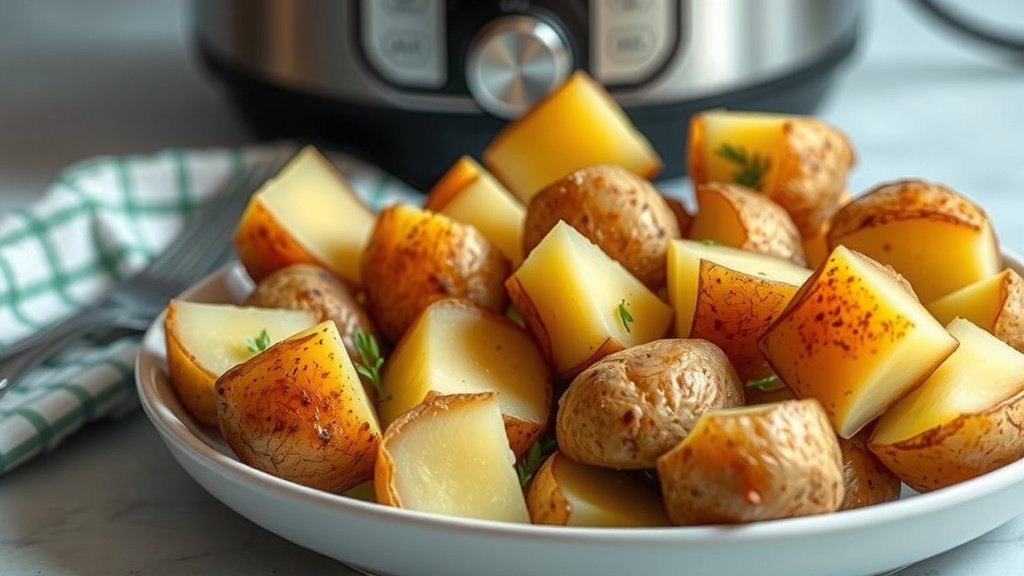
Pressure Cook Potatoes: Perfect Timing for Fluffy Results
You’re wondering how long to pressure cook potatoes, right? The short answer is: most potatoes cook in about 5 to 15 minutes on high pressure. This timing depends heavily on the type and size of the potato. Smaller, whole potatoes need less time than larger ones or those cut into chunks.
Getting potatoes perfectly cooked in your pressure cooker can feel like a culinary magic trick. We’ve found that understanding a few key factors helps immensely. This includes whether you’re cooking them whole, halved, or cubed, and your desired tenderness for recipes like mashed potatoes or baked potato skins.
- Potatoes typically take 5-15 minutes on high pressure.
- Size and type of potato matter most.
- Smaller potatoes cook faster.
- Cut potatoes cook faster than whole ones.
- Natural release is often best for tender results.
Let’s break down the perfect pressure cooking times for all your potato needs, so you can stop guessing and start enjoying delicious results!
Mastering Potato Pressure Cooking Times
You’ve got your pressure cooker ready, and a bag of potatoes. Now, how long do they actually need to cook? We found that for most potatoes, you’re looking at around 5 to 15 minutes on high pressure. This range is a great starting point. But, the exact time really boils down to a few key factors. Let’s dive in and make sure your potatoes are perfectly tender, every single time.
Understanding Potato Cooking Variables
Think of your pressure cooker like a super-powered steamer. It uses steam pressure to cook food much faster than traditional methods. For potatoes, this means getting them tender without turning them into mush. The size and type of potato play the biggest roles in how long they need.
Potato Size Matters Most
This is probably the biggest game-changer for your cooking times. Larger potatoes need more time to soften through. Smaller potatoes, like new potatoes or fingerlings, cook up in a flash. If you’re using a very large russet, it will take longer than a tiny red potato.
Potato Types and Their Textures
Different potatoes have different moisture content and starch levels. This affects how they cook. Waxy potatoes, like red or Yukon Gold, tend to hold their shape better. Starchy potatoes, like russets, break down more easily. For pressure cooking, this means slightly adjusted times. We found waxy potatoes often need a minute or two less than starchy ones of the same size.
Whole vs. Cut Potatoes
Cutting your potatoes is like giving them a head start. More surface area is exposed to the steam. Cubed potatoes cook the fastest. Halved or quartered potatoes fall in the middle. Whole potatoes, especially larger ones, will take the longest. Many recipes suggest cutting potatoes for faster, more even cooking.
Pressure Cooker Potato Cooking Timetable
Here’s a handy guide we’ve put together based on research and common cooking practices. This covers different potato types and sizes. Remember, these are approximate times. You might need to adjust slightly based on your specific pressure cooker model and potato batch.
| Potato Size/Cut | Potato Type | High Pressure Time | Release Method |
|---|---|---|---|
| Small (whole, 1-2 oz) | Any | 3-5 minutes | Natural Release (NR) for 5 min, then Quick Release (QR) |
| Medium (whole, 3-4 oz) | Any | 6-8 minutes | Natural Release (NR) for 10 min, then Quick Release (QR) |
| Large (whole, 5-6 oz) | Russet/Starchy | 10-12 minutes | Natural Release (NR) for 10-15 min |
| Large (whole, 5-6 oz) | Yukon Gold/Waxy | 8-10 minutes | Natural Release (NR) for 10 min |
| Cubed (1-inch) | Any | 3-5 minutes | Quick Release (QR) |
| Halved/Quartered (medium) | Any | 5-7 minutes | Quick Release (QR) |
We found that using the natural release method often yields the most tender potatoes. This allows the cooking process to finish gently. Quick release can sometimes leave the outside a bit firmer. For fluffy mashed potatoes, a slightly longer natural release is your friend. For potato salad, where you want them to hold their shape, quick release is usually better.
The Importance of Water and Trivets
You absolutely need liquid in your pressure cooker for it to work. Most recipes call for just 1 to 1.5 cups of water or broth. This creates the steam needed. Don’t go overboard with liquid; it doesn’t get absorbed by the potatoes. If you’re cooking potatoes without adding liquid to the pot (like placing them on a trivet for steaming), you still need that initial 1 cup of water at the bottom.
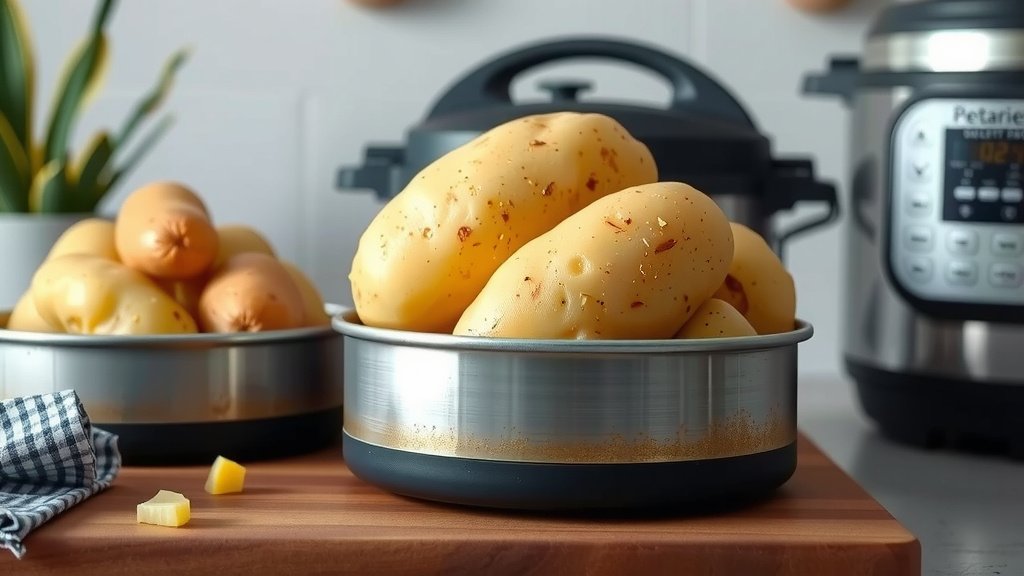
A trivet or steamer basket is essential if you don’t want your potatoes sitting directly in the water. This keeps them from getting waterlogged. We found this especially useful for recipes where you want distinct potato pieces, not boiled ones.
Natural vs. Quick Release: What’s Best for Potatoes?
This is a common question. For potatoes, we tend to lean towards natural release. Why? It’s like letting a steak rest after cooking. The residual heat continues to cook the potato gently. This helps achieve a perfectly tender interior without making the outside mushy. Many sources, like the USDA, suggest natural release for vegetables that you want to retain their structure and texture.
However, if you’re in a hurry, or if you want very firm potatoes for something like potato salad, a quick release can work. Just be aware that your potatoes might be slightly less tender. For most mashed potato or baked potato applications, patience with natural release pays off.
Troubleshooting Your Pressure Cooked Potatoes
What if your potatoes aren’t quite right? Don’t worry, it happens! Here are a few common hiccups and how to fix them.
Potatoes are Too Hard:
This usually means they needed a bit more time. If you did a quick release, you can put the lid back on and cook for another 1-2 minutes on high pressure, followed by a quick release. If you did a natural release, you might need to do a full re-cook. Next time, add an extra minute or two to your cooking time.
Potatoes are Too Soft (Mushy):
This often happens with overcooking or using a long natural release when quick release would have been better. If your recipe allows, you might be able to salvage them. For mashed potatoes, mushy is often okay! For other dishes, you might need to stir them very gently to avoid them falling apart completely. Next time, reduce your cooking time by a minute or two, or opt for a quicker release.
Uneven Cooking:
This usually points back to size and type variations. Try to use potatoes that are as similar in size and type as possible. Cutting them into uniform pieces also helps immensely. If you notice some pieces are done before others, you can carefully remove the tender ones and let the rest continue cooking.
Quick Pressure Cooking Checklist
Ready to get started? Keep these points in mind for pressure cooking success:
- Use the right amount of liquid (1-1.5 cups).
- Consider potato size and type for timing.
- Cut potatoes for faster, more even cooking.
- Natural release is usually best for tender results.
- Adjust times based on your cooker and preference.
- Don’t be afraid to experiment with timings!
Conclusion
You’ve now got the knowledge to pressure cook potatoes perfectly every time. Remember, it’s all about matching your cooking time to the potato’s size and type. Whether you prefer them whole, cubed, or halved, a little adjustment goes a long way. We found that using a natural release method generally leads to the most tender results, but a quick release works for firmer textures. So, don’t be afraid to experiment! Your next batch of mashed or roasted potatoes is just a pressure cook away. Ready to try it out? Grab your favorite potatoes and get cooking!
Frequently Asked Questions
What’s the minimum amount of water I need in my pressure cooker for potatoes?
You’ll generally need about 1 to 1.5 cups of liquid, like water or broth, at the bottom of your pressure cooker. This is essential for creating the steam needed to cook your potatoes properly. Even if you’re using a trivet, this base amount of water is still required.
Can I pressure cook different types of potatoes together?
While you can, we found it’s best to cook potatoes of similar types and sizes together for the most even results. Different potato varieties and sizes have slightly different cooking needs. Mixing them might lead to some being overcooked while others are undercooked.
How do I ensure my cubed potatoes don’t turn mushy?
To avoid mushy cubed potatoes, opt for a quick release method after cooking. This stops the cooking process immediately, helping them retain their shape. Also, be careful not to overcook them; 3-5 minutes on high pressure is usually sufficient for uniform 1-inch cubes.
Is it okay to put potatoes directly in the water, or do I need a trivet?
You can put them directly in the water, but using a trivet or steamer basket is often recommended. This prevents the potatoes from absorbing too much water and becoming waterlogged, especially if you want them to hold their shape for dishes like potato salad.
My pressure cooker has different pressure settings. Which one should I use for potatoes?
For potatoes, you’ll typically want to use the high pressure setting. Most recipes and charts, including the one we provided, are based on high pressure cooking. Low pressure generally takes longer and is usually better suited for more delicate items.