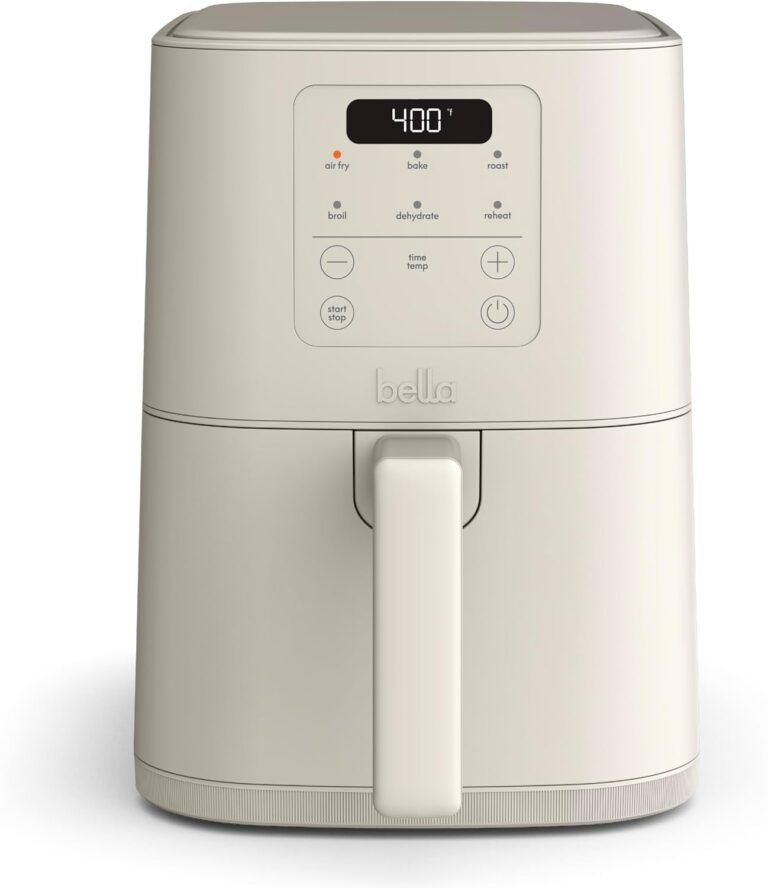
Air Fryer vs Backofen: Was ist besser im Vergleich?
If you want faster meals, easier cleanup, and lower energy bills, an air fryer wins for most everyday cooking. However, a traditional oven (Backofen) is still better for large batches, baking, and roasting bigger cuts of meat. The choice really comes down to what you cook most often and how much space you have.
We researched both appliances side-by-side, looking at cooking speed, taste results, energy use, and versatility. We found that many people are surprised by what an air fryer can do, but also by the things it simply can’t replace. You might be wondering if you need both gadgets on your counter, and that’s a fair question. Your kitchen size and family needs play a huge role in the final answer.
- Speed: Air fryers preheat in about 3 minutes and cook up to 25% faster than a regular oven.
- Crispiness: The air fryer makes frozen fries and chicken wings extra crispy with far less oil.
- Capacity: A standard oven holds a whole turkey, multiple trays of cookies, or a large casserole dish.
- Energy: Air fryers use about half the electricity of a full-size oven, especially for small meals.
- Versatility: Ovens are better for baking cakes and bread, while air fryers excel at reheating leftovers.
Below, we break down the real differences in taste, texture, and ease of use, so you can decide which one (or both) fits your cooking style. Let’s walk through some simple comparisons and honest recommendations.
Understanding the Air Fryer Versus Oven Showdown
We found that most people buy an air fryer expecting it to replace their big oven entirely. That is rarely the full story. Think of the air fryer as a tiny, turbo-charged convection oven that sits on your counter. It blows hot air around at high speed to make food crispy fast.
A traditional oven, which is often called a Backofen in German, works differently. It heats a large space slowly and evenly. You use it for big jobs like a Sunday roast, multiple trays of cookies, or a whole lasagna. It is the workhorse of the kitchen, while the air fryer is the quick sprinter.
The Real Difference in Cooking Technology
Both appliances use dry heat. The magic difference is airflow and size. An air fryer is small, so the heating element is very close to your food. A powerful fan moves the hot air around every inch of the basket.
Your oven relies on radiant heat. In a conventional oven, the heat comes from the top and bottom elements. Even with a convection setting, the air movement is much gentler. This means food takes longer to cook, and you often need to rotate trays to get an even result.
How Crispiness Compares in Real Life
Crispiness is where the air fryer shines. We found that the high-speed fan pulls moisture away from the surface of food. This creates that golden, crunchy crust you love without deep frying. Frozen french fries come out perfectly crispy in about 15 minutes with just a spritz of oil.
Ovens can also crisp food, but it takes longer. You might need to preheat for 15 minutes and then broil or bake for an extra 10 to get the same crunchy texture. For a busy weeknight, that extra time is a dealbreaker for many home cooks.
Speed and Preheat Time: A Quick Comparison
Speed is the number one reason people switch to air frying. We found that a typical air fryer reaches its target temperature in about 3 minutes. No waiting for the little bell to ding. You just set it, and it starts cooking almost instantly.
Your standard oven needs 10 to 15 minutes just to preheat. That time adds up. If you are cooking small meals five nights a week, you are wasting almost an hour of your life just waiting for the oven to get hot. Many experts say this is why families are ditching the oven for smaller tasks (Cleveland Clinic).
Energy Savings You Can Actually See
Energy efficiency is a huge win for the air fryer. A full-size oven draws about 2,400 watts to heat up. An air fryer only uses about 1,500 watts, and it runs for a much shorter time because it cooks faster.
We found that using an air fryer can cut your cooking energy use by half for small meals. For example, reheating leftovers in an oven takes 20 minutes. In an air fryer, the same meal is hot and crispy in 5. That saves you money on your electricity bill over time.
Cost Per Meal Breakdown
Let’s look at the math for a simple meal like chicken tenders. Using a full oven for 30 minutes costs more than using an air fryer for 12 minutes. The savings are small per meal, but they add up over a year of regular cooking.
- Small meals: Air fryer uses 50% less energy.
- Large meals: Oven is more practical, even if it costs more to run.
- Reheating: Air fryer is faster and cheaper than the microwave for crispy food.
You should still use the oven for batch cooking. Cooking six chicken breasts at once is more efficient than doing two batches in a tiny air fryer basket.
Capacity and Batch Cooking Limitations
Here is the honest truth: an air fryer is small. Most models hold about 4 to 6 quarts. That fits about two servings of fries or a single layer of chicken wings. If you are cooking for a family of four, you might need to do multiple batches.
Your oven has a massive capacity. You can fit a whole turkey, a large sheet pan of roasted vegetables, and a casserole all at once. This makes the oven the clear winner for holidays, parties, or meal prep Sundays.
When the Oven Wins Every Time
Baking is the biggest weakness of the air fryer. Cakes, bread, and cookies need even, gentle heat from all sides. Air fryers cook too aggressively on the top, which can burn the top of a cake before the center is done.
We also found that liquids and batters are tricky in an air fryer. The strong fan can blow the top of a muffin or create a mess. You can use a pan inside the basket, but the results are just not as consistent as an oven. Stick to your oven for baking projects.
Whole Roasts and Large Proteins
You cannot air fry a whole chicken or a large pork shoulder easily. The size just does not fit, and the intense heat will dry out the outside before the inside is cooked. Your oven creates a moist environment that is better for slow-roasting big cuts of meat.
Many home cooks find that they use the oven for the main protein and the air fryer for the sides. This combo gives you the best of both worlds without sacrificing quality. You can roast butternut squash in the oven while the air fryer crisps up the chicken thighs.
Taste and Texture Results for Everyday Foods
We found that taste depends heavily on what you are cooking. For frozen foods, the air fryer wins dramatically. Think mozzarella sticks, tater tots, and fish sticks. They come out tasting like they were deep-fried but with 80% less oil.
For fresh vegetables, both appliances do well. However, the air fryer gives you charred edges faster. Broccoli florets tossed in oil and garlic crisp up in 8 minutes. The oven takes 20 minutes and gives you a more steamed texture unless you crank the heat high.
The Reheating Champion
Reheating is where the air fryer truly replaces the oven and microwave. Pizza that gets soggy in a microwave becomes crispy in the air fryer. Leftover fried chicken reclaims its crunchy coating. We found that reheating in an air fryer is faster than an oven and better than a microwave.
You just need to watch the timing. Since the air is so hot, food can go from reheated to burnt in a matter of minutes. Set the temperature lower, around 300 degrees, to warm things up gently without scorching the outside.
Practical Side-by-Side Comparison Table
Use this simple chart to see where each appliance stands on key factors. This is based on our research and common cooking experience, not just specs on a box.
| Feature | Air Fryer | Traditional Oven |
|---|---|---|
| Preheat Time | 2 to 3 minutes | 10 to 15 minutes |
| Energy Use | Lower (1,500W) | Higher (2,400W) |
| Crispiness | Excellent for small items | Good, but slower |
| Capacity | 2 to 4 servings | 12 to 20 servings |
| Baking | Poor for cakes | Excellent for all baking |
| Reheating | Best texture | Slow and dry |
Kitchen Space and Lifestyle Fit
Counter space is precious. That is the most common reason people hesitate to buy an air fryer. They already have a toaster, a microwave, and a coffee maker fighting for space. You have to think about whether you will actually use it enough to justify the footprint.
If you live alone or have a small family, the air fryer fits perfectly. It replaces your toaster oven and your oven for most daily tasks. For larger families, the oven must stay in the rotation, but an air fryer becomes a handy secondary tool.
Cleaning and Maintenance Effort
Cleaning is simpler with an air fryer. The basket and tray are non-stick and can go right in the dishwasher. You can wipe the inside with a damp cloth. No racks to scrub and no heavy trays to deal with.
Ovens are a pain to clean. Spills bake onto the bottom and leave sticky residue. You have to use harsh chemicals or a steam cleaner to get the job done. Many experts say self-cleaning cycles can produce fumes that are unpleasant, so you end up doing it by hand.
Safety Considerations in the Kitchen
Air fryers get hot on the outside. You need to keep them away from the wall and out of reach of small children. They also use a lot of electricity on a single circuit, so plug them directly into the wall outlet, not a power strip.
Ovens are more fixed and safer in some ways. The heat is contained inside, and the door locks during cleaning. Just remember that the outside glass can get very hot, and curious kids can burn themselves if they touch the door.
Your Final Decision Checklist
We found that most households end up using both appliances, just for different jobs. But if you only want one, use this quick mental checklist to guide your choice.
- Do you cook for 1 to 2 people? Choose an air fryer for daily meals.
- Do you love baking cakes and cookies? Keep your oven, the air fryer won’t cut it.
- Are frozen snacks your weakness? The air fryer turns them into a crispy treat.
- Do you host big dinners? You need the oven’s capacity for roasts and casseroles.
- Is your energy bill a big concern? Use the air fryer for small sides to save money.
- Need to reheat leftovers fast? The air fryer has the best texture by far.
Think of it this way: the air fryer is your daily driver for quick trips, while the oven is the family SUV for big hauls. Most kitchens have room for just one, but if you have the space, owning both gives you total kitchen freedom. You can grab the air fryer for fries and heat the oven for a batch of bread without skipping a beat.
Conclusion
You no longer have to pick just one side. The air fryer is your best friend for quick weeknight meals, crispy frozen snacks, and reviving leftovers. The oven remains the champion for baking projects, feeding a crowd, and slow-roasting large cuts of meat.
We found that most people get the most value by using both, each for the jobs they do best. If you only have room for one, think about what you cook most often. For singles and couples who love crispy food, the air fryer is a total game-changer.
Here is your next step: look at your weekly menu for the next seven days. If you see a lot of small, quick meals, get an air fryer. If you see big roasts and baked goods, stick with your oven. Your perfect answer is right there on your own dinner plate.
Frequently Asked Questions
Can an air fryer replace my oven completely?
No, it is not a full replacement. You can cook most single-serving and small-batch meals in an air fryer with great results. But you still need a real oven for baking cakes, cooking whole chickens, or making multiple trays of food for a party. Most people keep both and use them for different jobs.
Is food cooked in an air fryer actually healthier?
Yes, in most cases it is. You use up to 80% less oil than deep frying, which cuts calories and fat. The hot air circulation creates a crispy texture without the extra grease. Just remember that processed foods like frozen fries are still not health foods. The air fryer just makes them a better option than the deep fryer.
Why does my baked cake come out burnt on top in an air fryer?
That is a common problem because the heating element is so close to your food. The intense top-down heat browns the surface before the center has a chance to cook. You can try lowering the temperature by 25 degrees and covering the cake with foil halfway through. Even then, your standard oven will give you a much more reliable bake.
What size air fryer do I need for a family of four?
You should look for a model that holds at least 6 quarts. This size fits about two pounds of fries or four chicken breasts in a single layer. If you regularly cook for five people or more, a 10-quart model or a dual-basket air fryer will save you from cooking in batches. Bigger is better when you are feeding a full family.
Is it cheaper to use an air fryer than a microwave for reheating?
An air fryer uses more electricity than a microwave, but it produces a much better texture. For most leftovers, the air fryer takes about 5 minutes and gives you crispy results that taste reheated but fresh. The microwave is cheaper and faster, but your pizza and fried chicken come out soft and soggy. We think the slightly higher energy cost is worth it for the quality.