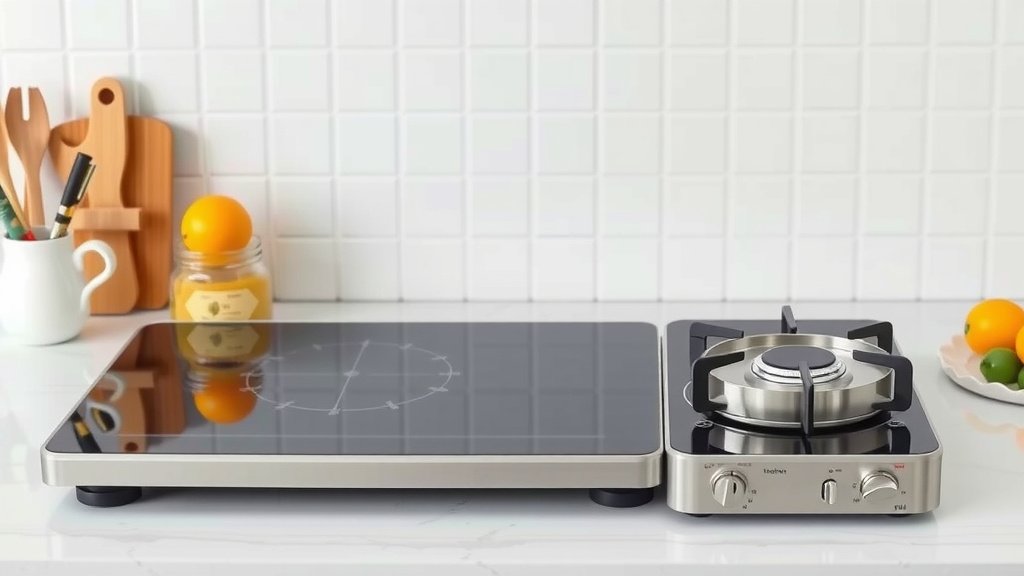
Induction vs Gas Cooker: Which is Best for Your Kitchen
Deciding between an induction cooker vs gas cooker often comes down to your cooking style and kitchen setup. While gas offers a familiar, hands-on experience with visible flames, induction cooktops heat your cookware directly, providing faster, more precise, and energy-efficient cooking. Many find induction a safer and cleaner option for modern kitchens.
Gas stoves have been a kitchen staple for decades, giving you that satisfying visual cue of heat. But, induction technology is rapidly changing the game. It uses electromagnetism to heat your pots and pans, making it incredibly responsive and efficient. We found that this direct heating method also means less wasted energy and a cooler kitchen environment overall.
- Speed: Induction heats up much faster.
- Efficiency: Less energy is wasted with induction.
- Safety: Induction surfaces stay cooler.
- Control: Both offer good heat control.
- Cost: Gas is typically cheaper upfront.
Let’s break down the key differences to help you choose the best cooktop for your home.
Comparing Induction and Gas Cooktop Cooking
Choosing between an induction and a gas cooktop is a big decision for your kitchen. Both have their fans for good reasons. We’re here to help you understand the key differences. This way, you can pick the one that truly fits your cooking habits and kitchen needs.
Understanding the Technology Behind Each Cooktop
Let’s dive into how these cooktops actually work. It’s not as complicated as it sounds, and knowing this will help you appreciate their unique strengths.
How Gas Cooktops Work
Gas cooktops are pretty straightforward. You turn a knob, and a spark ignites the natural gas or propane flowing through the burner. This creates a visible flame. You can easily see the size of the flame, which directly corresponds to the heat level. Many cooks love this visual feedback. It feels very hands-on and traditional. The heat is generated from the flame and transfers to your cookware.
How Induction Cooktops Work
Induction cooktops are a bit more high-tech. They use electromagnetism. Underneath the smooth glass surface, there’s a coil of copper wire. When you turn on an induction burner, an electric current flows through this coil. This creates a magnetic field. When you place a magnetic pot or pan on the surface, this magnetic field causes the metal in the cookware to vibrate rapidly. These vibrations generate heat directly within the pan itself. Our guide explains how induction hobs detect a pan for safety and efficiency.
The key thing to remember is that the cooktop surface itself doesn’t get very hot. It’s the pan that heats up. This is a pretty big deal for safety and efficiency. We found that the direct heating method is incredibly fast and responsive.
Performance and Cooking Experience
How do they stack up when you’re actually cooking? This is where you’ll see some of the most noticeable differences.
Speed and Responsiveness
Induction cooktops are champions when it comes to speed. They heat up your cookware almost instantly. You can bring water to a boil much faster than on a gas stove. We’ve seen tests showing induction can boil water up to 50% faster than gas. This means less waiting and more cooking. You can also adjust the heat settings very quickly. Turning the dial down on an induction cooktop results in an immediate drop in heat. This gives you incredible precision.
Heat Control and Evenness
Both gas and induction offer good heat control, but in different ways. Gas gives you that visible flame that you can adjust. It’s intuitive for many. However, some gas burners can create hot spots in your pan, leading to uneven cooking. Induction offers very fine-tuned digital control. You can often set precise temperature levels, which is fantastic for delicate tasks like melting chocolate or simmering sauces without scorching. Many users report more even heating across the bottom of their pots and pans with induction. We found that the lack of open flame means less heat escaping around the sides of the pot.
Energy Efficiency
Induction cooking is generally more energy-efficient. Because the heat is generated directly in the cookware, very little energy is lost to the surrounding air. Gas cooktops lose a significant amount of heat up the sides of the pot or pan. Research suggests induction cooktops can be around 85% to 90% efficient. Gas cooktops, on the other hand, are typically around 40% efficient. This difference can add up over time on your energy bills. Many studies point to induction as the winner in this category (U.S. Department of Energy).
Safety Features
Safety is a major concern for any kitchen appliance. Gas cooktops have an open flame, which always carries a risk. There’s also the potential for gas leaks. If a burner is left on accidentally, it can be a hazard. Induction cooktops are generally considered safer. Since the cooktop surface itself doesn’t get as hot, the risk of accidental burns is lower. Many induction models also have features like automatic shut-off if no cookware is detected. They also cool down quickly once you remove the pot. This makes them a great choice for households with children or pets.
Practical Considerations for Your Kitchen
Beyond how they cook, there are other factors to think about.
Cookware Requirements
This is a big one for induction. For induction to work, you need cookware with a magnetic base. This means pots and pans made of cast iron or magnetic stainless steel will work perfectly. Aluminum, copper, and glass cookware will not work unless they have a special magnetic layer added to the bottom. Many people already own compatible cookware, but if you don’t, you might need to invest in new pots and pans. Gas cooktops are more forgiving; virtually any type of cookware works on gas.
Here’s a quick way to check your existing pots and pans:
| Cookware Material | Works on Gas? | Works on Induction? |
|---|---|---|
| Cast Iron | Yes | Yes |
| Magnetic Stainless Steel | Yes | Yes |
| Aluminum | Yes | No (unless it has a magnetic base) |
| Copper | Yes | No (unless it has a magnetic base) |
| Glass/Ceramic | Yes | No (unless it has a magnetic base) |
Installation and Venting
Gas cooktops require a gas line connection and proper ventilation to the outside. This can sometimes involve more complex installation. Induction cooktops, being electric, usually just need a standard electrical outlet. However, they often require a dedicated circuit due to their high power draw. Ventilation is still recommended to remove cooking odors and steam, but it’s not as critical for removing combustion byproducts as with gas.
Cleaning and Maintenance
Cleaning is often simpler with induction. The smooth glass surface is easy to wipe down. Since spills don’t bake onto a super-hot surface, they’re usually easier to clean. Gas cooktops have grates and burner caps that can be removed and washed, but food can fall into the burner assembly, making deep cleaning more involved. Many find induction’s smooth surface a real cleaning advantage.
Cost: Upfront vs. Long-Term
Typically, gas cooktops have a lower upfront purchase price compared to induction cooktops. However, the long-term running costs can be different. While gas prices fluctuate, the higher energy efficiency of induction can lead to savings on your electricity bill over time. You also need to factor in the potential cost of buying new cookware if you opt for induction and don’t already have magnetic pots and pans.
Consider these points when making your choice:
- Your Budget: How much can you spend now and over time?
- Your Cooking Style: Do you need rapid boiling or precise low simmering?
- Your Kitchen Setup: Do you have a gas line and proper venting?
- Your Cookware: What pots and pans do you currently own?
- Your Safety Priorities: Is an open flame a concern?
- Your Maintenance Tolerance: How much time do you want to spend cleaning?
Conclusion
Choosing between an induction and a gas cooktop really comes down to your personal cooking needs and kitchen setup. Induction offers incredible speed, precision, and safety with its direct heating technology, making it a modern and efficient choice. Gas provides that familiar hands-on experience with visible flames and often a lower upfront cost, though it can be less energy-efficient. We found that both can serve you well, but understanding their unique strengths will help you make the best decision for your home. Think about your current cookware, your budget, and what cooking experience you prefer, then make the switch that feels right for you!
Frequently Asked Questions
Is induction cooking really faster than gas?
Yes, research and our findings show induction is significantly faster. It heats your cookware directly using electromagnetism, bringing water to a boil much quicker than a gas flame. This speed means less waiting and more efficient cooking for you.
Do I need to buy new pots and pans for an induction cooktop?
You might. Induction cooktops require magnetic cookware. Cast iron and magnetic stainless steel work great. If your current pots and pans aren’t magnetic, you’ll need to get new ones to use them on induction.
Is an induction cooktop safer for families with kids?
Many users find induction much safer. The cooktop surface itself doesn’t get as hot as a gas burner, reducing the risk of accidental burns. Plus, features like auto shut-off add an extra layer of safety.
How does cleaning an induction cooktop compare to gas?
Cleaning is generally easier with induction. The smooth glass surface wipes clean easily, and spills don’t bake on as intensely. Gas cooktops have grates and burners that can be more time-consuming to clean thoroughly.
Which type of cooktop is more energy-efficient?
Induction cooktops are considerably more energy-efficient. They lose much less heat to the surrounding air because the energy goes directly into the cookware. Gas cooktops lose a substantial amount of heat around the sides of the pot.