
Air Fryer Safety Guidelines Everyone Must Follow
Yes, air fryers are safe to use when you follow the manufacturer’s guidelines and a few common-sense rules, even though they get extremely hot inside. We found that the biggest risks, like burns or fire, come from overfilling the basket, using too much oil, or blocking the vents. For most households, an air fryer is a convenient and safer alternative to deep frying because there is no large pot of hot oil to worry about.
Because they work like a powerful mini convection oven, they heat up fast and can easily cause a kitchen accident if you’re not careful. Many experts say that proper placement and routine cleaning are the two most important steps to keep you and your family safe. It’s also key to remember that an air fryer is not a toy—you should keep it out of reach of small children and never leave it running while you leave the house.
- Keep it clear: Leave at least 5 inches of space around the air fryer for airflow.
- Don’t overfill: Pack food loosely so hot air can circulate and cook evenly.
- Go easy on oil: Use only a teaspoon or a light spray; too much oil causes heavy smoke.
- Clean every time: Wash the basket and tray after each use to prevent grease buildup.
- Unplug it: Always pull the plug when you’re done, and never immerse the base in water.
Below, we break down the essential safety guidelines for using an air fryer, from first-time setup to everyday habits that prevent accidents. Let’s walk through exactly how to enjoy crispy food without the worry.
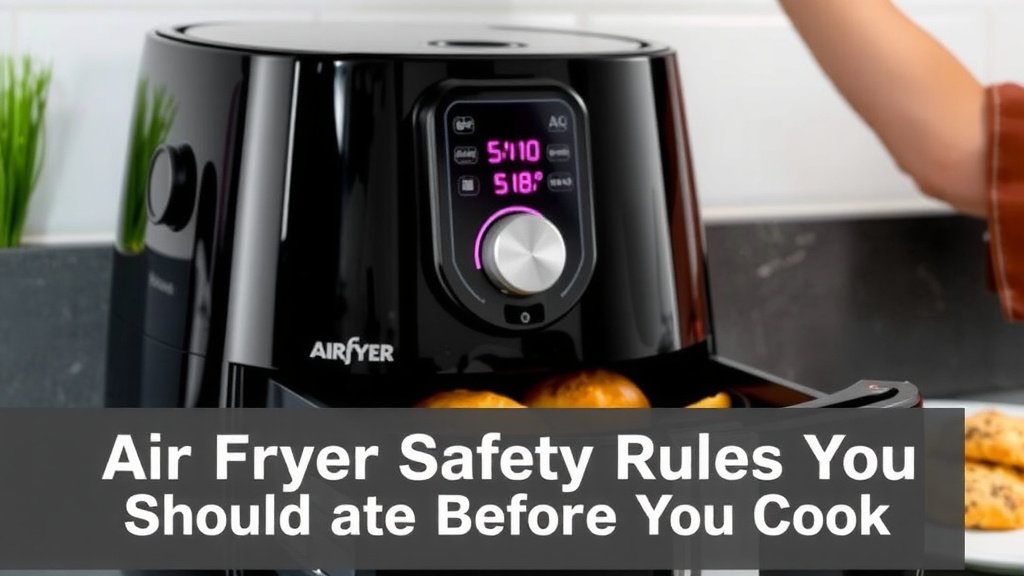
Air Fryer Safety Rules You Should Know Before You Cook
Before you plug in that shiny new countertop gadget, you need to know the ground rules. Air fryers are amazing little machines, but they are also powerful heating appliances. We found that most accidents happen because people treat them like a slow cooker or a microwave. That is a mistake.
Think of your air fryer as a tiny jet engine for your food. It blasts hot air at high speed to get that crispy texture. That speed is what makes it great, but it also means you need to respect the heat. The outside gets hot. The vent gets hotter. And the basket is basically a mini oven tray.
Where to Place Your Air Fryer for Maximum Safety
Location is everything. We found that a surprising number of kitchen fires start because people shove the fryer under a cabinet or right against the wall. The machine needs to breathe.
Keep at least five inches of clearance on all sides. That includes the top. Do not put anything on top of the air fryer while it runs. The hot air has to escape somewhere. If it cannot escape, the heat builds up and can warp the plastic or start a fire.
Place it on a flat, stable, heat-resistant surface. Granite, tile, or a sturdy wooden counter works well. Avoid flimsy tables or cutting boards that can wobble or melt. And no, the stove is not a great spot unless you turn off all the burners first.
How to Plug In Your Air Fryer the Right Way
Your air fryer draws a lot of power. Plug it directly into a wall outlet. We do not recommend extension cords or power strips for this appliance. They can overheat and trip your breaker, or worse, melt under the load.
Make sure the plug is fully seated in the outlet. A loose connection creates resistance, which creates heat. That heat can damage the cord and the outlet over time. If the outlet feels warm during use, stop using it and try another circuit.
Unplug the air fryer when you finish cooking. You might think it is off because the fan stopped, but the standby mode still draws power. Unplugging also prevents accidental bumps from turning it back on.
Preparing Your Food Without Starting a Fire
What you put inside the basket matters just as much as where you put the machine. Overfilling is the number one mistake we see in our research. A full basket blocks the air flow. That means uneven cooking and a higher chance of smoke.
Fill the basket only halfway to two-thirds full. Leave room for the air to swirl around each piece of food. If you have a big batch of fries, cook them in shifts. Yes, it takes longer. But you get better results and a safer kitchen.
Do not use paper towels or parchment paper without checking the manual first. Some brands allow parchment paper, but it must be weighed down by food and cut to fit. If a loose piece of paper flies up into the heating element, it will burn and smoke.
How Much Oil Is Too Much Oil
An air fryer needs very little oil. We found that most recipes work well with just a teaspoon or a light spray. Some foods do fine with zero oil at all.
Drizzling extra oil because you think it will make things crispier is a bad idea. Excess oil drips to the bottom of the basket. Then it heats up, smokes, and can catch fire. The smoke you smell might just be burning oil residue, not your food.
Use a brush or a spray bottle to apply oil evenly. Toss your food gently to coat it. That is all you need for that golden brown crunch. Your heart will thank you, and so will your smoke alarm.
Breading and Batter: The Hidden Smoke Hazard
Wet batter is a problem in an air fryer. Think about beer-battered fish or a runny tempura coating. That batter drips and creates excess smoke as it hits the hot surface. It can also burn onto the heating element.
If you want a crispy coating, use dry or slightly wet batters. Press breadcrumbs or panko onto your food and let it rest for a few minutes. This helps the coating stick and reduces dripping.
For wet batters, try applying a light spray of oil on the outside after breading. This creates a barrier that helps the coating brown without dripping too much. But watch it closely and be ready to stop if you see heavy smoke.
Cleaning Your Air Fryer to Prevent Grease Buildup
A dirty air fryer is a dangerous air fryer. Grease buildup is a leading cause of kitchen fires in appliances like these. Many experts say that routine cleaning is just as important as safe placement (National Fire Protection Association).
The good news is that cleaning is easy. You just have to do it every single time. Do not let it sit overnight with greasy crumbs inside. That grease becomes sticky, then hardens, then eventually catches fire on the next use.
First, always unplug the unit and let it cool completely. The basket and tray are usually dishwasher safe, but check your manual. If they are not, wash them in warm soapy water with a soft sponge.
How to Clean the Heating Coil and Inner Cavity
Most people wash the basket and forget the inside of the fryer. That is a mistake. Grease splatters up onto the heating coil and the interior walls. Over time, that residue burns off and creates smoke.
Use a damp cloth or a soft brush to wipe down the inside cavity. Be gentle near the heating element so you do not damage it. Do not submerge the base in water. You will ruin the electronics and risk an electrical shock.
Turn the air fryer upside down to check for crumbs in the bottom. A quick shake removes loose bits. Then wipe again. This whole process takes two minutes, and it keeps your fryer performing like new.
How Often You Should Give It a Deep Clean
We found that a quick wipe-down after each use works for most people. But you should do a deep clean every week or two, depending on how often you cook. Heavy users should do it weekly. Occasional users can stretch it to bi-weekly.
A deep clean means removing the basket and tray and soaking them in hot soapy water. Wipe the interior with a degreaser if needed. Check the vents for dust and debris. Dust can block airflow too, and that causes overheating.
Pay attention to the smell. If your air fryer smells like old fries even after cleaning, you have grease buildup somewhere. Find it and clean it before your next cook session.
Supervising Your Air Fryer While It Runs
An air fryer is not a set-it-and-forget-it appliance. You should stay in the kitchen while it is running. We know it is tempting to walk away and check your email, but that is how accidents happen.
Many guidelines from consumer safety groups recommend staying nearby to monitor the food. If you see smoke or smell something burning, unplug it right away. Do not open the basket mid-cycle unless you need to shake the food, and always use oven mitts.
Set a timer for the recommended cooking time, not longer. You can always add more time if needed, but you cannot un-burn a basket of food or undo a fire scare.
Shaking and Flipping Food Without Getting Burned
The outside of the basket gets hot. The inside is hotter. Use silicone tongs or a wooden spatula to move food around. Metal tongs can scratch the nonstick coating, and that coating is what keeps food from sticking.
When you shake the basket, do it over the sink or counter, not over hot coils. Hold the handle firmly and give it a quick jerk. If your air fryer has a tray insert, use a fork to lift it out for flipping, but rest it on a trivet first.
Never rest the hot basket on a plastic cutting board. It will melt. Use a cooling rack or a wooden board that can handle the heat.
What to Do If You See Smoke
Some light smoking is normal on the first few uses. That is just the factory coating burning off. But if you have used the fryer before and suddenly see heavy smoke, turn it off immediately. Unplug it and let it cool outside or on the stovetop with the hood fan on.
Do not open the basket right away. Adding oxygen to a smoldering fire can cause it to flare up. Wait a few minutes for it to cool down, then inspect the inside. Look for stuck food, oil puddles, or anything that looks charred.
If the smoke does not stop or you see actual flames, call 911 and get out of the house. Your air fryer is replaceable. You and your family are not.
Keeping Kids and Pets Safe Around Air Fryers
An air fryer sits on the counter at a perfect height for curious toddlers. The outer shell gets hot enough to cause burns. And the vent blows out very hot air that can hurt little hands (and curious cat paws).
Keep the air fryer at the back of the counter, away from the edge. Do not let the cords dangle where a child can pull them. Many experts say that cord management is a key part of childproofing your kitchen (Safe Kids Worldwide).
Make it a rule that kids stay at least three feet away while the fryer is in use. This is the same distance recommended for stoves and ovens. After cooking, let the fryer cool down completely before they come near it. The basket stays hot for a surprisingly long time.
Teaching Older Kids to Use It Safely
If your teenager wants to use the air fryer, teach them the basics first. Show them how to plug it in properly. Show them how to fill the basket and where to place it. Walk them through the smoke response plan.
We found that teens do well with checklists. Give them a simple routine: fill basket, set timer, stay in kitchen, unplug when done. That is the whole process. Once they prove they can follow it, they earn their crispy fries privileges.
A Quick Safety Checklist for Every Use
Here is a fast, 30-second routine you can run through before you press start. Do this every single time, and you will reduce your risk dramatically.
- Check the power cord. Look for frays, nicks, or exposed wires. If you see damage, do not use the fryer.
- Clear the space. Move anything within five inches of the fryer on all sides and the top.
- Inspect the basket. Make sure it is dry and free of leftover food or grease from the last use.
- Fill it properly. Leave at least one-third of the basket empty for air circulation.
- Set a timer. Never rely on memory. The timer is your best safety feature.
- Stay close. Keep an eye and a nose on the fryer while it runs.
That is it. Six little checks that take less than a minute. They become a habit fast, and they keep you cooking without worry.
Understanding the Heat: What to Expect From the Vents
The vent on the back of the air fryer pushes out hot air. That air can be well over 300 degrees while the fryer runs. It is not just warm air; it is powerful enough to melt plastic or burn bare skin.
Do not put plastic utensils or containers next to the vent. Do not hang dish towels over the back of the fryer. Even a lightweight cloth can blow into the vent and catch fire. Keep the vent area completely clear.
Some air fryers have a top vent, so the hot air blows upward. That means you need clearance above the unit, not just the sides. Check your manual to know where your vent is and plan accordingly.
Remember that the outside shell gets hot too. Some models have cool-touch exteriors, but many do not. Touch the side of the fryer test. If it feels hot to your hand, warn your family and keep them away.
How the Temperature Compares to Other Appliances
If you are new to air fry
Conclusion
You now have everything you need to use your air fryer with total confidence. The simple rules really matter: keep it clear, don’t overfill, go easy on oil, and clean it every time. These habits prevent the two biggest risks—smoke and grease buildup—so you can enjoy crispy food without the worry.
We found that people who follow these guidelines use their air fryers for years without a single incident. The machine is just a tool. Your habits make the difference.
Your next step is simple: run through the six-point checklist we shared before you cook tonight. It takes less than a minute. Make it a habit, and you’re set for safe, delicious meals every single time.
Frequently Asked Questions
Can I leave my air fryer plugged in when I’m not using it?
We recommend unplugging it after every use. Standby mode still draws power and can generate heat over time.
Unplugging also prevents accidental bumps from turning it on when you’re not around. It takes two seconds and it’s the safest habit you can build.
Is it normal for my air fryer to smell like burning plastic the first time?
Yes, this is completely normal on the first one or two uses. The factory coating burns off and creates a light plastic or chemical smell.
Run the air fryer empty at 400°F for about 10 minutes before your first real batch. Open a window and let the smell clear out.
Can I put aluminum foil in my air fryer?
You can, but you need to be careful. Place the foil in the basket, never on the heating element.
Make sure the foil is weighed down by food so it doesn’t fly up. And never cover the holes in the basket or tray, or you will block airflow and get uneven cooking.
Why does my air fryer keep tripping the circuit breaker?
This usually means the fryer is drawing too much power for that outlet or circuit. It’s a common issue when multiple appliances share the same line.
Try plugging your air fryer into a dedicated wall outlet on its own circuit. If the problem persists, you may have a faulty unit that needs replacing.
How long should I wait before cleaning my air fryer after cooking?
Wait until the unit has cooled completely, which usually takes 20 to 30 minutes. Cleaning a hot basket can warp it or cause burns.
Once it’s cool, wash the basket and tray right away. Leaving greasy crumbs overnight makes them harder to remove and increases the fire risk for your next cook.