How Much Rice for 2 People in a Rice Cooker: Exact Guide
For 2 people, use 1 cup of dry rice and about 1.5 to 2 cups of water in your rice cooker. That yields roughly 3 cups of cooked rice, which is a comfortable portion for two, maybe with a little left over. If you both have bigger appetites, bump it up to 1.5 cups of dry rice.
Why does this matter? Because too much rice means soggy, mushy leftovers, and too little means someone at the table goes hungry. Many experts say the standard serving is about half a cup of dry rice per person, though rice type plays a role too. Long-grain, jasmine, and sushi rice all cook up a bit differently.
Here’s the quick version before we dig in:
- 1 cup dry rice feeds 2 people comfortably.
- Use a 1:1.5 rice-to-water ratio for most white rice.
- Brown rice needs a bit more water, closer to 1:2.
- Your rice cooker’s measuring cup may not equal a standard US cup, so check it.
- Leftover rice keeps in the fridge for about 4 days.
Below, we break down everything you need to know about measuring rice for two, including water ratios for different rice types and a few tricks we found that make your cooker work even better.
Measuring Rice for Two: The Simple Math That Works
Here’s the easiest way to think about it: half a cup of dry rice per person. Multiply that by two, and you get one cup of dry rice for a dinner for two. That one cup balloons into about three cups cooked, which is plenty for two plates and maybe a small lunch portion tomorrow.
Why does dry rice grow so much? It absorbs water and steam during cooking. Most rice roughly doubles or even triples in volume. So don’t panic when you see one lonely cup sitting in the pot. It’s doing more work than it looks.
Rice Types Change the Water Ratio
Not all rice drinks water the same way. We found that the biggest mistake people make is treating every bag of rice identically. Long-grain white rice behaves very differently from short-grain sushi rice or brown rice.
White Rice: The Easy One
Long-grain white rice, jasmine, and basmati all do well with a 1:1.5 ratio. That means 1 cup of rice to 1.5 cups of water. Jasmine can go slightly lower, around 1:1.25, because it’s a bit stickier to begin with.
Brown Rice: Thirstier Grain
Brown rice keeps its bran layer, so it needs more liquid and more time. Use a 1:2 ratio and expect a longer cook cycle. If your brown rice comes out crunchy, add a quarter cup more water next round. Many experts say letting it rest for 10 minutes after cooking helps the grains finish absorbing (Mayo Clinic).
Specialty Rices Worth Knowing
Sushi rice and arborio like a bit more water, around 1:1.75. Quinoa, which people often cook in rice cookers too, prefers 1:2. When in doubt, check the bag. The package usually knows best.
| Rice Type | Dry Rice (2 people) | Water | Cooked Yield |
|---|---|---|---|
| Long-grain white | 1 cup | 1.5 cups | ~3 cups |
| Jasmine | 1 cup | 1.25 cups | ~3 cups |
| Basmati | 1 cup | 1.5 cups | ~3 cups |
| Brown rice | 1 cup | 2 cups | ~3 cups |
| Sushi rice | 1 cup | 1.75 cups | ~3 cups |
The Rice Cooker Cup Trap
Here’s a surprise many first-time owners miss: that little plastic cup in the box is not a standard US cup. It usually holds about 180 milliliters, while a US cup is 240 milliliters. That’s roughly three-quarters of a cup.
Does this ruin your dinner? Not really. Rice cooker water lines are designed to match that same little cup. So if you use the cooker cup and fill water to the matching line, everything balances out. Just don’t mix systems. Use the cooker cup with the lines, or use real measuring cups with the ratios above. Pick one method and stick with it.
Portion Sizes: Are You Feeding Big Eaters?
Half a cup of dry rice per person is the standard guideline, but real appetites vary. According to the USDA, a single serving of cooked rice counts as about one cup. If your household runs on big appetites, or rice is the main dish instead of a side, plan for closer to three-quarters of a cup dry per person.
Think of it this way. Half a cup dry is rice as a sidekick to stir-fry or curry. Three-quarters of a cup dry is rice as the main event, like a burrito bowl night.
Adjusting for the Rest of the Meal
Serving rice alongside heavy mains like curry or stew? Stick with half a cup dry per person. Serving it with something lighter, like grilled chicken and veggies? Bump it up slightly. You know your table best.
Common Mistakes That Ruin Rice for Two
We’ve all been there. You lift the lid expecting fluffy grains and find a gummy puddle instead. Most rice problems come from a few repeat offenders. If the problem persists even with the right ratio, our guide to troubleshoot a rice cooker covers the usual fixes.
- Rinsing skip: Skipping the rinse leaves extra starch, which makes rice sticky and clumpy.
- Peeking: Lifting the lid mid-cook lets steam escape and messes with the ratio.
- Overfilling: Cooking too little is fine, but never fill past your cooker’s max line.
- Wrong cup: Mixing the cooker cup with US measuring cups throws off the ratio.
- No rest: Opening the lid immediately after the beep traps nothing; let it sit 10 minutes.
Rinsing: Worth the Extra Thirty Seconds?
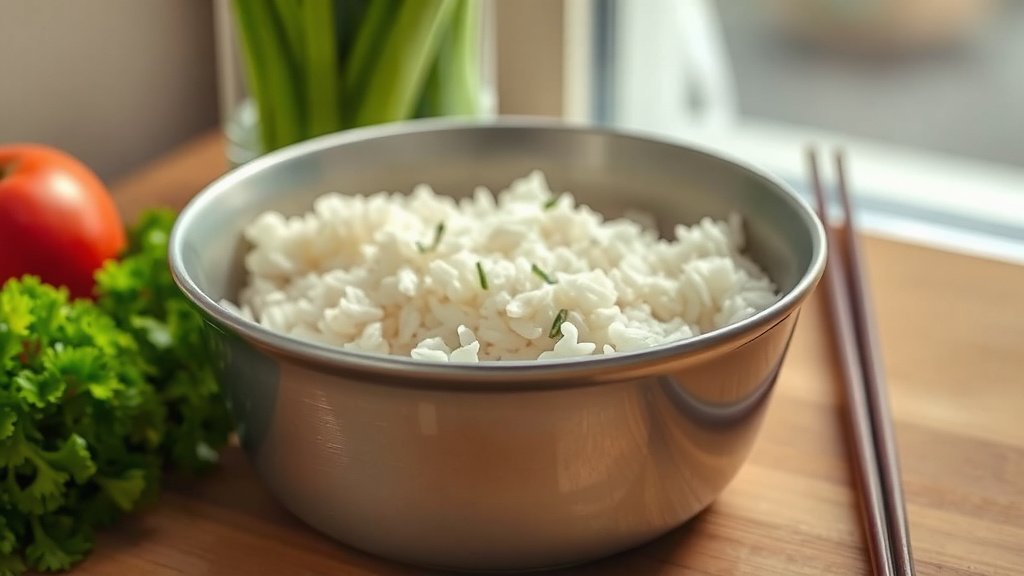
Yes, for most rice. Rinsing removes loose surface starch, which is what turns cooked rice into glue. Put your rice in a fine mesh strainer or the pot itself, run cold water over it, and swirl with your hand until the water runs mostly clear. Two or three quick rinses usually do it.
One exception: risotto-style dishes, where you actually want that starch. But for everyday jasmine or long-grain rice in a cooker? Rinse it. Future you will thank present you.
Storing and Reheating Leftover Rice Safely
Leftover rice is a real food safety topic, not just a convenience one. Rice can carry Bacillus cereus, a bacteria whose spores survive cooking. The CDC and food safety experts recommend cooling rice quickly and refrigerating it within one hour of cooking.
Store it in a shallow, airtight container. Eat it within 4 days. When reheating, make sure the rice steams all the way through, reaching 165°F. A splash of water before microwaving brings dried-out grains back to life. Add a damp paper towel over the bowl if you want to get fancy about it.
Your Quick Rice-for-Two Checklist
Before you hit the cook button, run through this list:
- Measure 1 cup dry rice (use the cooker cup or a US cup, not both).
- Rinse until the water runs mostly clear.
- Add water at a 1:1.5 ratio, or 1:2 for brown rice.
- Level the rice so it sits evenly under the water.
- Close the lid and resist the urge to peek.
- Let it rest 10 minutes after cooking, then fluff with a fork.
Scaling Up or Down Without Guesswork
Once you know the per-person rule, any headcount becomes easy math. Four people? Two cups dry. Just one hungry you tonight? Half a cup dry with three-quarters of a cup water. Most rice cookers handle small batches fine, though very tiny amounts (under half a cup) can cook unevenly in large pots.
And if your cooker has settings like “white” or “brown,” use them. They adjust time and temperature automatically. We found that trusting the machine, rather than hovering over it, leads to better rice almost every time. Curious how those smart presets work? Our guide to the fuzzy logic rice cooker explains what happens behind the scenes.
Conclusion
Getting rice right for two really comes down to one simple rule: 1 cup of dry rice, matched with the right water ratio. From there, it’s all about the details we covered—rinsing first, keeping the lid closed, and letting the pot rest before you fluff. Remember that your cooker’s little cup isn’t a standard US cup, so pick one measuring method and stay consistent. Once you nail this, you can scale up or down for any crowd without second-guessing. Tonight, grab your cooker, measure one cup, and give it a try. We think you’ll be pleasantly surprised how easy perfect rice becomes.
Frequently Asked Questions
Can I cook just half a cup of rice in a rice cooker?
Yes, most rice cookers can handle small batches. Half a cup of dry rice with about three-quarters of a cup of water works fine. Just know that very small amounts can cook slightly unevenly, so check the texture before serving.
Should I double the water if I double the rice?
Yes, the ratio scales directly. If you use 1.5 cups of dry rice instead of 1, add water proportionally to keep your ratio intact. The cook time may run a few minutes longer, but the cooker handles that on its own.
Why is my rice still hard after cooking?
Crunchy rice usually means it didn’t get enough water or enough time. Add a quarter cup of hot water, close the lid, and let it sit on warm for 10 minutes. For brown rice, you may need a full 1:2 ratio every time.
Do I need to adjust rice for high altitude?
You might. At higher elevations, water boils at a lower temperature, so rice can come out undercooked. We found that adding an extra 2 to 4 tablespoons of water and letting the rice rest longer helps at altitudes above 3,000 feet.
Can I add seasoning or broth to the rice cooker?
Absolutely. Swap the water for broth or stir in a pinch of salt, a pat of butter, or a bay leaf before cooking. Just keep the liquid amount the same, since extra solids can throw off how the cooker senses doneness.