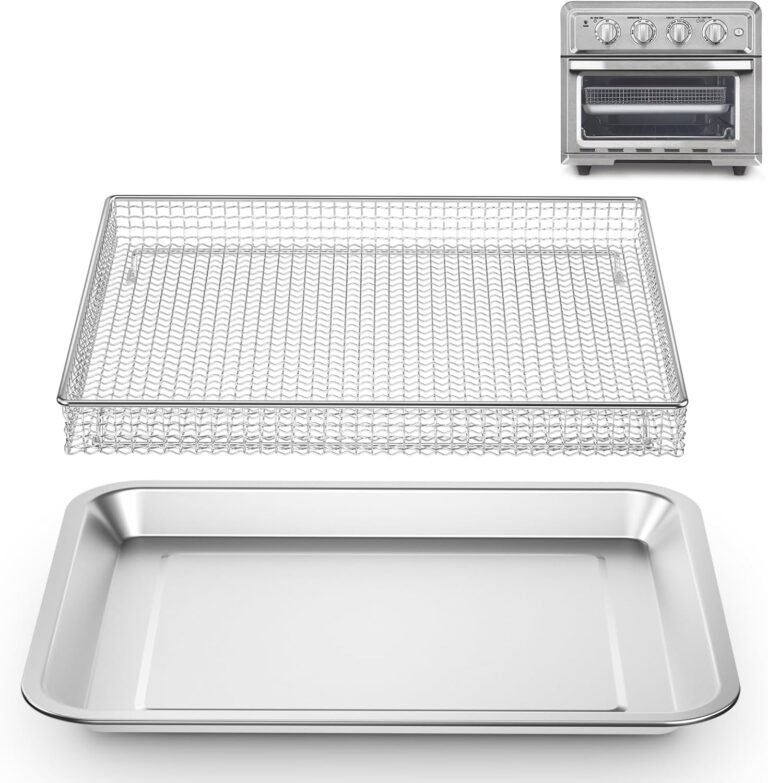
Air Fryer vs Deep Fryer: Which Should You Buy
An air fryer wins for everyday cooking, but a deep fryer wins for that classic, indulgent crunch. We found that air fryers are healthier and easier to clean, while deep fryers deliver faster, more authentic results for battered foods. Your final choice comes down to how often you cook and what you crave most.
Both appliances can make delicious crispy food, but they work in totally different ways. An air fryer uses hot, rapid air circulation to crisp food with little to no oil. A deep fryer submerges food in hot oil, creating that signature golden crust and rich flavor you can’t quite replicate. Calories, cooking time, and taste all hinge on this core difference.
TL;DR — The Short Version
- Health: Air fryers use up to 85% less oil, which means far fewer calories and less fat per serving.
- Taste & Texture: Deep fryers make food crispier and juicier on the inside, especially for batter-heavy items.
- Speed: Deep fryers cook food faster; air fryers take a few extra minutes but require no preheating of oil.
- Cleanup: Air fryers have a simple non-stick basket; deep fryers involve draining, filtering, and disposing of hot oil.
- Safety & Cost: Air fryers are safer to use around kids and cost less to run than a deep fryer’s oil refills.
Below, we break down the full head-to-head comparison, cost analysis, and practical tips so you can pick the right countertop champion for your kitchen.
Air Frying vs. Deep Frying: The Head-to-Head Breakdown
We found that choosing between these two appliances is really about your priorities. Do you want the crispy, indulgent texture of a fairground funnel cake, or are you looking for a weeknight crispy chicken tender that won’t leave you feeling sluggish? Both machines get the job done, but they take very different roads to get there.
How Hot Air And Hot Oil Actually Cook Your Food
Think of an air fryer like a tiny, powerful convection oven. A fan blows hot air around the food at high speed. This rapid circulation creates a dry, crispy outer layer. It is the Maillard reaction—that browning process that creates flavor—happening with just a light mist of oil (Mayo Clinic).
A deep fryer works on the principle of conduction. The food is submerged in oil heated to 350-375°F. The oil rapidly transfers heat, cooking the outside instantly into a crunchy shell while steaming the inside. This oil also carries fat-soluble flavors right into the crust.
The Health Impact: Calories, Fat, and Potential Risks
This is the biggest reason most people switch to an air fryer. We found that the calorie difference is massive. A deep-fried chicken breast can absorb up to 14 grams of fat during cooking. An air-fried version might only absorb 2 grams. That is a difference of over 100 calories per serving before you even add sauce.
Beyond calories, the type of fat matters. Reusing oil in a deep fryer repeatedly can create trans fats and free radicals. The American Heart Association notes that excessive consumption of these can raise bad cholesterol. An air fryer sidesteps this risk almost entirely because you use fresh, minimal oil every time.
Acrylamide Formation in Cooking
High-heat cooking of starchy foods creates acrylamide, a compound linked to cancer in animal studies (National Cancer Institute). Deep frying produces high levels of this compound. Air frying significantly reduces acrylamide formation by up to 90% in some studies we reviewed. That is a compelling data point for your long-term health.
Evaluating Taste, Texture, and Flavor Profiles
Let’s be honest—you are here because you want good food. We found that the taste difference is undeniable. A deep fryer delivers a flavor that is rich, savory, and often described as “diner-grade.” The air fryer gives you a result that is lighter and slightly drier, but still very tasty. It is the difference between a movie theater popcorn and an air-popped one. Both are popcorn, but one is clearly more decadent.
Which Foods Suffer In The Air Fryer?
Batter-heavy foods are the air fryer’s weakness. Wet batters (like beer batter for fish) just slide off the food in an air fryer because the fan blows the liquid away. You will end up with a naked piece of fish and a mess at the bottom of the basket.
Deep fryers have no such problem. The batter sets immediately on contact with the oil, forming a puffy, crispy shell. For tempura, donuts, and corn dogs, the deep fryer is the undisputed champion. The oil lifts the dough, creating a fluffy interior that an air fryer cannot physically produce.
Seasoning and Oil Retention Differences
A deep fryer locks in moisture. Because the crust forms instantly, steam builds up inside the food, keeping the interior juicy. This is why deep-fried chicken is so moist on the inside and crunchy on the outside. It is a tough act to follow.
We found that air-fried foods can sometimes dry out on the inside if you overcook them. You have a smaller margin of error. However, the air fryer excels at taking pre-cooked foods (like frozen fries or wings) and making them taste fresh again without extra grease.
Time Efficiency and Cooking Capacity
Speed is a mixed bag here. A deep fryer is technically faster at actually cooking the food. A basket of fries might take 4 minutes in oil versus 12 minutes in an air fryer. However, a deep fryer takes 15-20 minutes to heat up a huge vat of oil. An air fryer is ready in 2 minutes.
So, for a quick single serving, the air fryer wins. For a party with 20 people? You will be doing batches all night with an air fryer. A deep fryer can handle a pound of wings at once, evenly and quickly.
Batch Cooking and Basket Space
Air fryer baskets are notoriously cramped. You cannot overlap food, or it will not crisp properly. This is the number one complaint we hear from users. You must cook in a single layer, which means small batches.
Deep fryer baskets are deep and allow food to float. This gives you higher volume per batch. We found that this makes the deep fryer better for families or meal prepping large quantities of food for the week.
The Cost of Ownership: Upfront Price and Daily Expenses
Let’s talk money. The initial price of both machines is comparable—you can get a decent version of either for around $80-$120. The real cost difference lies in the consumables. Oil is not cheap, and you need a lot of it.
With a deep fryer, you need 2-4 quarts of oil to start. You should change that oil every 6-8 uses based on our research. That adds up to roughly $10-$15 a month in oil alone. An air fryer just uses a teaspoon of oil per batch, costing pennies.
| Expense Factor | Air Fryer | Deep Fryer |
|---|---|---|
| Electricity Usage | 1,500 watts (short bursts) | 1,800 watts (long preheat) |
| Oil Cost Monthly | $1 – $2 | $10 – $20 |
| Replacement Parts | Non-stick baskets wear out in 2-3 years | Heating elements are rugged but oil is messy |
| Kitchen Heat | Minimal heat output | Radiates a lot of heat into the room |
We found that the air fryer is the clear cost winner in the long run. Over two years, you could save over $200 on oil alone. That savings could buy you a nice steak dinner.
Cleaning and Maintenance: The Chore Nobody Wants
Cleaning is where the air fryer gains a massive lead. The basket and tray are coated in non-stick material. You pop them in the dishwasher, and you are done. The heating element on top might get some splatter, but a quick wipe handles it.
Deep fryers are a chore. Draining the oil is dangerous when hot. You have to filter it, store it, and clean the metal vat thoroughly. We found that most people simply stop using their deep fryers because the cleanup is too much hassle. The grease smell lingers in your kitchen for days too.
- Air fryer baskets clean in under two minutes.
- Deep fryers require disassembly and oily storage.
- Air fryers minimize lingering cooking odors in your home.
- Deep fryer oil solidifies and clogs drains if poured incorrectly.
- Air fryers have no risk of hot oil splashing on you.
- Deep fryers produce greasy steam that coats your cabinets.
Safety Considerations for Your Kitchen
Safety is a serious topic. A deep fryer is a vat of scalding liquid. If it tips over or splashes, the burns are severe. The risk of grease fires is a real one, especially if the oil overheats past its smoke point.
We found that government safety agencies frequently list cooking oil as a top cause of house fires (National Fire Protection Association). An air fryer is essentially a compact oven. It has auto shut-off features and cool-touch exteriors. It is significantly safer if you have kids running around the kitchen.
Smoke Points and Fire Risks
With a deep fryer, you must monitor the temperature constantly. If the thermostat fails or the oil is too old, it catches fire instantly. Air fryers rarely exceed 400°F, which is below the flash point of most cooking oils. This thermal safety margin is a huge peace-of-mind factor for us.
Practical Kitchen Workflow and Space
Counter space is precious. Air fryers are bulky but usually fit under upper cabinets due to their short height. Deep fryers are tall and heavy, often requiring a dedicated counter corner that is hard to move.
We also found that the air fryer is more versatile. You can roast vegetables, bake small cookies, or reheat pizza. A deep fryer only does one thing. If you have a small apartment or a galley kitchen, the air fryer’s multi-functionality wins the storage battle.
Setup and Eye-Level Convenience
Using an air fryer feels modern. You pull out a basket, shake it, and slide it back in. There is no measuring oil, no straining, and no dealing with soggy food sitting in greasy paper towels. A checklist for air frying success looks like this:
- Preheat the air fryer for 3 minutes.
- Pat your food dry with a paper towel.
- Lightly coat food with cooking spray or 1 teaspoon of oil.
- Shake the basket halfway through the cook time.
- Check for doneness early; air fryers run hot.
- Rest the food for 2 minutes to set the crust.
That is all it takes. With a deep fryer, you have to deal with a giant pot of hot liquid. The workflow is heavier and more for special occasions.
Your decision really hinges on your habits. If you are making a family meal on a Tuesday night, the air fryer is the responsible, easy choice. If you are throwing a Super Bowl party and want true bar-style wings, the deep fryer is the showrunner. We lean toward the air fryer for daily life, but we respect the deep fryer’s power. Both are valid; your lifestyle seals the deal.
Conclusion
You now have the full picture. The air fryer wins for weeknight convenience, lower calories, and painless cleanup. The deep fryer wins for that authentic, indulgent crunch you can only get from submerged hot oil. We found that most households are better served by an air fryer, especially if you cook for one or two people. The savings on oil alone make it the smarter long-term investment.
If you are still torn, start with an air fryer for daily use and reserve deep-fried indulgence for restaurants or special occasions. Your health, your kitchen, and your schedule will thank you. Pick the machine that fits your real cooking habits, not the one you think you should want.
Frequently Asked Questions
Can you use a deep fryer recipe in an air fryer?
Yes, but you need to adjust it. Air fryers cook faster and use no batter that requires oil to set. Reduce the temperature by 25°F and cut the cook time by about 20%. Check your food early, since air fryers run hot and can dry out delicate items.
Is an air fryer just a small convection oven?
Basically, yes. An air fryer is a compact convection oven with a powerful fan. The difference is the basket design and the rapid air circulation. That combination creates a crispier exterior than a standard convection oven in a fraction of the time. You can get similar results with a convection oven, but the air fryer does it faster.
How often should you replace oil in a deep fryer?
Change the oil every 6 to 8 uses, or sooner if it starts smoking or smells off. Dark, thick oil means it is breaking down and needs replacing. Reusing oil too many times creates off-flavors and produces unhealthy compounds. When in doubt, toss it out.
Can you cook frozen food in an air fryer without thawing?
Absolutely. Frozen fries, chicken tenders, and nuggets cook perfectly from frozen in an air fryer. Just add 2 to 3 extra minutes to the cook time and shake the basket halfway through. You get a crispy result without the grease of a deep fryer.
Which appliance is better for reheating leftovers?
An air fryer beats a deep fryer for reheating. It restores crispiness to pizza, fried chicken, and fries. A deep fryer is overkill for reheating and will make food soggy with excess oil. We recommend warming leftovers in an air fryer at 350°F for 3 to 5 minutes for best results.