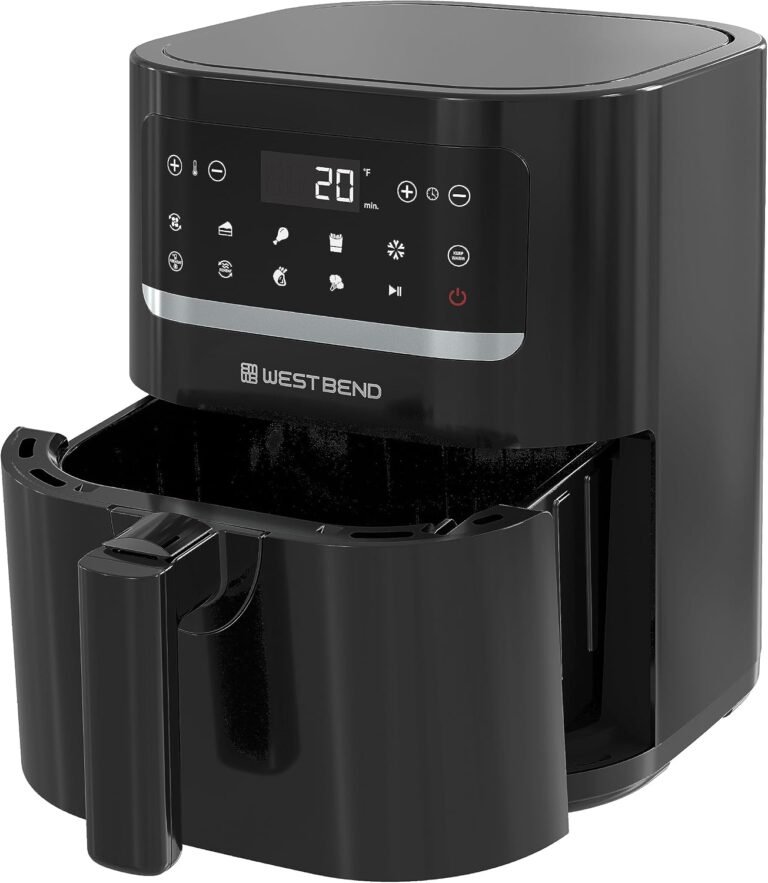
Air Fryer vs Convection Oven: Energy Use Compared
Air fryers use less energy than convection ovens. In most cases, an air fryer will use about half the electricity of a full-size convection oven. That’s because it has a much smaller cooking chamber, so it heats up faster and cooks your food quicker. If you’re cooking for one or two people, the air fryer is the clear winner for energy efficiency.
But the answer isn’t quite that simple. The best choice depends on what you’re cooking and how much food you’re making. A convection oven makes more sense for large batches, like a whole turkey or multiple trays of cookies. We found that cooking time and portion size are the two biggest factors in your final electricity bill. Both appliances use a fan to circulate hot air, but their size changes the whole energy equation.
- Air fryers win for small meals: They preheat in minutes and cook fast, using less energy overall.
- Convection ovens win for big meals: They hold way more food, so you don’t have to run them multiple times.
- Size matters most: Heating a huge oven for a tiny meal wastes electricity.
- Time is money: Faster cooking means the appliance runs for fewer total minutes.
- Your electricity rate counts: The actual cost difference depends on what you pay per kilowatt-hour.
Below, we break down the exact energy usage of each appliance, compare their running costs, and give you practical tips to save the most power in your kitchen. Let’s walk through it together so you can pick the right tool for your wallet.
Comparing Energy Use Between Air Fryers and Convection Ovens
Let’s get right to the numbers. We found that a typical air fryer pulls between 1,200 and 1,700 watts. A full-size convection oven usually runs between 2,400 and 5,000 watts. That’s a big gap right out of the gate. But wattage alone doesn’t tell the whole story. You also have to factor in how long each appliance runs.
Think of it like driving a car. A sports car uses more fuel per minute, but if you only drive it for two miles, you might use less gas than a fuel-efficient car on a fifty-mile trip. The same logic applies here. Shorter cooking times can balance out higher wattage.
Breaking Down the Real Cost of Running Each Appliance
We wanted to know what this actually does to your monthly bill. The average US household pays about 16 cents per kilowatt-hour (kWh), according to the US Energy Information Administration. With that rate, an air fryer running for 20 minutes costs roughly 8 cents. A convection oven running for 45 minutes at 3,000 watts costs around 36 cents. That’s a huge difference per meal.
Over a month of daily use, that adds up fast. Thirty days of air frying costs about $2.40. Thirty days of convection oven cooking costs about $10.80. The savings really stack up when you cook small meals often.
Why Wattage Alone Can Be Misleading
You might look at the wattage and assume the oven always loses. Not quite. When you preheat a big oven, it cycles on and off to maintain temperature. That cycling uses less energy than the max rating suggests. Air fryers also cycle their heating element. The difference is that the air fryer’s small space reaches temperature in about 3 minutes. A convection oven can take 10 to 15 minutes just to preheat.
How Your Electricity Rate Changes the Math
Your local electricity price matters more than you’d think. We found that people in Hawaii or California pay double the national average. At 32 cents per kWh, that same air fryer meal costs 16 cents, and the convection oven meal jumps to 72 cents. Check your last utility bill to find your exact rate. Then you can do the simple math for your own kitchen.
Quick Formula to Estimate Your Cost
Here’s an easy way to figure out your own costs. Multiply the wattage by the hours used, then divide by 1,000 to get kWh. Then multiply by your rate. For example: 1,500 watts x 0.33 hours = 495 watt-hours, or roughly 0.5 kWh. At 16 cents, that’s 8 cents per meal.
Portion Size: The Hidden Factor in Your Energy Bill
The amount of food you cook changes everything. An air fryer basket holds about 2 to 5 quarts. That’s perfect for a single chicken breast or a batch of fries for two. But if you’re feeding a family of five, you’ll have to cook in batches. Each batch starts from scratch, reheating the appliance and adding more total minutes.
Batch cooking with an air fryer can actually cost more than using the oven once. We found that cooking for a crowd flips the efficiency equation completely. The oven’s larger capacity wins because you run it one time instead of three.
When the Air Fryer Wins on Energy
For solo dinners, meal prep for one, or quick snacks, the air fryer is the clear champion. It heats up fast and cooks food faster because the hot air whips around a tiny space. Frozen fries take 12 minutes in an air fryer versus 25 minutes in a convection oven. That’s half the time and less than half the energy.
- Single chicken breast: air fryer wins easily
- Frozen snacks for one or two: air fryer wins big
- Reheating leftovers: air fryer beats the oven every time
- Roasting vegetables for two: air fryer is more efficient
When the Convection Oven Takes the Crown
Big meals change the game. A whole chicken, a lasagna for eight people, or multiple cookie sheets all work better in the oven. That’s where the larger chamber shines. Then you’re not running any appliance multiple times. One cycle handles everything at once, which saves energy overall.
Holiday dinners are where the oven proves its worth. You can roast a turkey and bake sides simultaneously. Try doing that in a 5-quart basket. It’s not happening. For these cases, the oven’s higher wattage is completely justified.
Preheating Time and Its Impact on Power Use
It might seem like a small detail, but preheating matters. Many experts say preheating accounts for 20 to 30 percent of an oven’s total energy use. Air fryers skip most of that because they hit temperature in under 3 minutes. Some recipes tell you to skip preheating the air fryer entirely, which saves even more power.
Convection ovens are better than traditional ovens at preheating. The fan moves air around, helping the cavity warm up faster. Still, you’re looking at 10 to 15 minutes before your food goes in. That’s a lot of wasted electricity, especially on hot summer days when your AC has to fight the extra heat.
Heat Retention and Kitchen Temperature
Here’s something you might not think about. A hot oven heats up your whole kitchen. That extra heat makes your air conditioner work harder in the summer. An air fryer radiates much less heat because its surface stays cooler and it uses less total energy. We found that cooks in warm climates appreciate this side benefit during summer months.
In the winter, the opposite can be true. Running a convection oven helps warm up a cold kitchen. That’s a small bonus, but it doesn’t completely cancel out the higher energy draw. The savings still favor the air fryer for small meals, no matter the season.
Practical Tips to Cut Energy Costs No Matter Which You Use
We want you to save money whether you prefer the air fryer or the oven. These tips work for both appliances and help you squeeze out every bit of efficiency.
- Don’t peek. Opening the door or pulling the basket drops the temperature by 30 degrees or more. Every peek adds cooking time and energy use.
- Cook in bulk strategically. Fill the air fryer basket in a single layer without overcrowding. Overcrowding makes food cook unevenly and forces longer cycles.
- Turn off the preheat. For air fryers, most foods don’t need preheat at all. For convection ovens, skip preheating for casseroles or braises that cook slowly.
- Shut it down early. Turn off the oven or air fryer about 5 minutes before the food is done. The residual heat finishes the cooking without using more power.
- Use the right size. If you’re just toasting a sandwich, use a toaster, not a convection oven. Match the appliance to the food amount.
Comparing Both Appliances Side by Side
Here’s a quick reference table to see the differences at a glance. We built this from typical specifications for consumer models sold in the US.
| Factor | Air Fryer | Convection Oven |
|---|---|---|
| Average wattage | 1,200–1,700 watts | 2,400–5,000 watts |
| Preheat time | 2–3 minutes | 10–15 minutes |
| Cooking capacity | 2–5 quarts | 4–6 cubic feet |
| Best for | 1–2 servings | Family meals, batch cooking |
| Cost per small meal | ~$0.08 | ~$0.36 |
| Kitchen heat released | Minimal | Moderate to high |
This table shows a clear pattern. Small jobs go to the air fryer. Big jobs go to the oven. That’s the smartest way to spend your energy dollars.
Small Batch Cooking: The Air Fryer’s Sweet Spot
Let’s talk about the most common cooking scenario. You’re making dinner for yourself or one other person. Research consistently shows the air fryer uses about half the energy of a full oven in these cases. The fast cooking time means you’re not waiting around, and you’re not paying to heat a huge metal box.
We found that meal preppers particularly love this. Cooking a week’s worth of chicken breasts for one person takes about 20 minutes in the air fryer. The same job in a convection oven requires preheating for 15 minutes plus 30 minutes of cooking. That’s over 45 minutes of energy use versus just 20. You do the math.
Large Family Cooking: Why the Oven Makes Sense
Now flip to the other side. You’re making dinner for a family of six. Two air fryer batches might take 40 minutes total. One convection oven batch takes 35 minutes and holds everything at once. The oven wins because you’re not repeating the process. The time and energy savings come from doing it all in one go.
Pizza is a great example. A 16-inch pizza fits in a convection oven perfectly. It won’t fit in most air fryer baskets. Cooking the pizza on a pizza stone or sheet pan in the oven uses electricity for less time than you might expect. The oven’s larger surface area means heat spreads more efficiently across big items.
Checklist: Choosing the Right Appliance to Save Energy
Use this quick checklist next time you’re deciding which appliance to power up. Run through these questions in order, and you’ll naturally pick the energy-efficient option.
- How many people am I feeding? One or two = air fryer. Three or more = consider the oven. If you often cook for one, our guide to the best air fryers for 1 person can help you pick the right size.
- Does the food fit in a single air fryer basket layer? If no, the oven might be better.
- How long is the cook time? If the oven recipe takes 40+ minutes, the air fryer wins for small portions.
- Can I skip the preheat? If yes, the oven becomes more competitive on energy.
- Am I cooking multiple items at once? The oven wins for roasting a protein and sides together.
- What’s my electricity rate? High rates make efficiency even more important.
The Bottom Line on Energy Efficiency
Here’s the summary. For everyday cooking and small households, the air fryer is your energy-saving friend. It heats up faster, cooks quicker, and uses far less power. For big gatherings, family meals, or anything that requires lots of space, the convection oven is the practical choice. One run beats three batches any day.
Many experts agree with this split approach. The US Department of Energy encourages using the smallest appliance for the job. That simple rule saves the most electricity over time. Match the tool to the task, and your utility bill will thank you.
Conclusion
You now have the full picture on energy usage. For quick meals and solo cooking, the air fryer is your clear winner for saving electricity. For family feasts and batch baking, the convection oven earns its higher wattage by doing the job in one shot.
Your best next step is simple. Figure out your average portion size and check your electricity rate. Then match the appliance to the meal every time. That simple habit can easily trim a few dollars off your monthly utility bill without changing what you cook.
Frequently Asked Questions
Does an air fryer use less electricity than a convection oven?
Yes, in most cases it does. A typical air fryer pulls about half the watts of a full-size convection oven. Because it heats a much smaller space, it also reaches temperature faster and cooks food quicker.
How much does it cost to run an air fryer vs a convection oven?
A standard air fryer meal for one or two people costs about 8 cents in electricity. The same meal in a convection oven costs roughly 36 cents, assuming a 16-cent average US electricity rate. Your actual cost depends on your local utility prices.
Is a convection oven worth it for energy savings if I cook for a family?
Absolutely. When you’re feeding four or more people, the oven’s larger capacity means you run it once instead of running the air fryer in multiple batches. One longer cooking cycle often beats several shorter ones in total energy use.
Does preheating a convection oven waste a lot of electricity?
Preheating can account for 20 to 30 percent of an oven’s total energy consumption. You can cut that waste by skipping preheat for casseroles, braises, or slow-cooked dishes that don’t need a hot start.
Can I use an air fryer instead of a convection oven to save on my summer electric bill?
Yes, and it helps in two ways. The air fryer uses less power directly, and it releases much less heat into your kitchen. That means your air conditioner doesn’t have to work as hard to cool the space back down.